Three illuminated two-story brick houses on a tree-lined residential street photographed at twilight, with warm window light and landscape uplighting visible against a deep blue evening sky.

Furnace Repair in Delaware, OH

Tell us about the job

Takes about a minute. No obligation.

RepairFurnace or heatingDelaware County, OH
Step 1 of 2

What ZIP code is the job in?

September is when a weak furnace gets found out

A furnace in Delaware County sits idle all summer. Then October comes and it's asked to run every day. Whatever was already marginal, a cracked igniter, a weak capacitor, a sensor going bad, tends to give out in those first few weeks.

That first failure is worth a real look

A furnace that quits in October isn't just a glitch to reset and forget. Get the actual cause fixed now, and it runs through the rest of the season, and the one after, without that same part failing again.

8 months
October through May, your furnace is on duty
23°F
the average winter night it heats against
68%
of homes here heat with gas, so most furnaces here burn gas
5 winter storms
in ten years, the nights a failure hurts most
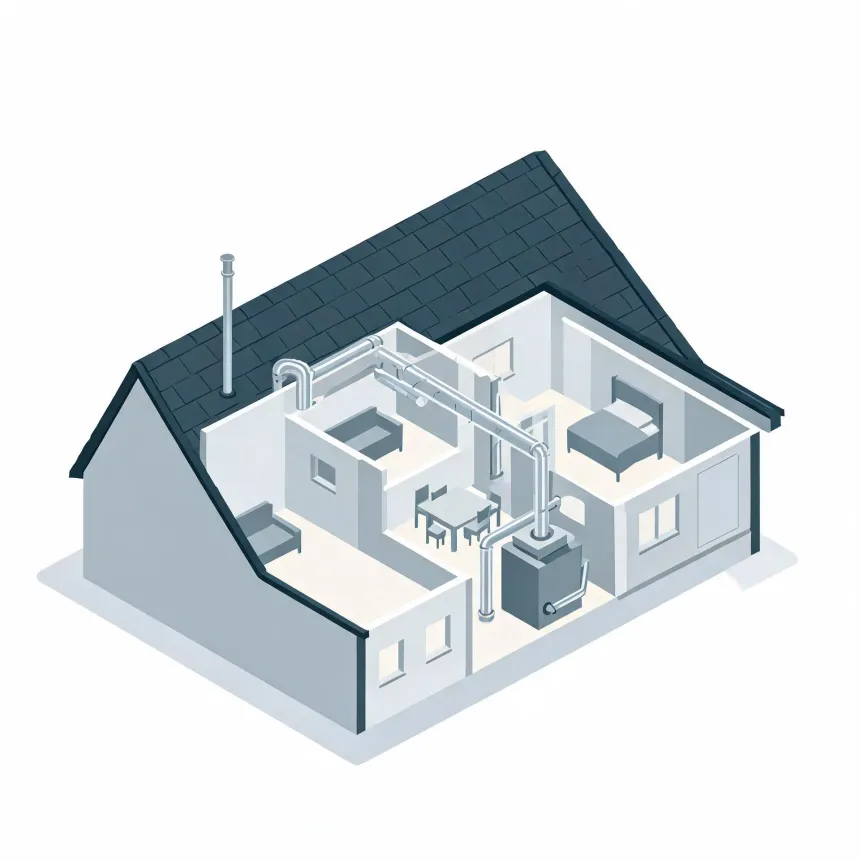
Isometric cutaway illustration of a single-story house with a dark shingled roof, showing interior rooms with furniture and a ducted furnace unit connected to metal ductwork and a roof flue.
Your furnace works hardest from November through March.

NOAA nClimDiv, 1991–2020 normals

An old furnace that needs a repair usually needs another one soon after.

Once a furnace gets old enough, parts start failing on their own schedule. Fix the one that quit, and the rest are still due.

Nothing unusual about this winterOvernight lows average 23°F in December and January here. That's just a normal load for a furnace to carry.

Gas in Ohio runs $12.89 per million Btu, the average for 2024. That's not a high price, and nothing about Delaware County makes it cost more to burn or makes a furnace work harder. So when a furnace struggles to heat, short cycles, or runs longer than it used to, that's just ordinary wear catching up. Not the gas, not the climate. That shows up on the bill before it shows up as a breakdown. Fix the cause now, and the bill stops creeping up for the rest of winter.

Get it looked at early

Problems tend to show up in the first weeks of the season, when the load hits a part that was already weak.

Find a contractor
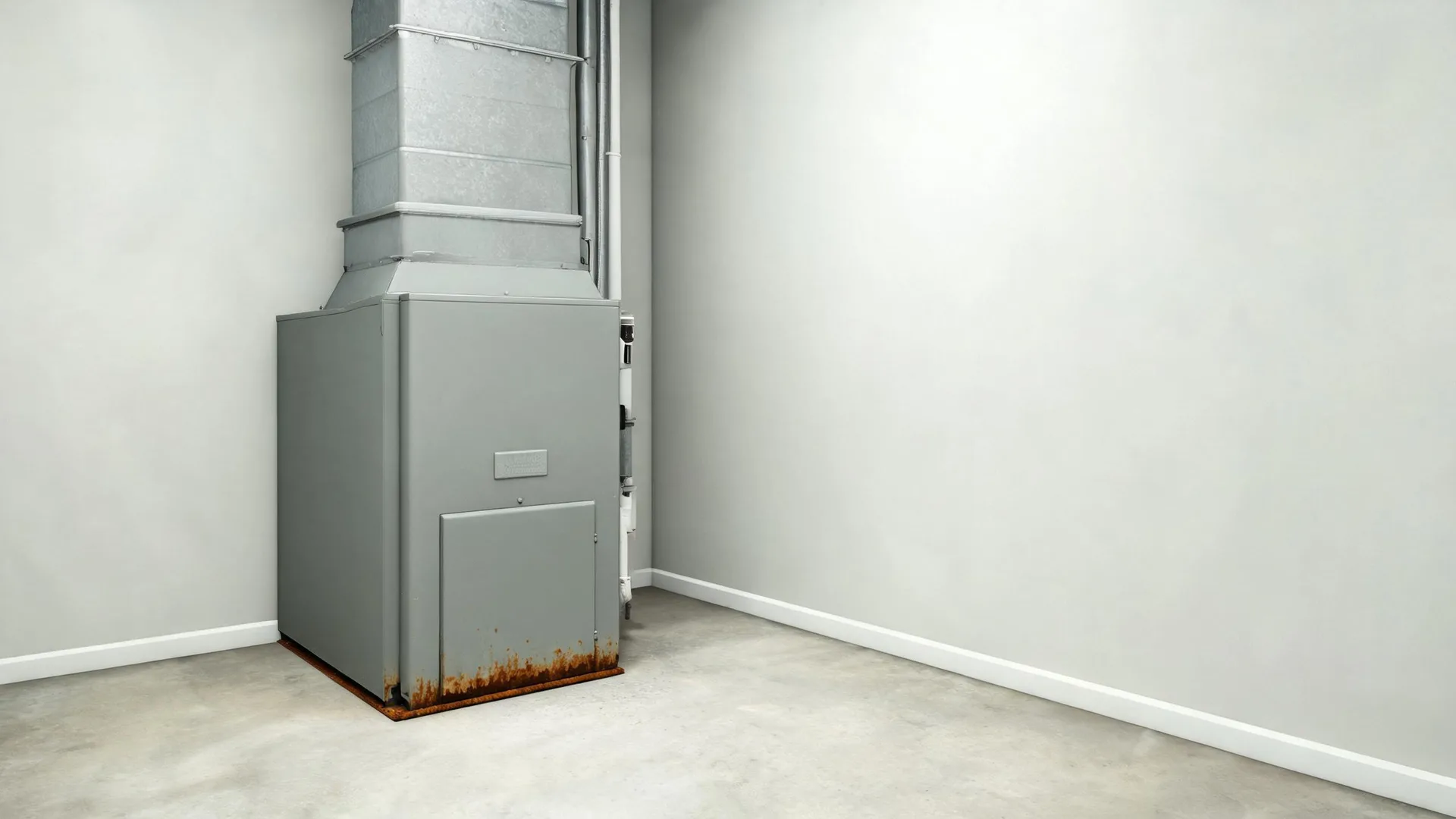
A gray residential gas furnace installed in an unfinished basement, connected to sheet-metal ductwork and PVC pipes.

What to check before you call

Start with the thermostat. Set it to heat, a few degrees above room temperature, not wherever it was left last spring. Then go check the furnace door. Most furnaces have a safety switch behind that panel. If it is loose or not seated right, the furnace will not fire at all. Check the filter next. A filter packed with dust chokes the airflow, and that alone can trip the high limit switch and shut the furnace down before it puts out any heat. If it runs on a standing pilot, check that the pilot light is actually lit. If it uses an igniter, looking will not tell much, but listening will. A furnace that clicks or hums but never catches is getting power and gas. It is failing somewhere in between. Last, check the breaker, and any switch near the furnace or at the top of the basement stairs that looks like an ordinary light switch. That switch is a shutoff, and it gets bumped by accident more than people think. None of this fixes a bad igniter or a failed control board. It just clears away the simple stuff first.

A limit switch trips for a reason

When a furnace isn't getting enough airflow, the heat exchanger gets too hot, and the high limit switch shuts the burners off to protect it. Resetting it and letting the furnace fire again doesn't fix anything. It just makes the furnace try the same thing and fail the same way. Each cycle puts more heat stress on a part that doesn't hold up well under that stress.

A hard start wears down everything around it

A cracked igniter or a flame sensor coated with residue can still let the furnace limp through a start, barely. Every one of those hard starts draws more current through the control board and the blower motor than a clean start would. Keep that up long enough, and the igniter usually isn't the only part that fails.

An unfinished basement featuring a forced-air furnace, exposed wooden ceiling joists, bare concrete walls, and miscellaneous items including cardboard boxes and coiled cables on the floor.

A new furnace would cut about $150 a year off heating for a typical Delaware County home.

  • A new high-efficiency furnace$650 a year
  • An older furnace$800 a year

Estimates for a typical Delaware County home, compared with an older unit built to the previous federal minimum, from EIA household energy data, Ohio fuel prices and NOAA climate normals. Your home will differ.

Repair makes sense when one part has failed and the heat exchanger is sound.

Replacement makes sense when the heat exchanger is cracked or the furnace keeps needing parts.

Checking a furnace starts before the panel comes off. A tech looks at the thermostat call, the return air, the flame itself. That way something like short cycling gets traced to where it actually starts, instead of guessed at. The control board matters too. Most boards store a fault code in the blink pattern of an LED. That code narrows it down, whether the last shutdown came from a limit switch, a flame sensor, or something else in the sequence. From there it's testing the suspect part directly. Checking an igniter for continuity. Checking a flame sensor's reading in microamps against what it should be. The furnace needs to run a full cycle before the tech leaves. Not just started and left idle. Some failures only show up once the burners have been running a few minutes and everything's hot.