






A row of illuminated two-story brick houses with front porches and mature trees photographed at twilight.

Furnace Repair in Cincinnati, OH

Tell us about the job

Takes about a minute. No obligation.

RepairFurnace or heatingHamilton County, OH
Step 1 of 2

What ZIP code is the job in?

Hamilton County logged 271 severe weather events between 2015 and 2024. Damaging wind caused 169 of those, hail another 79, and four tornadoes touched down in that span too. Wind and hail both reach the outdoor unit of a furnace system that includes AC, since the cabinet sits outside exposed to both. A bent fin or a cracked panel does not always stop the furnace from running, at least not right away. Statewide, 18% of Ohio households lost power for a full day or longer in 2024, and a furnace with electronic ignition or a blower motor does not run without power regardless of how much gas is behind it. If a storm has come through and your system took a hit, it is worth having someone look even if it seems fine now.

7 months
October through April, your furnace is on duty
25°F
the average winter night it heats against
60%
of homes here heat with gas, so most furnaces here burn gas
16 winter storms
in ten years, the nights a failure hurts most
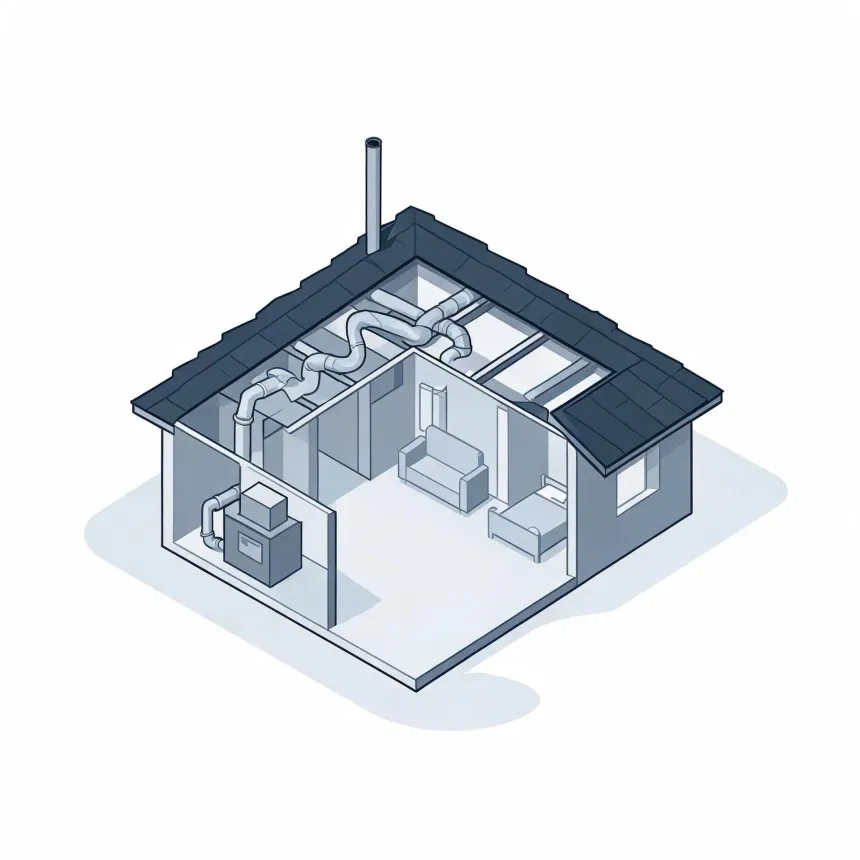
Isometric cutaway illustration of a small house showing a furnace unit connected to ductwork running through the interior and attic, with a chimney on the shingled roof and simple furniture in the rooms.
Your furnace works hardest from November through March.

NOAA nClimDiv, 1991–2020 normals

A furnace that won't start can still have a thermostat set wrong or a switch flipped off.

Check the thermostat and the power switch before you call anyone out.

Half these furnaces are older than the house's wiring

Half the homes here were built by 1963
Heat runs October through April
Winter nights average 25°F
Furnaces Here Get Pushed Hard Starting in OctoberHomes in Hamilton County run heat about seven months a year, from October through April.

Half the houses in Hamilton County were built in 1963 or earlier. If yours is one of them, nobody can tell you from that alone how old the furnace is, but a unit that old has had a lot of chances to be replaced once already, maybe more than once. That matters when something breaks. A furnace near the end of its life can often be nursed through one more repair, but it's worth asking the contractor straight out how many years they think it has left before you pay for that repair. If the answer is not many, that changes what the repair is worth to you.

Had a Storm Come Through? Get It Looked At Before It Fails

If your outdoor unit took hail or wind damage in a storm, have it checked even if the furnace still runs. A bent fin or a cracked panel does not always show up as a problem right away. If the power went out, check that the furnace restarted on its own before you assume it's fine.

Find a contractor
A man in a cap, dark shirt and tan work pants, seen from behind, carries a worn canvas tool bag up steps toward a dark blue front door beside a tall planter of flowers.
A gas furnace with attached ductwork, gas piping, and condensate lines installed in a concrete-block basement.

Running Through a Problem Usually Makes It Bigger

A furnace that's struggling doesn't fail cleanly. It fails a little, then keeps running that way until it fails more. A cracked heat exchanger can keep running for a long time before it's forced to stop, and every hour it runs it's pushing exhaust where it shouldn't go. A blower motor with a bad bearing will keep spinning hot and loud until it seizes, and the heat it throws off while it struggles can scorch a nearby wire or warp a cabinet part. A clogged filter starves the system of airflow, so the heat exchanger runs hotter than it was built to, and that kind of stress shortens the life of the unit. None of this means shut the furnace off the moment something sounds off. It means a furnace that's acting up and still running is not proof nothing is wrong. Sometimes it's proof of the opposite.

Short Cycling Wears Out the Parts That Start the Furnace

A furnace that turns on, runs a couple minutes, then shuts off and starts again is short cycling. It points to a flame sensor that's coated and can't confirm the flame, a limit switch tripping because airflow is weak, or an igniter that's failing. Each start puts the most strain on these parts, so a furnace that short cycles burns through its igniter and sensor faster than one that runs a normal length cycle.

A Yellow Flame or a Burning Smell Means Stop and Call

The flame behind the burner viewport should be steady and blue. Yellow or flickering means the gas isn't burning clean, which can point to a cracked heat exchanger or a burner that needs cleaning. A burning smell when the furnace first kicks on each season is normal dust burning off and clears in a few minutes. A burning smell that lingers, or a smell like formaldehyde, is not normal and means shut the furnace off and get it looked at.

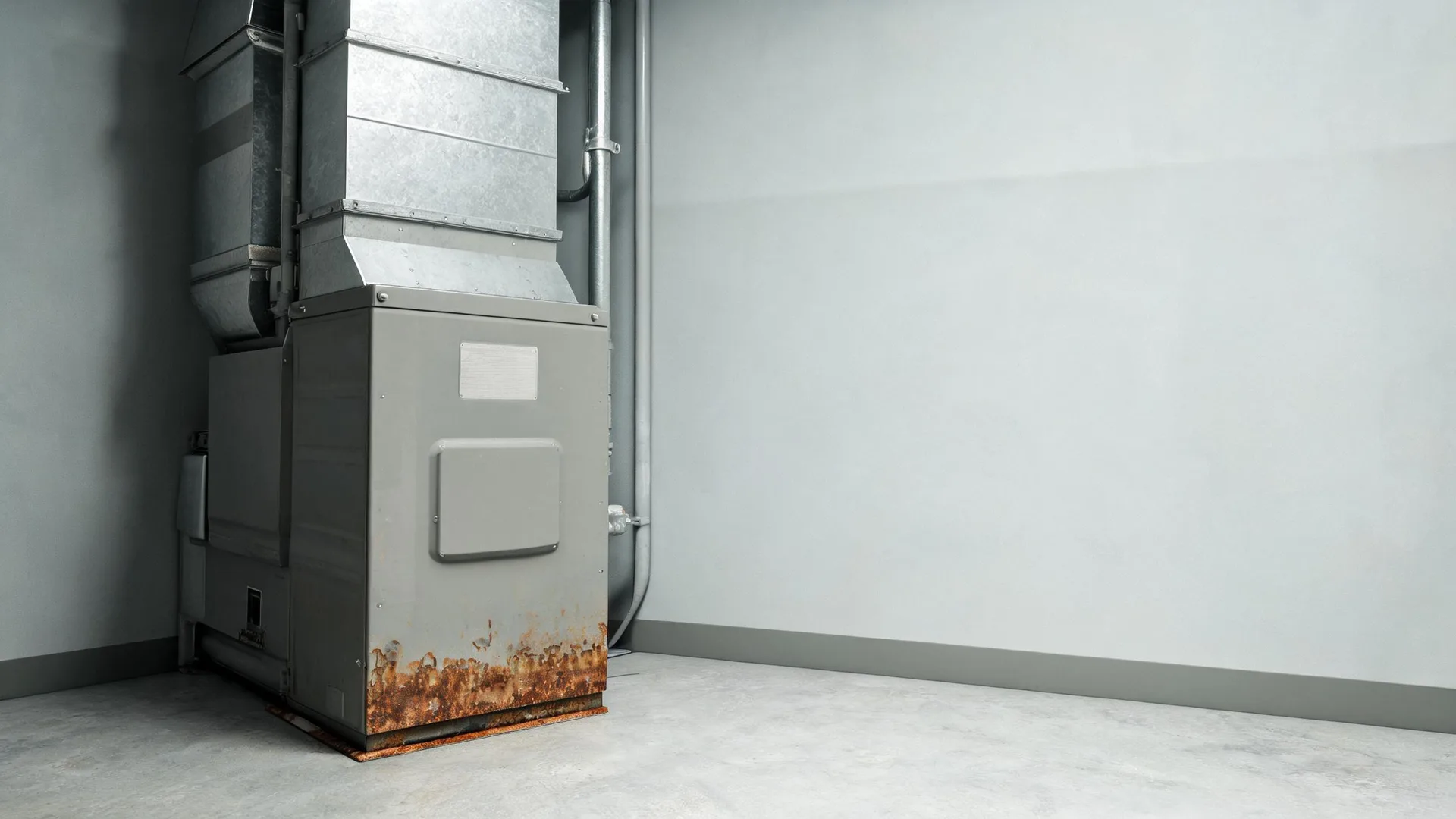
An unfinished basement interior featuring a large metal furnace unit, exposed ceiling joists, concrete walls, and scattered boxes and cables on the floor.

A new furnace would cut about $140 a year off heating for a typical Hamilton County home.

  • A new high-efficiency furnace$570 a year
  • An older furnace$710 a year

Estimates for a typical Hamilton County home, compared with an older unit built to the previous federal minimum, from EIA household energy data, Ohio fuel prices and NOAA climate normals. Your home will differ.

Repair makes sense when one part has failed and the heat exchanger is sound.

Replacement makes sense when the heat exchanger is cracked or the furnace keeps needing parts.

A diagnostic visit starts with the thermostat and the power, then moves to watching the furnace run through a full cycle. A tech will pull the panel and check the flame through the viewport, looking for that steady blue rather than yellow or flickering. They'll test the flame sensor, the igniter, and the limit switch separately, since any one of those can cause the same shutdown but each gets fixed a different way. They'll check the filter and the airflow, because weak airflow trips the limit switch and gets blamed on other parts that are actually fine. If the furnace is short cycling, they're listening for when in the cycle it quits, since that timing points to which part is failing. A gas furnace also gets checked for proper venting and a clean burn, since that's a safety question as much as a repair one. By the end, the goal is a straight answer: what's failing, what it takes to fix it, and whether that repair is worth making on this furnace.