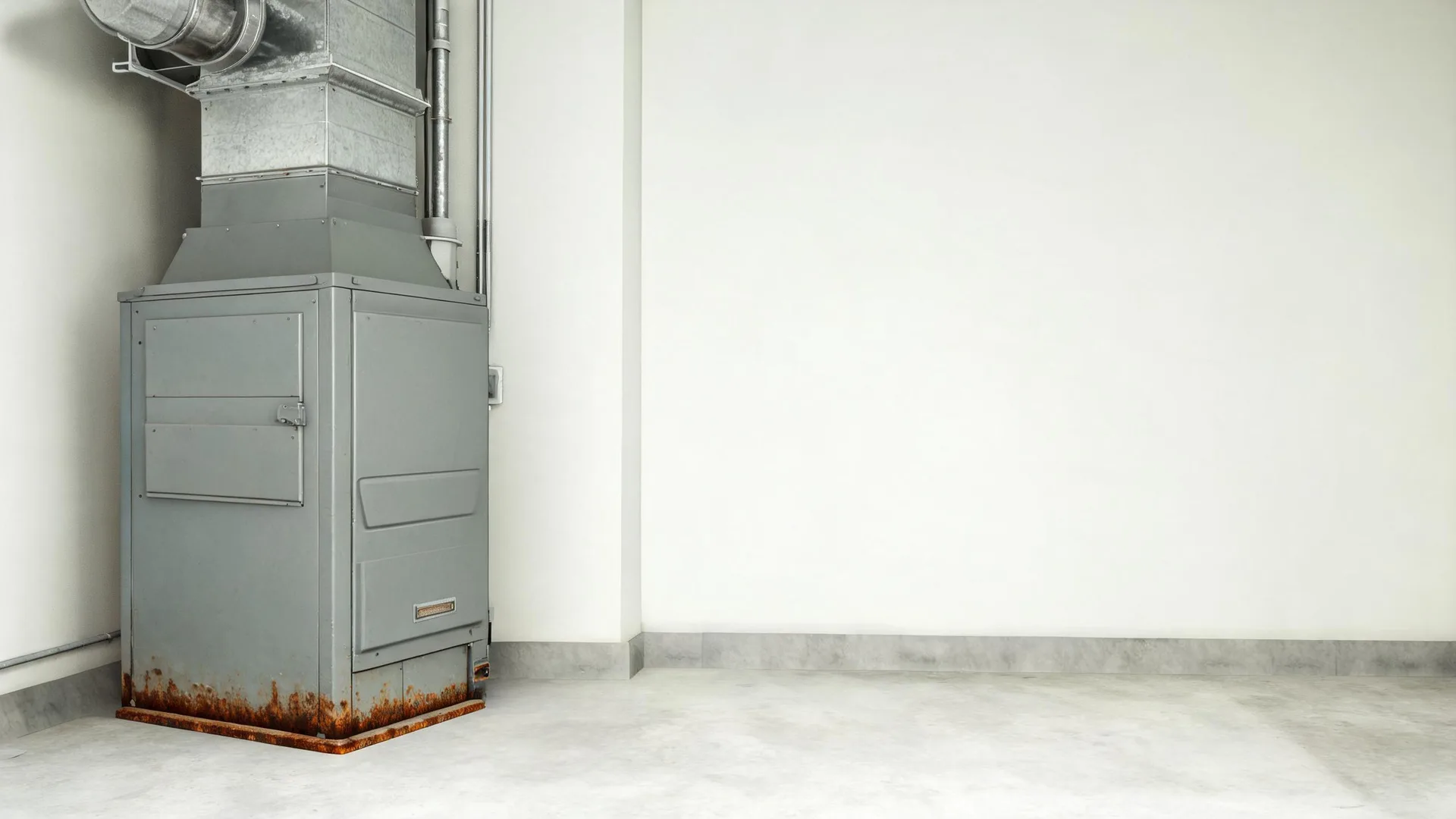
An unfinished basement featuring concrete block walls, exposed floor joists, a bare concrete floor, and a forced-air furnace with a large metal exhaust duct in the corner.

Furnace Repair in Canton, OH

Tell us about the job

Takes about a minute. No obligation.

RepairFurnace or heatingStark County, OH
Step 1 of 2

What ZIP code is the job in?

September is the month to catch a weak furnace before it fails

Furnaces in Canton sit idle from spring until October. A part that was already failing back in May, a cracked igniter or a worn blower bearing, doesn't show itself until the furnace fires up for real and has to carry a full load.


The first cold snap finds whatever was already wrong

The October through May run is hard on a weak part. It's the test that part was due for. If a furnace is acting up now, the cause was probably sitting there all along. Fixing it means finding that cause, not just getting the heat back on for the night.

8 months
October through May, your furnace is on duty
22°F
the average winter night it heats against
77%
of homes here heat with gas, so most furnaces here burn gas
6 winter storms
in ten years, the nights a failure hurts most
Isometric cutaway illustration of a single-story house showing interior rooms with furniture, a furnace unit with connected ductwork and a tall vertical flue pipe extending above the dark shingled roof.
Your furnace works hardest from November through March.

NOAA nClimDiv, 1991–2020 normals

Canton furnaces run about eight months a year, October through May.

A furnace with a weak part doesn't get much rest. It just keeps running until that part gives out. Usually it's something ordinary that finally quit.

Stark County's weather is nothing special. Furnaces here fail from sitting unused, not from the county itself

131 severe weather events from 2015 to 2024
18% of homes statewide lost power a day or more in 2024
93 damaging wind events from 2015 to 2024

Nothing unusual happens to a furnace in Canton. The cold is ordinary Ohio cold, and the parts inside wear the same way they would in any county that gets a real winter. That's good news when something breaks. The fix is almost always a known one. An igniter, a flame sensor, a blower motor, a pressure switch, the same things that wear out in any furnace, anywhere. Gas runs $12.89 per million Btu here, so a furnace cycling more than it should to make up for a bad part is burning real money while it does it. Find which part gave out and replace that one. No need to treat the whole furnace like a mystery.

Get it looked at early

Problems tend to show up in the first weeks of the season, when the load hits a part that was already weak.

Find a contractor
A gas furnace with attached ductwork, gas piping, and condensate lines installed in a concrete-block basement.

Most failures were already wearing out before the cold set in

An igniter doesn't fail all at once. It cracks a little more every time it heats up and cools down. That's wear from cycling, not from one cold night. A flame sensor wears the same way. It gets coated cycle after cycle until it can't tell the control board the flame is lit. Blower bearings and capacitors wear on their own clock too, worn down by hours of running, not by how cold it got outside. None of that shows up while the furnace sits idle. It shows up once the furnace has to carry real load and run longer. That's exactly when a weak part finally gives out.

A cracked heat exchanger gets worse every time it fires

A hairline crack in the heat exchanger doesn't heal between cycles. Every time the metal heats up and cools down, it flexes a little more along that crack. A furnace that keeps running on a bad exchanger just makes that crack bigger. That's the one problem on a furnace that can't wait.

A furnace that won't stay lit will start short cycling harder

When a flame sensor or pressure switch is going bad, the control board shuts the furnace down. That's not a glitch, that's the safety doing its job. Letting it keep trying to restart puts more wear on the igniter and the blower motor, every single try. And the part that failed first is still bad.

An unfinished concrete basement containing a gas furnace with sheet-metal ductwork, utility shelving, and exposed overhead joists.

A new furnace would cut about $170 a year off heating for a typical Stark County home.

  • A new high-efficiency furnace$680 a year
  • An older furnace$850 a year

Estimates for a typical Stark County home, compared with an older unit built to the previous federal minimum, from EIA household energy data, Ohio fuel prices and NOAA climate normals. Your home will differ.

Repair makes sense when one part has failed and the heat exchanger is sound.

Replacement makes sense when the heat exchanger is cracked or the furnace keeps needing parts.

A diagnostic visit starts with the furnace running, if it'll run at all. A tech will watch it go through a full cycle, ignition, flame, blower coming on, and pay attention to where in that sequence it struggles or shuts down. That tells more than taking it apart cold. From there it's testing, not guessing. A multimeter on the components that can't be judged by eye, the flame sensor checked for signal strength, the pressure switch checked against what the inducer motor is actually pulling. If there's any question about the heat exchanger, that gets inspected before anything else gets touched, because a cracked exchanger changes what's safe to do next. The part that's actually failing usually shows itself this way, not by replacing things until one works.