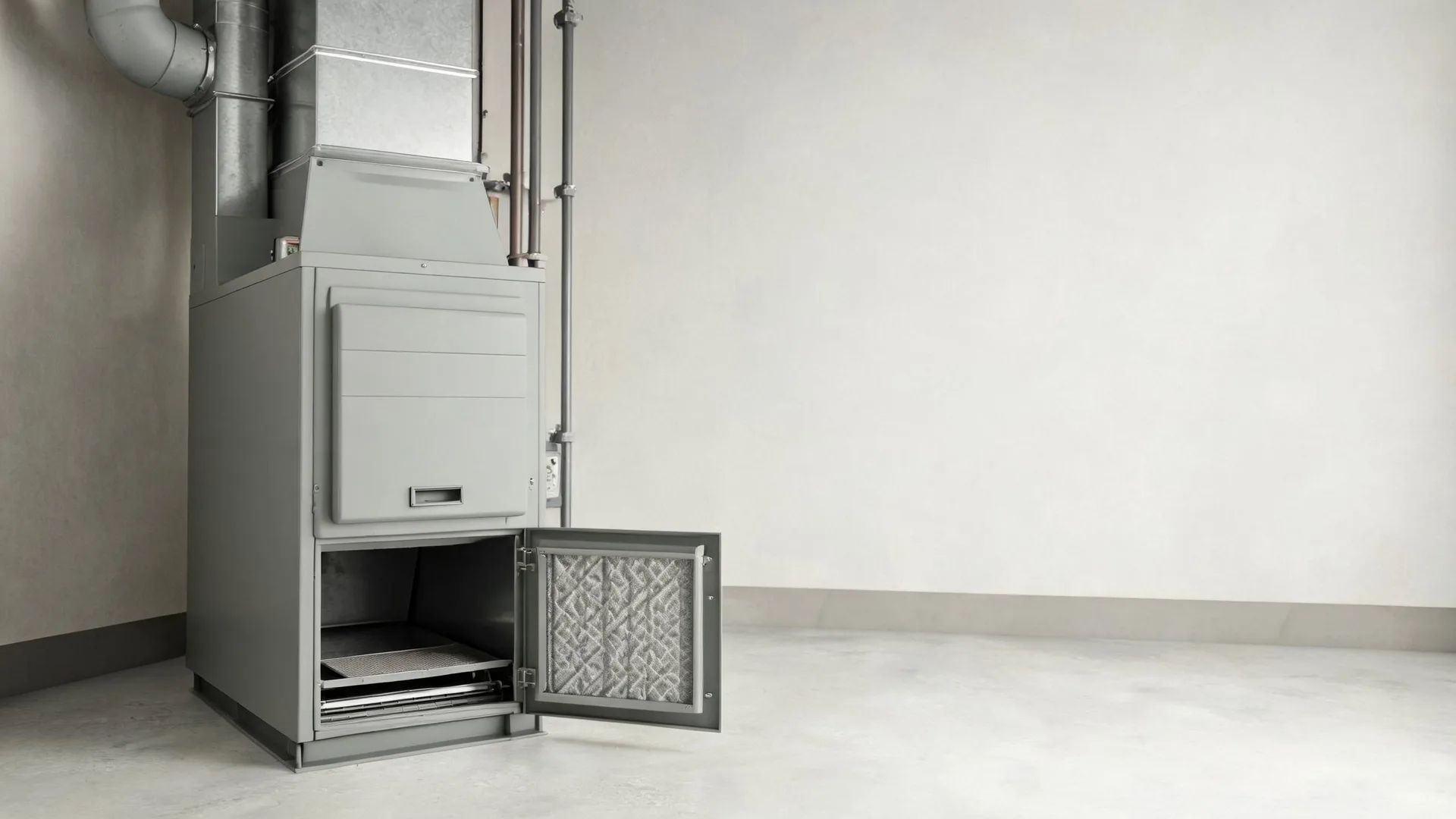
A furnace doesn't have a drain or a coil to worry about
A furnace moves heat, not moisture. No condensate line underneath to clog. No coil sitting in the airflow to grow mold. The filter is the part of this job that belongs to the furnace.
Takes about a minute. No obligation.
A furnace in Clark County runs about eight months a year, October through May. That leaves summer wide open, and that's the right time for its one yearly check. A technician looks at the igniter, the flame sensor and the burner while the furnace sits idle, so nothing shows up the hard way once the cold hits. Overnight lows average 23°F here through December, January and February. That's no night to find out the igniter is failing. One visit, before the season starts, takes care of it.
October is when furnaces in Clark County start working for real.
Get the check done in September, before the furnace is the only thing keeping the house warm.


A furnace usually gives some warning before it quits. The burner flame should burn blue. If it's yellow or flickering, it's not burning clean. A short cycle, where the furnace fires up and shuts off again in a few minutes, means a flame sensor is losing its read or a filter is choking airflow. A blower running louder than usual, or a rattle that only shows up when the furnace kicks on, is worth checking before it turns into a worn bearing or a loose panel. Heavier dust than normal, or a faint burning smell the first few times it runs each fall, is reason enough to get it looked at instead of waiting it out.
71.4 percent of homes in Clark County heat with gas. A gas furnace has a burner and a flue that sends exhaust outside. Both need a technician to look them over, not just a new filter. That's what this visit covers, while the furnace is sitting idle anyway.
Find a contractorA filter is the one part of this job that's yours. Check it monthly once the furnace is running every day, and swap it when the pleats are gray instead of white. A dirty filter chokes airflow, and a furnace starved for air runs hotter and longer than it should. Keep vents and returns clear of furniture and rugs so air can actually get back to the furnace. Walk past the flue pipe now and then and make sure nothing's stacked against it. Past that, leave the burner and the flame sensor to the visit that's already scheduled.
A furnace moves heat, not moisture. No condensate line underneath to clog. No coil sitting in the airflow to grow mold. The filter is the part of this job that belongs to the furnace.
All the air the furnace heats passes through that filter first. Let it load up with dust and the blower has to pull harder to move the same air. That runs the furnace hotter and longer than it's built for. A clean filter keeps it breathing easy all winter.
Skip the visit and the furnace doesn't fail the next morning. What changes is what's quietly gotten worse underneath. A flame sensor coated with a thin film of oxidation will still light the burner, just less reliably each time it fires, until one morning it doesn't. A cracked heat exchanger doesn't announce itself either, and it's exactly the kind of thing a technician is checking for when the furnace is apart and the panels are off. The burner keeps running without the check, but it's running on last year's adjustment, not a fresh one. None of that shows up as a problem on a mild day. It shows up on the kind of morning that doesn't give you time to deal with it.
A real tune-up means the furnace comes apart. It's not a quick glance. The burner assembly comes out so the soot and scale from a season of use can be cleaned off, and the flame gets reset to the right shade of blue. The flame sensor gets cleaned or swapped out. That's the part most likely to leave a furnace that won't stay lit. The heat exchanger gets checked for cracks. That matters more than anything else on the list, since it's what keeps exhaust out of the air inside the house. The igniter gets tested under load, not just eyeballed. A weak igniter can still glow without putting out enough heat to light the burner every time. The blower motor and wheel get checked too, since dust buildup there throws them off balance. And the gas pressure gets checked, so the furnace burns fuel at the rate it's built for, not too rich, not too lean. That's the actual work. Swapping a filter isn't a tune-up.