





Three illuminated two-story brick houses on a tree-lined residential street photographed at twilight, with warm window light and landscape uplighting visible against a deep blue evening sky.

Furnace Installation in Sandusky, OH

Tell us about the job

Takes about a minute. No obligation.

New system or replacementFurnace or heatingErie County, OH
Step 1 of 2

What ZIP code is the job in?

Most homes in Erie County run on utility gas, 64.2 percent of them. If the old furnace is gas, putting in another gas furnace keeps things simple. Switching to electric means rethinking the wiring, and sometimes the ductwork sizing too. For most houses here, gas in means gas out.

8 months
October through May, your furnace is on duty
23°F
the average winter night it heats against
64%
of homes here heat with gas, so most furnaces here burn gas
80% AFUE
the federal minimum any new unit must meet
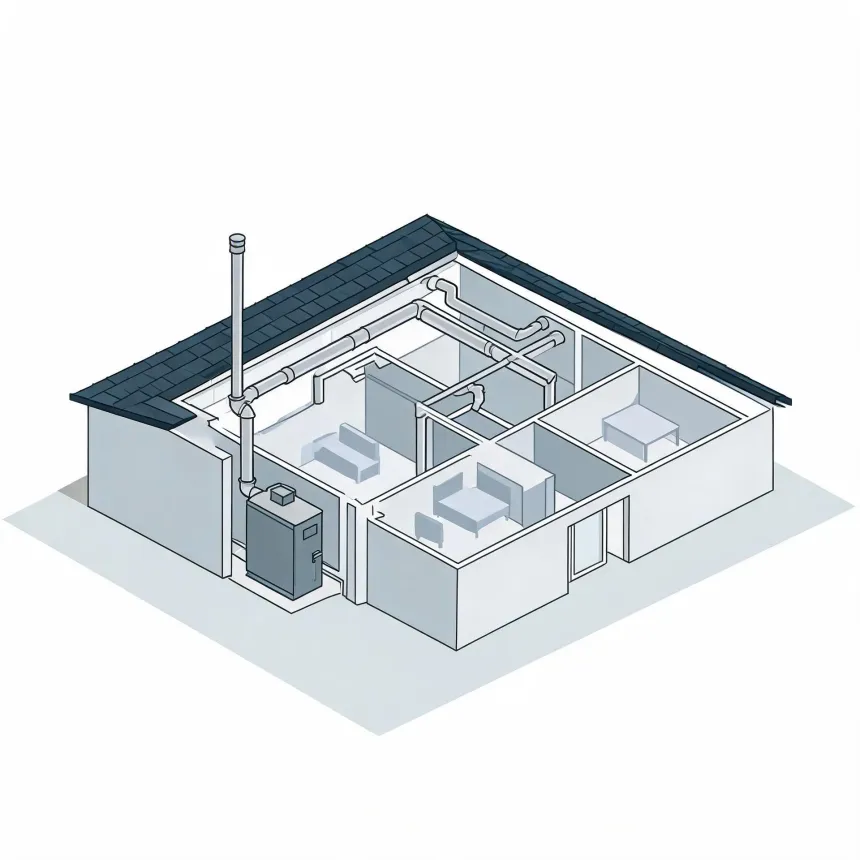
Isometric line illustration of a cutaway single-story house showing interior rooms with furniture, ceiling ductwork, and an exterior furnace unit with a tall flue pipe.
Your furnace works hardest from November through March.

NOAA nClimDiv, 1991–2020 normals

Ohio gas ran $12.89 per million Btu in 2024.

At that price, a standard-efficiency furnace sized right for the house is the way to go. No need to size up chasing savings. The fuel cost won't pay that back.

Eight months of heat and 23°F nights. Nothing a standard furnace can't handle.

Heat runs October through May
Winter nights average 23°F
Climate zone 5A
Older homes need a furnace sized for the house they're inHalf the homes in Erie County went up in 1968 or earlier.

The furnace itself is only part of what you're paying for. Venting is often the bigger swing. A furnace that vents out a sidewall through PVC needs new pipe run to the outside wall, sometimes through framing that wasn't built with a penetration in mind, and that's labor the furnace price doesn't cover. Ductwork is another variable. If the new unit's blower compartment sits a different size than the old one, the transition piece connecting it to your existing ducts has to be built for that furnace, not pulled off a shelf. Electrical can matter too, since a furnace with a variable-speed blower draws differently than a single-speed one and may ask more of the circuit feeding it. None of this shows up in the sticker price of the equipment. It shows up in what the house already has and what the new furnace needs from it.

Put the furnace in before October, not after

Heat runs here from October through May, eight months straight. September is the month before all that starts. That's the time to put in a new furnace, while there's no cold night yet asking anything of it. Get it done then, and the work happens on your schedule. Wait, and it happens on whatever's left of the contractor's schedule once winter sets in.

Find a contractor
A gray high-efficiency gas furnace installed in an unfinished basement, surrounded by gas lines, a condensate drain, and sheet-metal ductwork.

Sized for this house, not a newer one

A load calculation tells the installer what this house needs. Not the house down the street. Not the one built last year with different ductwork and insulation. Half the homes in Erie County went up in 1968 or earlier. A furnace going into one of them has to match the rooms it's actually heating. Get that number right and sizing stops being a guess.

Ask what AFUE rating each quote is built around

Contractors can quote the same furnace size and mean different things by efficient. Ask for the AFUE number in writing, not just the phrase 'high efficiency,' and ask what venting that rating requires. A furnace rated near the top of the range usually vents through PVC pipe out a sidewall instead of up a metal flue, which changes where it can sit in the house.

Ask who pulls the permit and does the load calculation

A load calculation and a permit aren't paperwork to skip for a faster install. If a contractor quotes a system without walking the house first, ask how they arrived at that size. The answer tells you whether you're being sized for this house or sold whatever's on the truck.

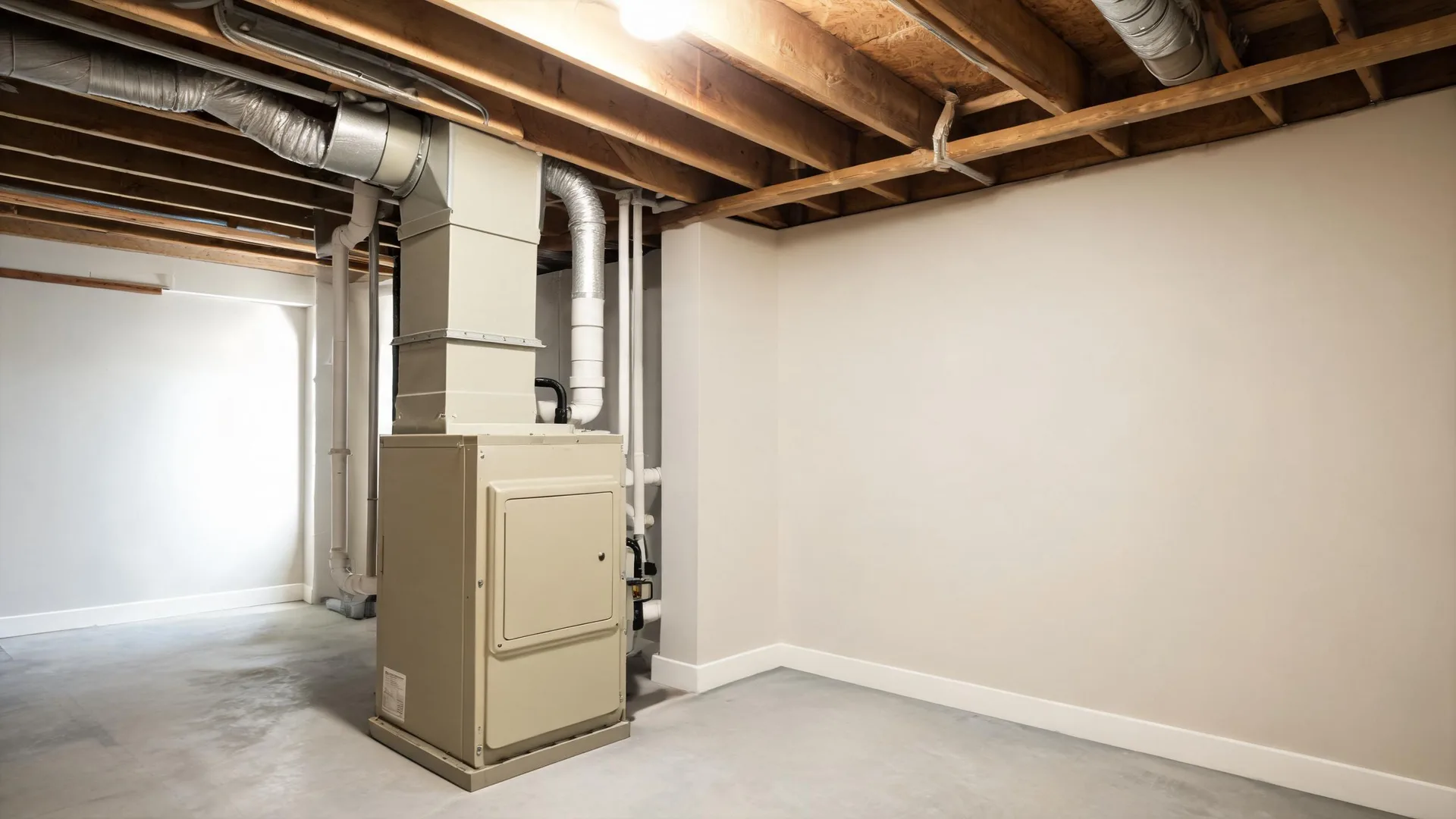
An unfinished basement featuring concrete block walls, exposed floor joists, and a metal forced-air furnace with ductwork near a central pillar.

A high-efficiency gas furnace would save about $150 a year to run in Erie County compared with a gas furnace.

  • A high-efficiency gas furnace$670 a year
  • A gas furnace$820 a year

Estimates for a typical Erie County home, from EIA household energy data, Ohio fuel prices and NOAA climate normals. Your home will differ.

Install day starts with the old furnace coming out, along with any venting and ductwork that doesn't carry over to the new unit. If the new furnace has a different efficiency rating, the venting often changes too, metal flue swapped for PVC run out a sidewall, or the other way around. The gas line gets connected and pressure tested before anything fires up. Ductwork ties in, sometimes with a new transition piece if the new furnace's dimensions don't match the old one. Once it's running, gas pressure, airflow, and temperature rise all get checked against that furnace's own specs, not a general rule of thumb. Last step is a carbon monoxide test on the heat exchanger. On a gas furnace, that's the one thing that has to be right before the job gets signed off.