







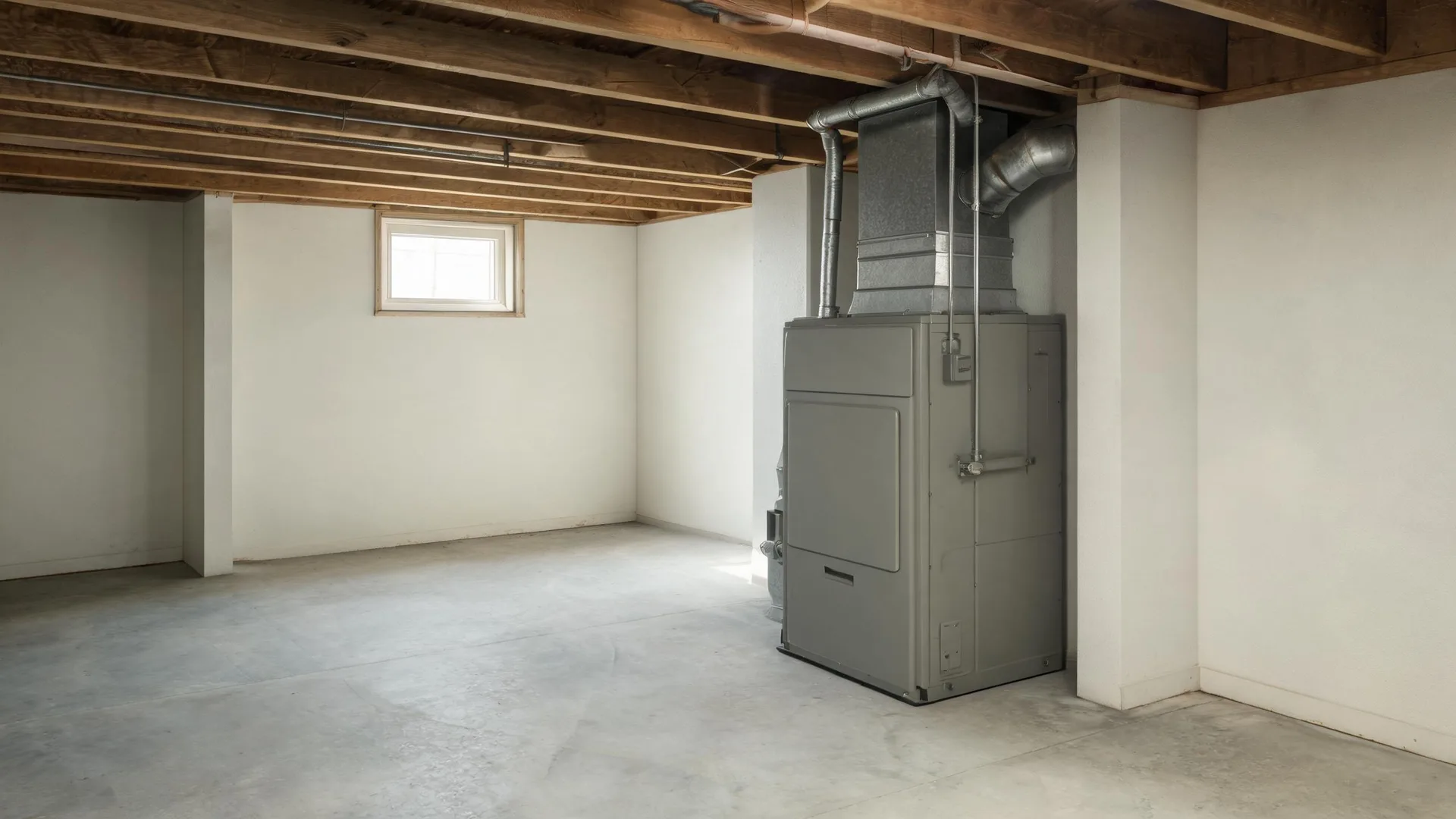
An unfinished basement containing a gray HVAC furnace with ductwork, exposed wooden joists, a concrete floor, and miscellaneous clutter in one corner.

Furnace Installation in Mentor, OH

Tell us about the job

Takes about a minute. No obligation.

New system or replacementFurnace or heatingLake County, OH
Step 1 of 2

What ZIP code is the job in?

Gas heats 80.3% of occupied homes in Lake County, which makes it the fuel most furnaces here are built to use. If your old furnace burned gas, replacing it with another gas furnace is usually the simplest path, since the gas line and venting are already in place. Electricity heats 16.1% of homes in the county, and those houses need a different kind of furnace entirely. Fuel oil and propane show up occasionally, but gas is what a new installation in Mentor is most likely matching.

8 months
October through May, your furnace is on duty
23°F
the average winter night it heats against
80%
of homes here heat with gas, so most furnaces here burn gas
80% AFUE
the federal minimum any new unit must meet
Isometric grayscale illustration of a cutaway house showing an interior furnace with a tall flue pipe and ductwork running to rooms under a partially lifted roof.
Your furnace works hardest from November through March.

NOAA nClimDiv, 1991–2020 normals

A gas furnace sized right for the house runs the same in Mentor as anywhere else in Ohio.

No local reason to size up. No reason to chase a higher efficiency rating than the job calls for.

What changes here isn't the furnace, it's what happens when the power goes out

107 severe weather events from 2015 to 2024
18% of homes statewide lost power a day or more in 2024
82 damaging wind events from 2015 to 2024
Replace it in September, before the heat goes onMentor homes turn the heat on in October. It runs through May.

Mentor sits in climate zone 5A, a cool zone where heating carries most of the load through the year. Any furnace installed here has to clear the federal minimum of 80.0 percent AFUE, the standard that applies to non-weatherized gas furnaces built since November 2015. That floor holds for a few more years yet, then rises to 95.0 percent for furnaces built after it. A furnace only has to meet the standard in place when it was built, so today you can still choose between a standard-efficiency model and a high-efficiency one without falling short of what the zone requires.

Match the furnace to the house, not the other way around

Half the homes in Lake County went up in 1972 or earlier. A furnace going into a house that old has to work with the duct runs, the venting, and the layout that's already there. Not some standard the house never had. Get it sized to the house you've actually got.

Find a contractor
A man in a cap, dark jacket and tan pants carries a worn duffel bag as he climbs porch steps toward a dark blue front door beside a potted shrub.
A gray residential gas furnace installed in an unfinished basement, surrounded by ductwork, a metal flue pipe, and a gas supply line.

Eight months on

Heat runs about eight months a year here. Even in December, January and February, overnight lows average 23°F. So the furnace is working most of the year, not sitting idle. A standard furnace, sized right for the house, handles that kind of run time fine. Nothing about the cold here calls for anything more than a correctly sized unit.

Ask for a load calculation, not a match to the old unit

A furnace should be sized to the house. The insulation, the windows, the square footage. Not to the BTU rating on the old unit. Someone sized that one too, a long time ago, under conditions nobody can check now.

Ask what the venting change means for the installation

A high-efficiency furnace vents differently than a standard one. Often through a different wall, or a different pipe altogether. Change the efficiency and the vent path usually has to change with it. That's more work than just swapping the unit.

An unfinished basement containing a gas furnace with ductwork in the foreground and miscellaneous stored items along the far concrete wall.

A high-efficiency gas furnace would save about $150 a year to run in Lake County compared with a gas furnace.

  • A high-efficiency gas furnace$690 a year
  • A gas furnace$840 a year

Estimates for a typical Lake County home, from EIA household energy data, Ohio fuel prices and NOAA climate normals. Your home will differ.

Installation day starts with the old furnace coming out, and that alone takes a couple of hours once the gas line, ductwork and venting are disconnected. The new unit gets set in place, and the crew builds the transitions, the sheet metal pieces that connect the furnace to your existing ductwork, since no furnace arrives fitted to the duct opening already there. Gas line, venting and electrical get connected next, and if the new furnace vents differently than the old one, this is where that shows up as real work rather than a quick swap. Once it's hooked up, it gets fired and run through a full cycle while the tech checks the gas pressure, the temperature rise across the heat exchanger, and the flue draft. The system gets left running, not just switched on and left, so any problem shows itself before the crew is gone.