






A row of dark-painted single-story cottages with gabled shingle roofs behind a mowed lawn, a trimmed hedge in the left foreground and large leafy trees overhead under an overcast sky.

Furnace Installation in Mason, OH

Tell us about the job

Takes about a minute. No obligation.

New system or replacementFurnace or heatingWarren County, OH
Step 1 of 2

What ZIP code is the job in?

A furnace that's too big for the house cycles on, heats things up fast, then shuts off before it's pulled the moisture out of the air or warmed the walls and furniture. That short cycling wears out the igniter and the blower motor sooner than they should quit. The house still ends up feeling drafty even with warm air blowing. Too small, and it runs constantly on the coldest days and still can't hold the temperature on the thermostat. The right size comes from a room by room heat loss calculation. Not the square footage of the house, and not whatever the old furnace happened to be. Doing it right means measuring the windows, the insulation, the ceiling height, how the walls are built, then adding up how much heat the house actually loses on a cold day. That number is what decides which furnace goes in. Not a guess.

7 months
October through April, your furnace is on duty
25°F
the average winter night it heats against
53%
of homes here heat with gas, so most furnaces here burn gas
80% AFUE
the federal minimum any new unit must meet
Isometric cutaway illustration of a single-story house with a dark shingled roof, showing interior rooms with furniture and a furnace connected to ductwork and a flue pipe extending above the roof.
Your furnace works hardest from November through March.

NOAA nClimDiv, 1991–2020 normals

Gas in Ohio ran $12.89 per million Btu in 2024, cheaper than a lot of the country.

A high-efficiency furnace earns back its higher price slower here, so weigh how well it will hold up over the rating on the sticker.

Most of Mason already heats with gas, so a new furnace usually just replaces what's there

53.2% of homes heat with gas
Heat runs October through April
Winter nights average 25°F
Get it done before OctoberFurnaces in Mason run October through April. That's seven months of the year.

Since the payback stretches out here, the better question is which standard-efficiency unit is built to last, not which one squeezes out a few more points of AFUE. Ask the contractor about the warranty on the heat exchanger specifically, since that part is expensive to replace and it defines how long the furnace lives. Ask too how long parts take to get when something fails, since a furnace sitting idle waiting on a part is worse here than one running a few points below the top of the AFUE range. A furnace that starts reliably every winter and keeps starting year after year is worth more here than one that trims a few dollars off a gas bill that's already low.

Any furnace installed here has to hit 80 percent AFUE

Warren County is in zone 4A, and federal rules set the minimum. Furnaces built today have to hit 80 percent AFUE. That stays the rule until December 2028, when it jumps to 95 percent. Any new install now has to meet the current standard, at least.

Find a contractor
A man in a cap, dark jacket and tan work pants walks up porch steps toward a dark blue paneled door, carrying a canvas tool bag with tools in its outer pockets, beside a potted shrub.
A gas furnace with attached ductwork, gas piping, and condensate lines installed in a concrete-block basement.

The furnace is the easy part to price

The furnace itself is only part of the cost. Venting is the other part. A standard furnace vents through PVC pipe, usually straight out a side wall. That's a simple run. A high-efficiency furnace sometimes needs the pipe routed further to reach a spot where it can vent. That extra run drives up labor before the furnace even gets bolted in. Ductwork is the other variable. If the existing ducts are in decent shape and sized right for the new furnace's blower, the installer reuses them. If a duct run is crushed, undersized, or built for a furnace that moved a lot more air, modifying it adds to the job. The furnace's size matters too. A bigger unit built for a bigger heat loss costs more than a smaller one. That's one more reason the room by room calculation comes before any quote.

Ask for the heat loss numbers in writing

Any contractor can tell you a furnace size. Ask to see the room by room calculation that got them there, with the inputs for your windows, insulation, and square footage written down. If they can't produce the numbers, they guessed, and a guessed size is either going to short cycle or run flat out on the coldest night.

Ask what happens to the old ductwork

A furnace quote that doesn't mention your existing ducts is an incomplete quote. Have the contractor walk the duct runs with you and say plainly whether they're being reused as is, modified, or replaced, and why. That answer changes the price and it changes how evenly the heat reaches every room.

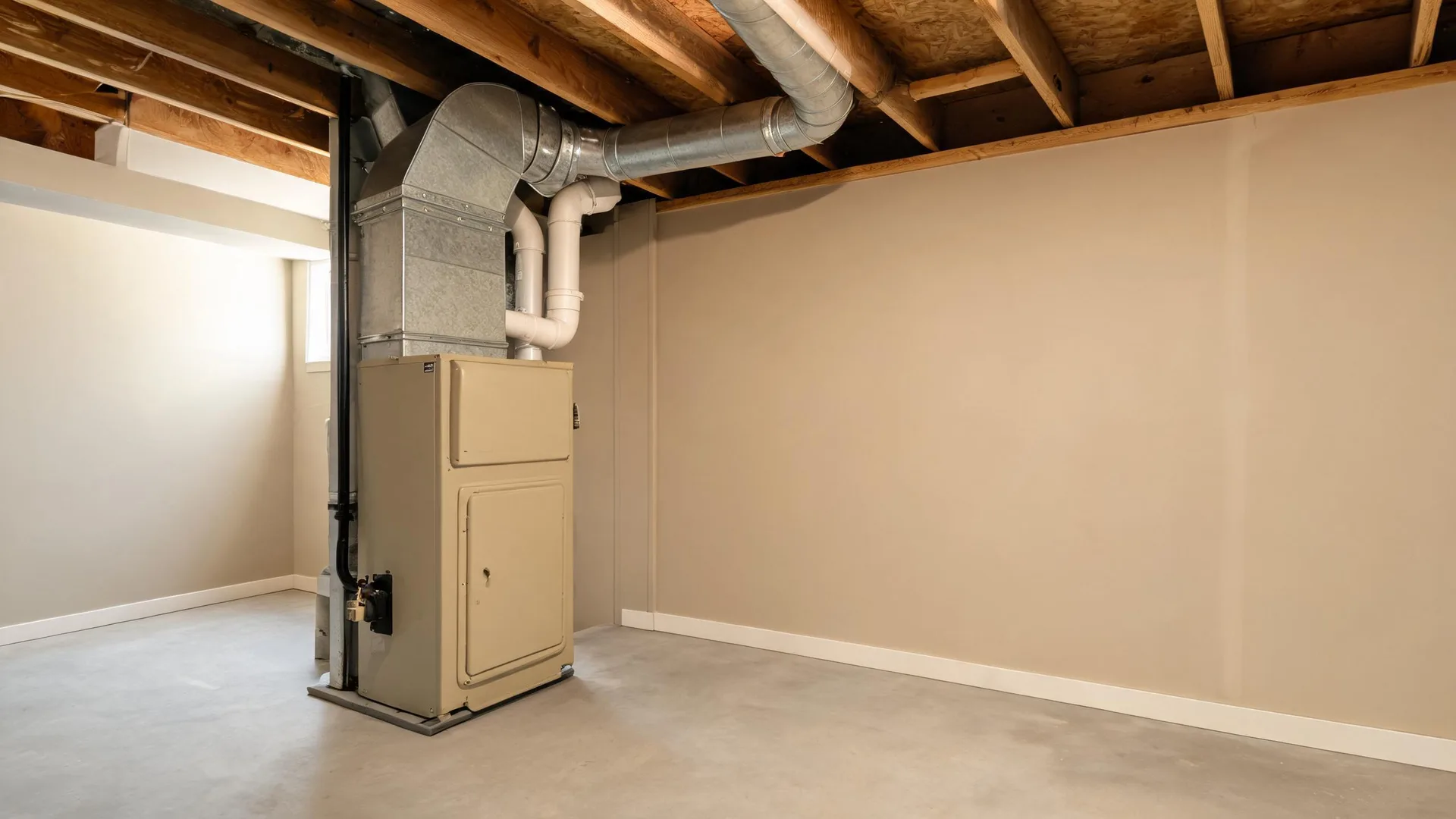
An unfinished basement containing a gas furnace with ductwork in the foreground and miscellaneous stored items along the far concrete wall.

A high-efficiency gas furnace would save about $130 a year to run in Warren County compared with a gas furnace.

  • A high-efficiency gas furnace$590 a year
  • A gas furnace$720 a year

Estimates for a typical Warren County home, from EIA household energy data, Ohio fuel prices and NOAA climate normals. Your home will differ.

Installation day starts with the old furnace coming out, and the ductwork and gas line get inspected before the new one goes in. The installer sets the new furnace, connects the supply and return plenums, and runs the venting to the spot the contractor scoped out ahead of time. Gas gets hooked up and pressure tested before anything is fired on. Electrical comes next, tying in the blower and the control board, along with the thermostat wiring if the new furnace uses a different one than the old setup called for. Once it's running, the installer checks the gas pressure, the temperature rise across the furnace, and the airflow at the vents to confirm the furnace is actually performing the way the heat loss calculation said it should. That last check is the one that matters most, since a furnace that's sized right on paper still needs to be set up right in your house to heat it evenly.