






An empty unfinished basement containing a forced-air furnace with overhead ductwork, exposed ceiling joists, and a single hanging light bulb.

Furnace Installation in Hamilton, OH

Tell us about the job

Takes about a minute. No obligation.

New system or replacementFurnace or heatingButler County, OH
Step 1 of 2

What ZIP code is the job in?

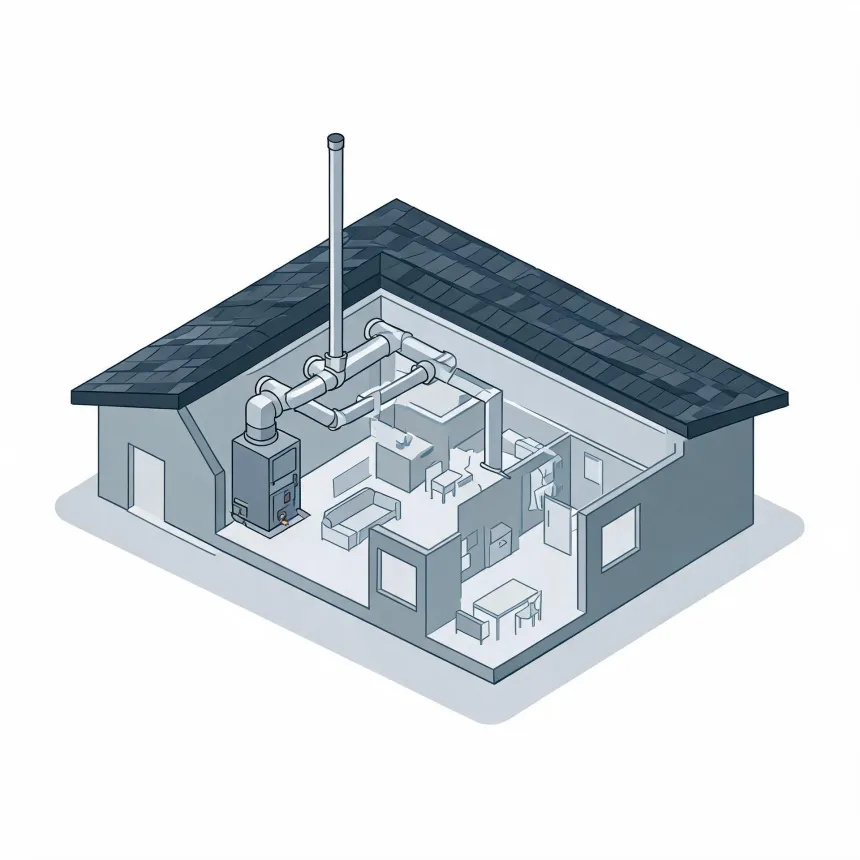
Ask what size furnace is being proposed and how they landed on that number. It should come from a load calculation on the house, not just matching the old unit. Ask what happens to the vent pipe. A high efficiency furnace vents through PVC out a sidewall instead of up a chimney, and that changes what has to get run. Ask about the gas line and electrical connection too, since not every furnace draws power or gas the same way the old one did. And ask who pulls the permit. A contractor who handles that without being asked is showing how they run the rest of the job.

7 months
October through April, your furnace is on duty
24°F
the average winter night it heats against
52%
of homes here heat with gas, so most furnaces here burn gas
80% AFUE
the federal minimum any new unit must meet
Isometric cutaway illustration of a single-story house showing interior rooms with furniture, a furnace unit with connected ductwork and a tall vertical flue pipe extending above the dark shingled roof.
Your furnace works hardest from November through March.

NOAA nClimDiv, 1991–2020 normals

A furnace too big for the house cycles on and off instead of running a steady stretch.

Short cycling wears out the heat exchanger and leaves rooms farther from the furnace feeling cold even though the thermostat reads warm.

Seven months of heat start in October. September is when you replace it.

Heat runs October through April
Climate zone 4A
Winter nights average 24°F
The priciest furnace isn't always the right oneGas in Ohio ran $12.89 per million Btu in 2024. That's cheap. So the top-efficiency furnace takes years to pay back the extra cost over a standard model.

A little over half the houses in Butler County run on gas heat. That's why most furnace installs here are gas to gas, pulling the old unit and setting a new one on the same line. Close to four in ten homes run on electric, usually a heat pump or electric furnace, and that's a different job with different venting and wiring. If the house already has a gas line run to the furnace, keeping it gas is almost always the simpler path. Switching fuels on a replacement means new venting, new gas or electrical work, and a contractor should walk through why that switch is worth it before anyone signs off on it.

Replace it before the season

Replace it before the season starts, so it happens on your schedule, not in a hurry.

Find a contractor
A man in a gray t-shirt and tan work pants, seen from behind, climbs concrete steps toward a dark blue front door while carrying a canvas tool bag, with a potted shrub beside the entry.
A gray gas furnace with attached ductwork and piping installed in an unfinished concrete basement.

The old furnace doesn't just get switched off

The old furnace gets disconnected from the gas line, the vent pipe, and the ductwork, then carried out. If it vents through a chimney, that liner was sized for the old furnace's exhaust. A new high efficiency furnace won't use it at all, so the liner gets capped or left for something else to vent through. The duct connection at the plenum usually gets cut down and refitted to match the new furnace's dimensions. They're rarely the same size as what's coming out. Whoever hauls away the old furnace should take the whole cabinet, not just the parts that failed. An old heat exchanger can have hairline cracks that never caused a problem. No reason to find out later whether this one did.

AFUE tells you what's lost up the vent

The percentage on the label is how much of the gas turns into heat in the house. The rest goes out the vent pipe. It's measured under set lab conditions, so the furnace won't hit that exact number every day. But it's the one figure that lets you compare models side by side.

A few points of rating is a small difference to chase

Furnaces sold today cluster closer together than the label makes them look. A few points higher changes the gas bill some. It doesn't change how evenly the house heats or how long the furnace lasts. Weigh that against what gas costs to run over the years the furnace will be in the house, instead of just picking the highest number on the shelf.

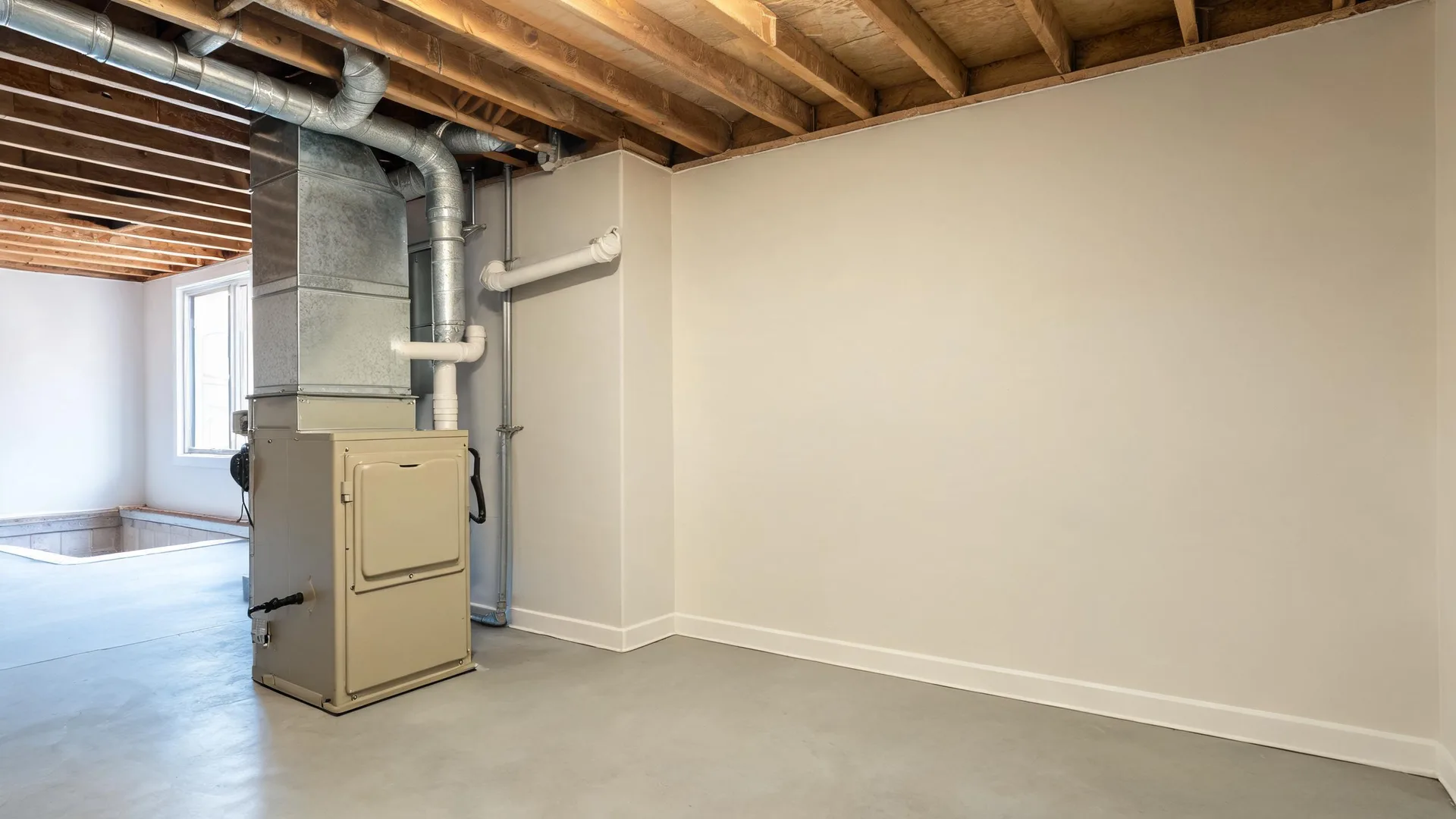
An unfinished basement containing a metal furnace with ductwork, exposed wooden joists on the ceiling, cardboard boxes, a coiled cable, and a single hanging incandescent bulb.

A high-efficiency gas furnace would save about $130 a year to run in Butler County compared with a gas furnace.

  • A high-efficiency gas furnace$590 a year
  • A gas furnace$720 a year

Estimates for a typical Butler County home, from EIA household energy data, Ohio fuel prices and NOAA climate normals. Your home will differ.

Install day starts with the old furnace coming out. Duct, gas, and vent connections get cut loose. Once the space is open, the new cabinet goes in, gets leveled, and the plenum and duct collar get built back to fit it. The gas line gets connected and pressure tested before anything fires up. A leak found after the fact means pulling the furnace back out, so that check happens first. On a high efficiency unit, the intake and exhaust PVC run out to the sidewall. That's a few hours of work on its own, cutting the wall and sealing it against weather. Electrical is usually just a switch and a low voltage thermostat wire, but it still gets checked against what the new furnace draws. Before anyone leaves, the furnace should run a full cycle. Someone checks the flue for backdrafting and the burners for a clean flame. Not just a quick power-on to see that it starts.