





A row of dark-sided single-story houses with gray shingled roofs behind a trimmed hedge, with mown lawn and large deciduous trees under an overcast sky.

Furnace Installation in Delaware, OH

Tell us about the job

Takes about a minute. No obligation.

New system or replacementFurnace or heatingDelaware County, OH
Step 1 of 2

What ZIP code is the job in?

Most homes in Delaware County heat with gas, 67.6 percent of them. If your house already has a gas line and a flue running out through the roof or a side wall, replacing that furnace with another gas furnace is the straightforward job. The venting is already there, the gas line is already sized for it, and the contractor is matching what's already in place rather than building a new setup. Electricity is a distant second at 24.3 percent, and LP gas and fuel oil make up the rest. If your home falls into one of those smaller groups, say so early, because the installation looks different from the common case.

8 months
October through May, your furnace is on duty
23°F
the average winter night it heats against
68%
of homes here heat with gas, so most furnaces here burn gas
80% AFUE
the federal minimum any new unit must meet
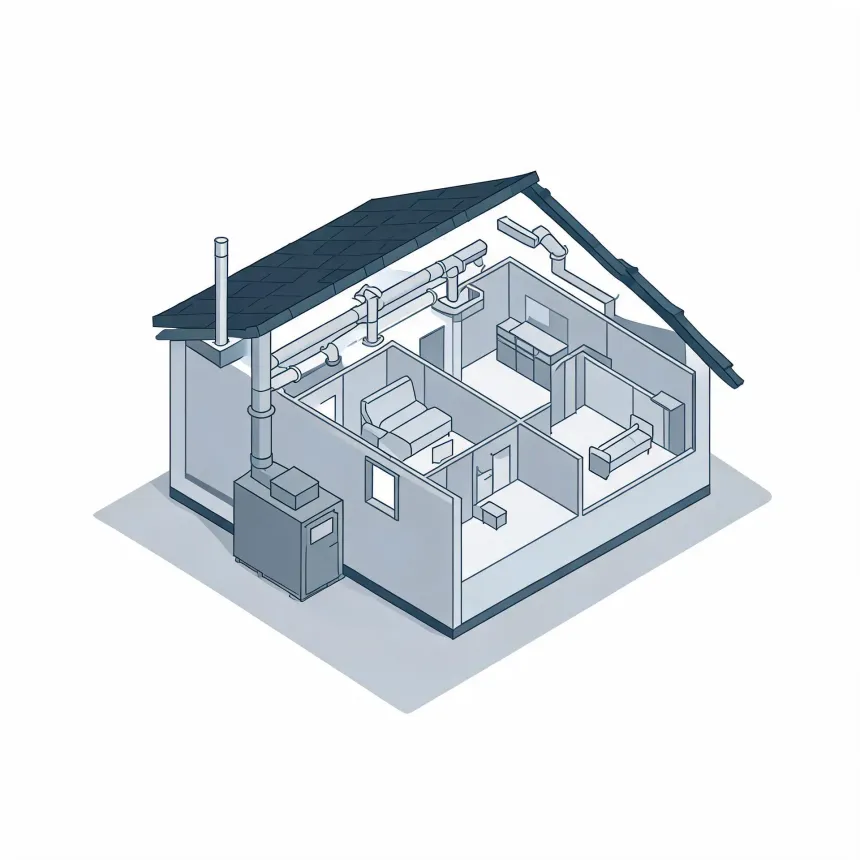
Isometric line illustration of a cutaway single-story house showing interior rooms with furniture, ceiling ductwork, a chimney flue, and a furnace unit outside the exterior wall.
Your furnace works hardest from November through March.

NOAA nClimDiv, 1991–2020 normals

September is the month before heat season starts in Delaware County.

A struggling furnace shows it in October. Get the new one in now, while there's still a choice.

Eight months of heat and nights down near 23°F. A standard furnace handles both just fine.

Heat runs October through May
Winter nights average 23°F
Climate zone 5A
Nothing about Delaware County calls for anything but a standard furnaceNatural gas cost $12.89 per million Btu in Ohio last year. A standard furnace handles that job just fine.

AFUE is the share of the fuel that actually turns into heat in your house, with the rest going out the flue as exhaust. A furnace at the federal minimum vents that exhaust through a metal flue because it's still hot enough to need it. A high-efficiency furnace cools the exhaust so much before it leaves the heat exchanger that it vents through PVC pipe instead, since the gas is no longer hot enough to need metal. That difference in AFUE shows up on the gas bill every month the furnace runs, not just on the coldest days. It has nothing to do with how warm the house gets or how fast, since both furnaces get sized to the same heat loss. The rating only tells you how much fuel it burns to deliver that heat, not how much heat it delivers.

A standard furnace is built for what Delaware County sees

Delaware County gets rough weather. Wind, winter storms, the occasional tornado. Last year 18% of Ohio households lost power for a full day or more. None of that changes what furnace is needed. A standard-efficiency unit built for this zone handles what the weather here brings. Thinking about a generator or battery backup for outages? That's a separate conversation from sizing the furnace.

Find a contractor
A man in a cap, dusty dark shirt and work pants walks up stone steps toward a dark navy front door, carrying a worn canvas tool bag, with a potted shrub beside the entry.
A gas furnace with attached ductwork, gas piping, and condensate lines installed in a concrete-block basement.

A furnace wears by the cycle, not by the calendar

The inducer motor spins up every time the burner fires. It clears the heat exchanger before ignition, then shuts off when the call for heat ends. The blower runs on its own schedule, moving air as long as the thermostat asks for it. Both ride on bearings, and bearings wear by hours run, not years on the wall. The igniter wears a different way. It heats up to ignition temperature and cools back down every single cycle, and that back-and-forth stress is what cracks it. None of these parts care how old the furnace is. They care how many times they've fired. That's why the burner, inducer and igniter need a look before the season starts, not after one of them quits on a cold morning.

The old furnace comes out before the new one goes in

A furnace swap isn't the new unit sitting down next to the old one. The old cabinet comes out first, usually in one piece or close to it. That means disconnecting the gas line and pulling the vent connection before anything new goes in. The duct collar and gas line stay put, ready to hook up to the replacement.

What's inside doesn't go in the trash

A furnace cabinet is mostly sheet metal. Inside, the heat exchanger, blower wheel and motor are steel, copper and aluminum. That's worth something, so most of it ends up at a scrap yard or recycler instead of a landfill. Ask what happens to the old unit if it matters to you.

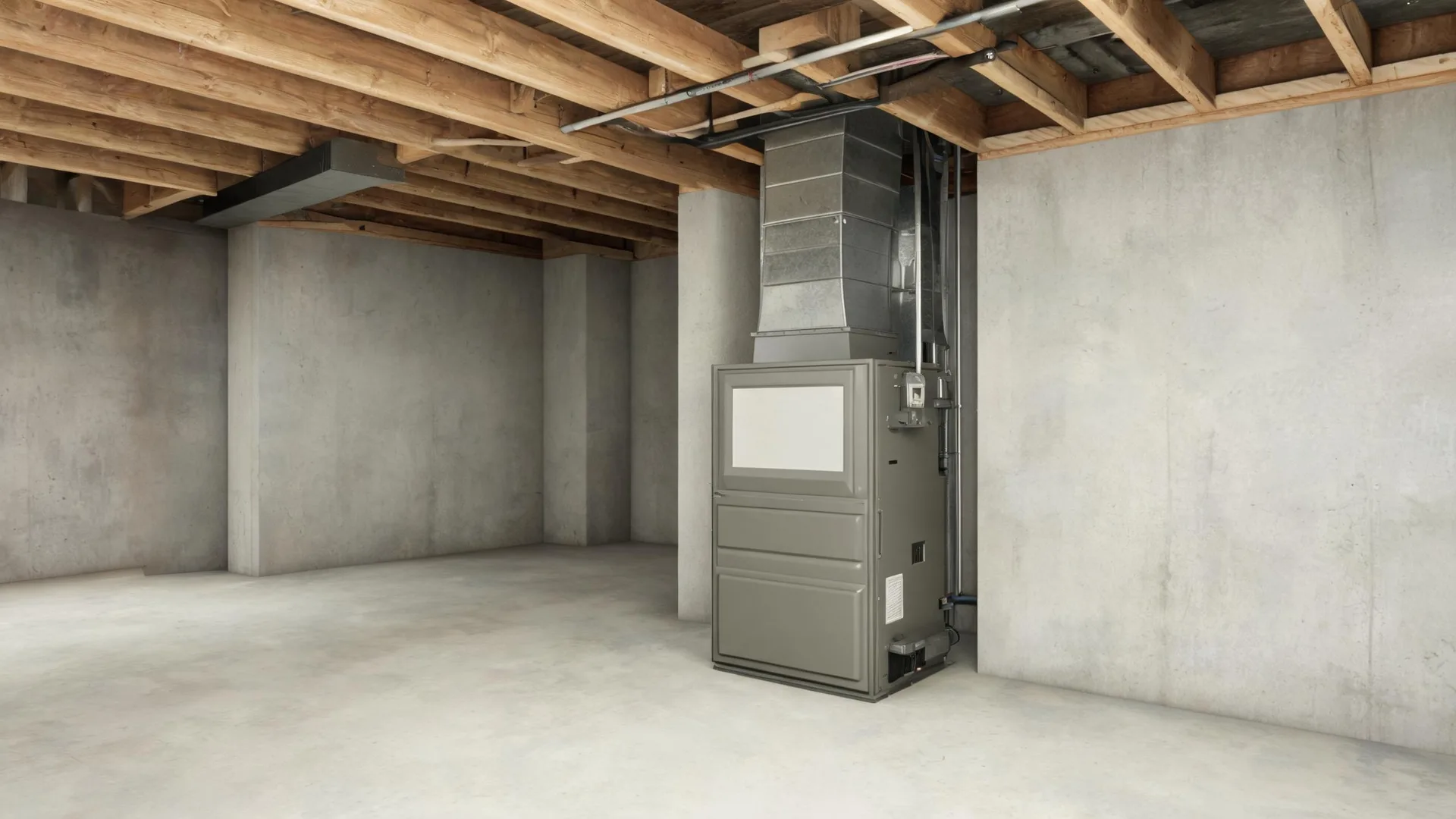
An unfinished basement featuring concrete block walls, exposed floor joists, a bare concrete floor, and a forced-air furnace with a large metal exhaust duct in the corner.

A high-efficiency gas furnace would save about $130 a year to run in Delaware County compared with a gas furnace.

  • A high-efficiency gas furnace$650 a year
  • A gas furnace$780 a year

Estimates for a typical Delaware County home, from EIA household energy data, Ohio fuel prices and NOAA climate normals. Your home will differ.

Gas and power to the furnace circuit get shut off before anything gets disconnected. Once the old cabinet is out, the new one goes in level, and the gas line, duct collar and vent connection all hook up to it. Before anything gets closed up, the contractor runs a combustion test, checking gas pressure and flue draft, to make sure the furnace burns clean and vents right. The thermostat gets checked, or swapped out if the new furnace needs a different one. Then it runs through a full cycle, heat on, blower running, heat off, so it can be felt working before the crew leaves. Most of the day goes into the parts that don't show, the testing and sealing that make sure the furnace does its job, not just sits where the old one used to be.