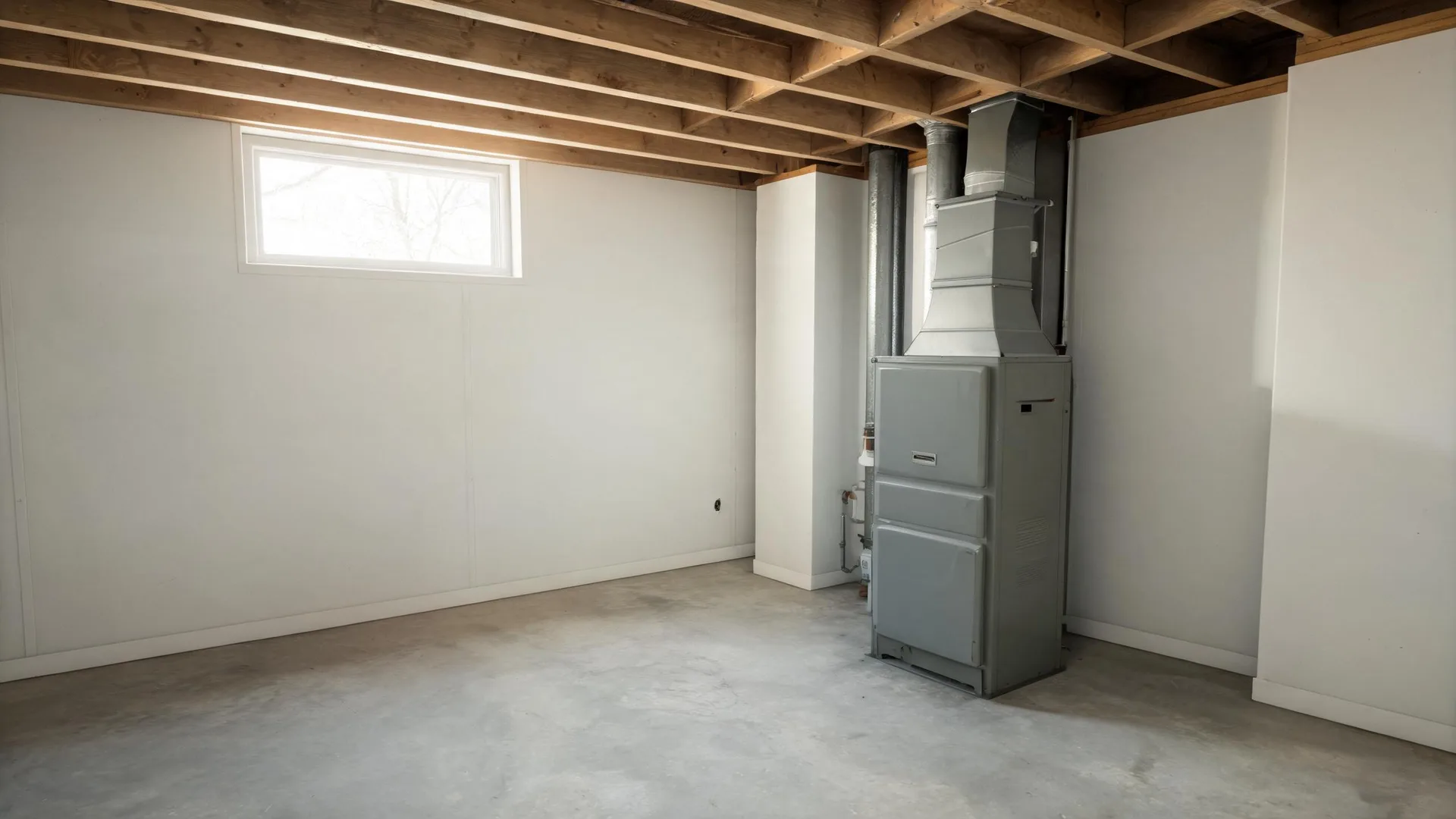
An unfinished basement interior featuring a large metal furnace unit, exposed ceiling joists, concrete walls, and scattered boxes and cables on the floor.

Furnace Installation in Dayton, OH

Tell us about the job

Takes about a minute. No obligation.

New system or replacementFurnace or heatingMontgomery County, OH
Step 1 of 2

What ZIP code is the job in?

Montgomery County sees real storm numbers

The county recorded 267 severe weather events between 2015 and 2024, including 188 damaging wind events, 60 hail events and 10 tornadoes. Winter storms with heavy snow and ice hit 8 times in that same stretch.
Power doesn't always hold through it

Almost one in five Ohio households went at least 24 hours without power in 2024. A furnace with no electricity won't fire, even if the gas line is fine, so an outage can mean no heat right when a winter storm causes it.

8 months
October through May, your furnace is on duty
24°F
the average winter night it heats against
63%
of homes here heat with gas, so most furnaces here burn gas
80% AFUE
the federal minimum any new unit must meet
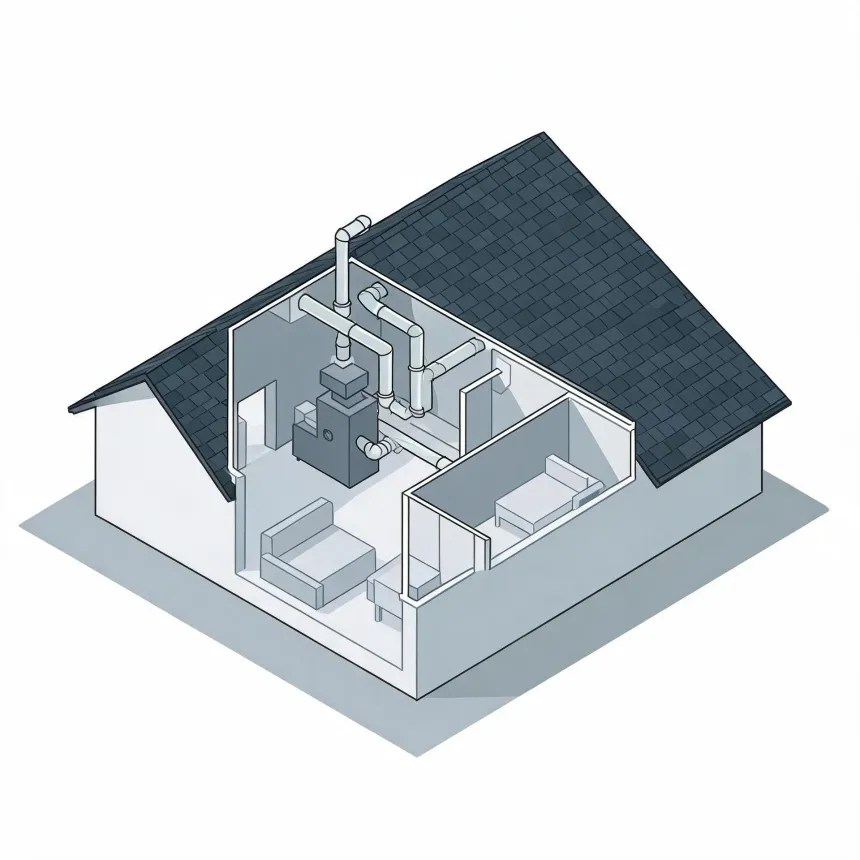
Isometric cutaway illustration of a single-story house with a dark shingled roof, showing interior rooms with furniture and a furnace connected to ductwork.
Your furnace works hardest from November through March.

NOAA nClimDiv, 1991–2020 normals

Half the homes in Montgomery County were built in 1966 or earlier.

A furnace going into a house that old has to match a house that old, not a showroom spec sheet.

Eight months of heat means no room to wait until October

Heat runs October through May
Climate zone 5A
Winter nights average 24°F
Most Furnaces Here Run on GasUtility gas heats 63.3% of homes in Montgomery County, electricity heats most of the rest

Montgomery County falls under zone 5A in the 2021 energy code, a cool and fairly humid climate where the furnace carries more of the load than the air conditioner does. Any furnace installed has to meet the federal minimum for that climate. Units built from November 2015 on have to turn at least 80 percent of the gas they burn into heat. That floor rises to 95 percent for units built from December 2028 on. A homeowner installing now can still choose between the two, but the choice narrows once that date passes.

Plan for a furnace that still works when the power doesn't

A new furnace needs power to fire, so where it sits and what backs it up are worth deciding at installation, not after a storm takes the grid down. Ask what keeps the house warm if the outage runs long.

Find a contractor
A man in a dark cap, gray long-sleeve shirt and brown work pants climbs porch steps toward a navy front door, carrying a canvas tool tote with tools in its pockets, beside a potted evergreen shrub in a blue planter.
A gray gas furnace with attached ductwork and piping installed in an unfinished concrete basement.

This furnace has to fit a house that's been standing a while

A house built in 1966 or earlier already has its ductwork, its vents and its gas line in place. The new furnace has to work with that layout, not the other way around. That matching is sizing and fitting work a contractor does on-site, not something decided off a spec sheet. Worth asking how the new unit ties into what the house already has before install day, not during it.

Ask what happens if the power cuts out mid-cycle

A furnace with a standing pilot still needs electricity to run its blower and control board. Some units restart on their own once power comes back. Others trip a fault code and sit there until someone resets them. Ask which one you're buying before it's installed, not after you're standing in a cold house trying to figure out why the furnace won't fire.

Ask how the stages and the blower are matched to the ductwork

A furnace that runs single-stage pushes full heat or none at all, while a two-stage or modulating unit can run low and steady most of the time. Either can work, but only if the blower speed and the stages are set to match the ducts already in the house. A unit sized off a sheet without checking the actual duct run can short-cycle or leave rooms uneven, and that's a setup problem, not a furnace problem.

A gas furnace and sheet-metal air handler unit installed in an unfinished concrete basement.

A high-efficiency gas furnace would save about $130 a year to run in Montgomery County compared with a gas furnace.

  • A high-efficiency gas furnace$610 a year
  • A gas furnace$740 a year

Estimates for a typical Montgomery County home, from EIA household energy data, Ohio fuel prices and NOAA climate normals. Your home will differ.

Installation day starts with the old furnace coming out, and that alone can take a couple of hours once the gas line, the vent pipe and the duct connections are disconnected. The installer checks the gas line and the vent before the new unit ever goes in, because both have to suit the furnace being installed, not just the one that's leaving. Setting the new furnace and connecting it to the existing ducts is the slow part, not the lifting. Once it's in place, the gas line gets pressure tested and the vent run gets checked for the right pitch and clearances. Then comes startup: the igniter has to light the burners cleanly, the flame has to sense properly, and the blower has to ramp to the speed that matches the ductwork. A contractor doesn't call the job done until the furnace has run through a full cycle and the temperature rise checks out against what that unit is rated for.