





Three lit brick homes on a tree-lined residential street photographed at dusk.

Heat Pump Repair in Zanesville, OH

Tell us about the job

Takes about a minute. No obligation.

RepairHeat PumpMuskingum County, OH
Step 1 of 2

What ZIP code is the job in?

Zanesville is a cool climate zone, so the heat pump works harder in winter than in summer. That's still a moderate heating load, not an extreme one. Overnight lows average 23°F through December, January and February. Cold enough to lean on the system, but nowhere near what some parts of the country deal with. A heat pump built for this kind of winter isn't fighting conditions it wasn't made for. So when one starts acting up, it's usually one specific part wearing out or failing, not years of being pushed too hard. That's worth fixing, not writing off.

8 months
October through May, your system heats
3 months
June through August, it cools
23°F
the average winter night it heats against
83°F
the average summer afternoon it cools against
Isometric cutaway illustration of a single-story house showing interior rooms with furniture, an attic duct system connected to an indoor air handler, and an outdoor condenser unit linked by lines along the exterior wall.
Your system heats October through May and cools June through August.

NOAA nClimDiv, 1991–2020 normals

A heat pump sits through September without heating anything.

Then October comes and it has to switch over and carry the load. If a part was already weak, that's when it quits.

Electricity runs 15.99 cents a kilowatt-hour. A heat pump running wrong burns extra money every single day it's not fixed.

Power costs 15.99 cents a kWh statewide
107 damaging wind events from 2015 to 2024
30 hail events from 2015 to 2024

Muskingum County had 154 severe weather events between 2015 and 2024, mostly wind, not hail or tornadoes. None of that targets a heat pump directly, and it doesn't explain one that's short cycling or blowing lukewarm air. What weather does cause is power loss. When the power drops, the outdoor unit stops with it. A heat pump that won't start back up after an outage usually just needs its switches checked and reset. That's not a repair. If a unit's been running fine for years and suddenly won't come on, check what changed recently before assuming the worst.

It's usually worth repairing

It has an easier job here than in most places, so your heat pump is often in decent shape. Repair is usually worth it.

Find a contractor
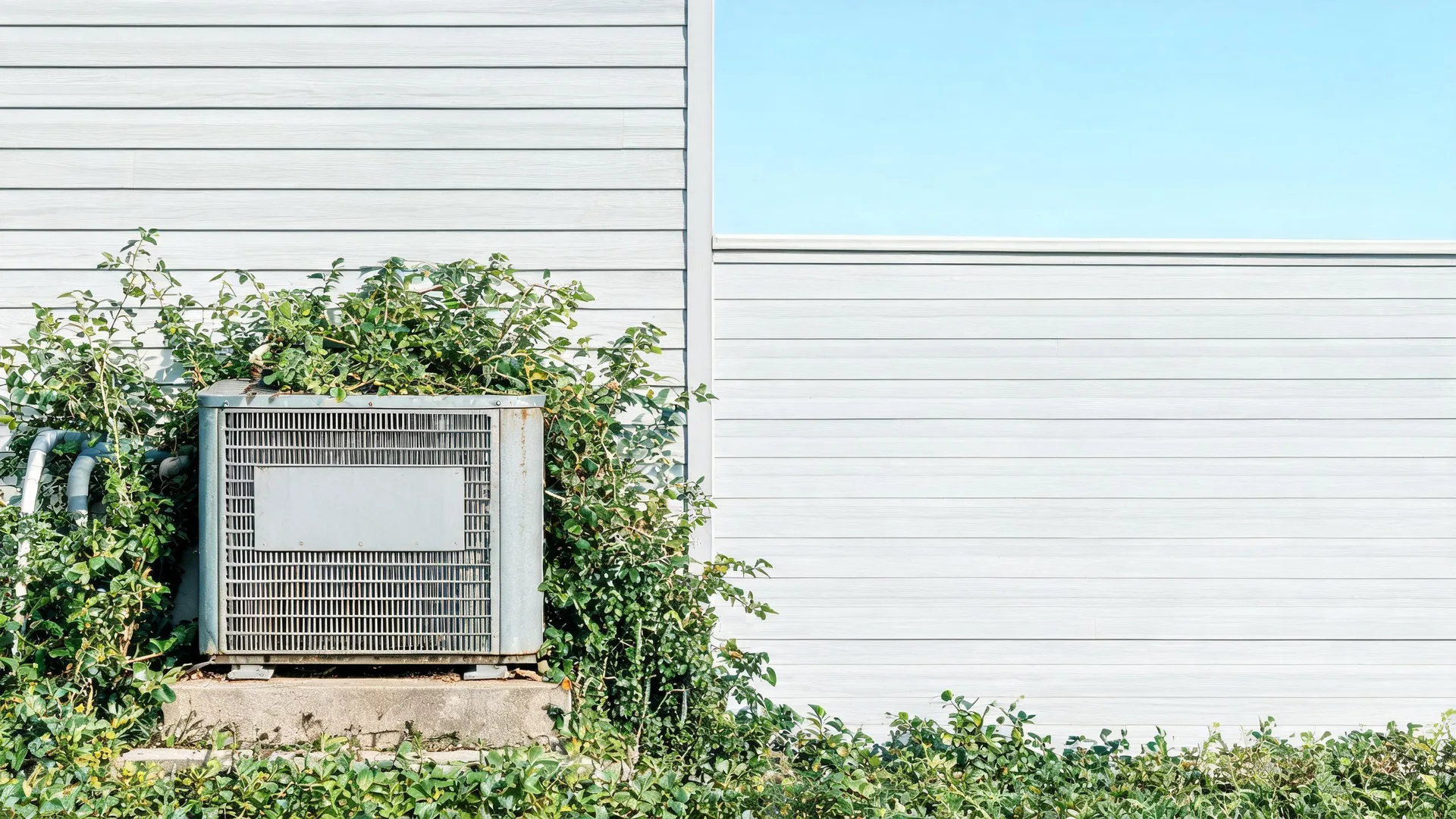
A gray air-source heat pump mounted on a concrete pad next to a house with gray vinyl siding, surrounded by gravel and flanked by green shrubs and white hydrangea flowers.

It hasn't been run hard

The clip runs from day into night, and the idle stretches show up as the shadows get longer through summer. A heat pump around here earns its keep in the cold months and does little through the warm ones. Nowhere near the nonstop cooling load a unit further south carries all year. That lighter schedule adds up over time. Fewer run hours over its life means less wear on the compressor and the reversing valve, compared to a unit the same age in a hotter climate. So age by itself isn't a good reason to give up on a unit here. If the compressor or reversing valve has a real fault, that's usually worth fixing. It's not a sign the machine is worn out.

Ice building on the outdoor coil

A heat pump defrosts itself on a schedule. It melts off any frost that builds up on the outdoor coil during a heating cycle. If ice is staying put outside, or building up along the bottom of the unit, the defrost board or the reversing valve isn't doing its job. Left alone, that ice blocks airflow across the coil, and the system loses its ability to pull heat from the outside air at all.
Air from the vents that isn't warm enough

Heat pump air always feels cooler than a furnace's. A little coolness at the register is normal. What isn't normal is air that stays barely above room temperature the whole cycle, or a system that runs non-stop and never catches up to the thermostat setting. That points to a refrigerant problem, or a compressor that's lost its capacity to move heat. Get it looked at before the next cold snap.

Before calling anyone, go outside and look at the unit. If the fan isn't spinning at all, check the breaker first. A tripped breaker is the cheapest problem a heat pump can have, and it happens a lot after a power blip. Rule that out before anything else. Inside, check the thermostat is set to heat, not cool or fan only. Then check the filter. A clogged filter chokes airflow across the indoor coil, and that alone can make a heat pump blow weak or cool air with nothing actually broken. If the outdoor coil has a light, even coat of frost, leave it alone. That's normal, and the system clears it on its own. Checked the breaker, the thermostat, and the filter, and it still won't run right? That's the point to stop and call a tech.

The tech starts outside, watching the outdoor unit run through a cycle before touching anything. Refrigerant pressures get checked with gauges at the service valves, because low charge shows up there before it shows up anywhere else. Next is the reversing valve, checked by feel and by temperature on both lines, to see if it's actually switching between heating and cooling or just stuck. The defrost board gets tested too. A board that won't call for defrost is what lets ice take over a coil. Inside, the filter gets pulled if it hasn't been done already, and airflow gets checked at the return and the supply. Weak airflow can look like a refrigerant problem and send someone chasing the wrong fix. By the end there's usually one part to point to, with a straight answer on whether it's worth replacing or whether the unit needs more than that.