






A row of dark gray gabled houses behind a trimmed hedge and mowed lawn, framed by large leafy trees under an overcast sky.

Heat Pump Repair in New Philadelphia, OH

Tell us about the job

Takes about a minute. No obligation.

RepairHeat PumpTuscarawas County, OH
Step 1 of 2

What ZIP code is the job in?

Tuscarawas County had 172 severe weather events between 2015 and 2024. Damaging wind caused most of them. Wind throws branches and grit into the outdoor unit's coil and fan. Hail does the same kind of damage from a different angle. A heat pump can keep running after a storm like that, but it's running with a bent coil fin or a cracked blade working against it. Power matters just as much. Ohio households lost power for a day or longer often enough last year to plan for it. A heat pump needs power to do anything, heating or cooling.

8 months
October through May, your system heats
3 months
June through August, it cools
22°F
the average winter night it heats against
82°F
the average summer afternoon it cools against
Isometric cutaway illustration of a single-story house showing interior ductwork, an indoor air handler, and an outdoor condenser unit connected by lines along the exterior wall.
Your system heats October through May and cools June through August.

NOAA nClimDiv, 1991–2020 normals

Your heat pump switches over to heat in October, right after a storm-heavy stretch in September.

Any coil or fan damage sitting unnoticed since summer gets tested the first cold morning it has to run heat.

A heat pump working harder than it should runs up the bill at 15.99 cents a kWh, every single day it's left that way

Power costs 15.99 cents a kWh statewide
124 damaging wind events from 2015 to 2024
38 hail events from 2015 to 2024
A heat pump that's had it easyWinters here average 22°F. That's mild. The heat pump isn't fighting the cold so much as whatever's been left unchecked.

Check starts outside, at the unit itself. Coil fins and the fan blade get looked at before anything's switched on. Bent fins block airflow across the coil. A cracked or unbalanced blade puts strain on the motor every time it spins. Next is the refrigerant charge, checked with gauges, not guessed at. A system low on charge runs long and still doesn't heat the house right. Inside, the air handler, the filter, and the thermostat's call for heat all get checked too. A signal that isn't reaching the outdoor unit looks just like a dead heat pump, even when it isn't. Electrical connections and the capacitor get tested as well. Either one can make a unit hum and not start, or start and shut back off on its own. By the end of the visit, the exact part at fault should be known. Not just that something's wrong.

Get the outdoor unit checked before you need it for heat

If the heat pump took wind or hail damage since summer and nobody's looked at the outside unit, get the coil and fan checked before counting on it for heat.

Find a contractor
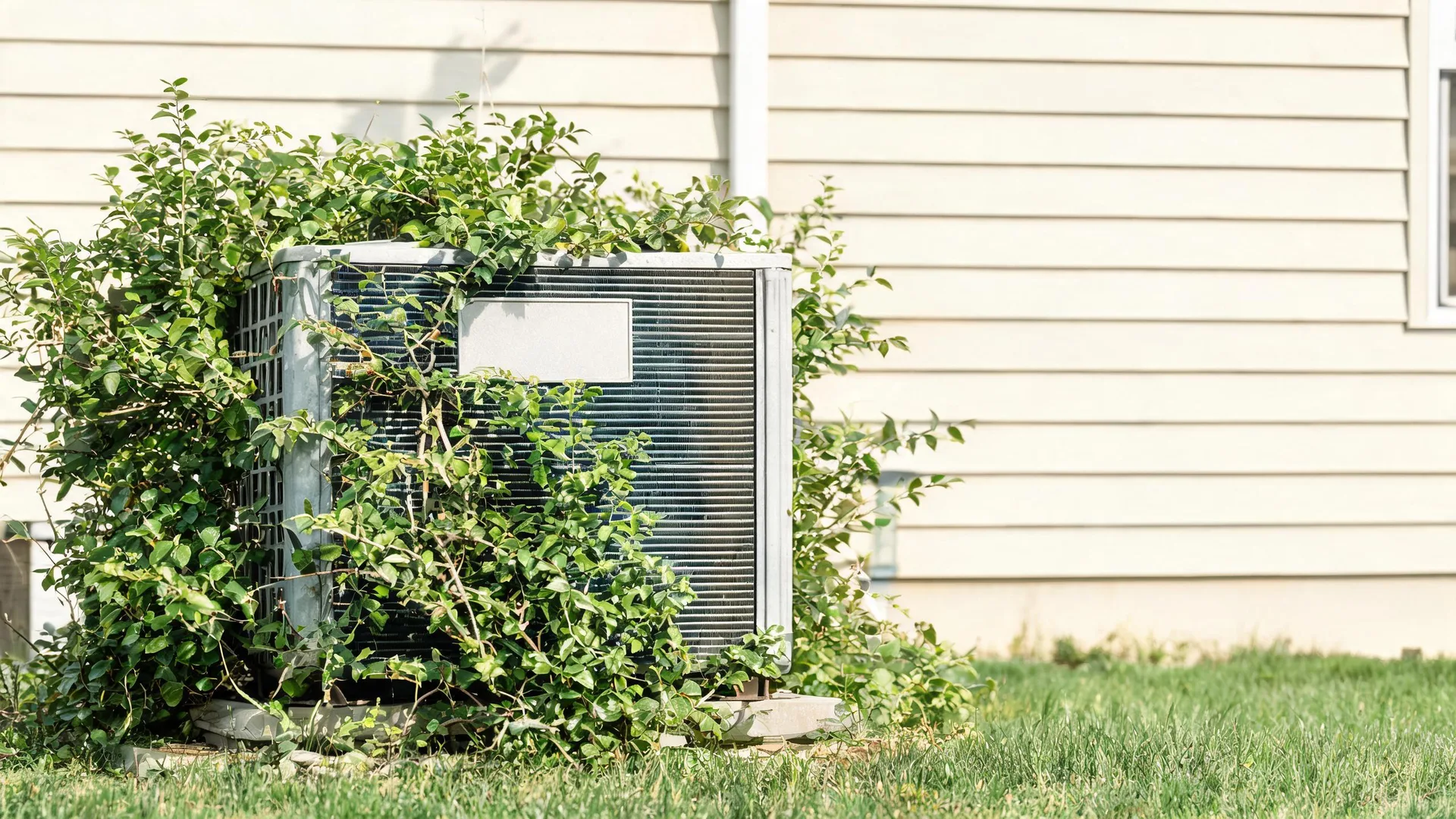
A gray heat pump condenser unit mounted on a concrete pad against the gray lap-siding exterior wall of a house.

A heat pump wears where something upstream has made it work too hard

The compressor is the part that ages hardest, because it carries the load every time the system runs, heating or cooling. What shortens its life isn't age alone, it's starting over and over instead of running a full steady stretch. That kind of short cycling usually traces back to something else going wrong first. A coil clogged with debris makes the system work harder and trip off early. A fan blade thrown off balance by hail or wind strains the motor on every rotation it makes. A refrigerant charge that's drifted low makes the compressor run long and still fall short. None of these parts fail on a schedule. They fail when something else has already been making them work harder than they should.

A failing capacitor takes the compressor down with it

A weak capacitor makes the compressor work harder to start every cycle. Keep running it like that for a few days and the compressor overheats. Once the compressor goes, the whole outdoor unit goes with it.
The question isn't whether it still runs

A heat pump will keep blowing air even with a clogged coil or a low charge. That's why it never feels urgent. Get it checked while it's still one bad part, not a dead compressor.

Most of the signs show up long before the unit quits outright. Air coming from the vents that's warm but not warm enough means it's running without keeping up, which points to low refrigerant or a coil that can't move enough heat across it. A unit that clicks on, runs for a couple minutes, then shuts off and starts again shortly after is short cycling, and that's hard on the compressor every time it happens. Listen for anything new too. A hum with no startup is usually the capacitor, and a rattle from outside is often a fan blade that's gone out of balance. Ice building up on the outdoor coil during a cold snap can be normal for a few minutes while it defrosts, but a coil that stays frosted over is telling you the defrost cycle or the charge isn't right. Any of these on their own is worth a call before it becomes the compressor's problem.

Age and the compressor are what decide this, more than any single part. A coil or a capacitor is almost always worth fixing. The part is cheap next to the price of a whole unit, and swapping it brings the system back to normal. The compressor is different. It sits in the middle of the outdoor unit doing the actual work of moving heat, and there's no cheap version of replacing it. If a technician traces the problem back to the compressor itself, especially on a unit that's already been running for many winters, that's the point where fixing it and replacing the unit cost close to the same. Ask what failed and why before deciding anything. A unit that's called for service again and again for unrelated parts is telling a different story than one that's run clean for years and just hit one bad capacitor.