This county gets hit
Franklin County saw 268 severe weather events between 2015 and 2024. That included 174 damaging wind events, 79 hail events, and 8 tornadoes touching down.
Takes about a minute. No obligation.
Franklin County saw 268 severe weather events between 2015 and 2024. That included 174 damaging wind events, 79 hail events, and 8 tornadoes touching down.
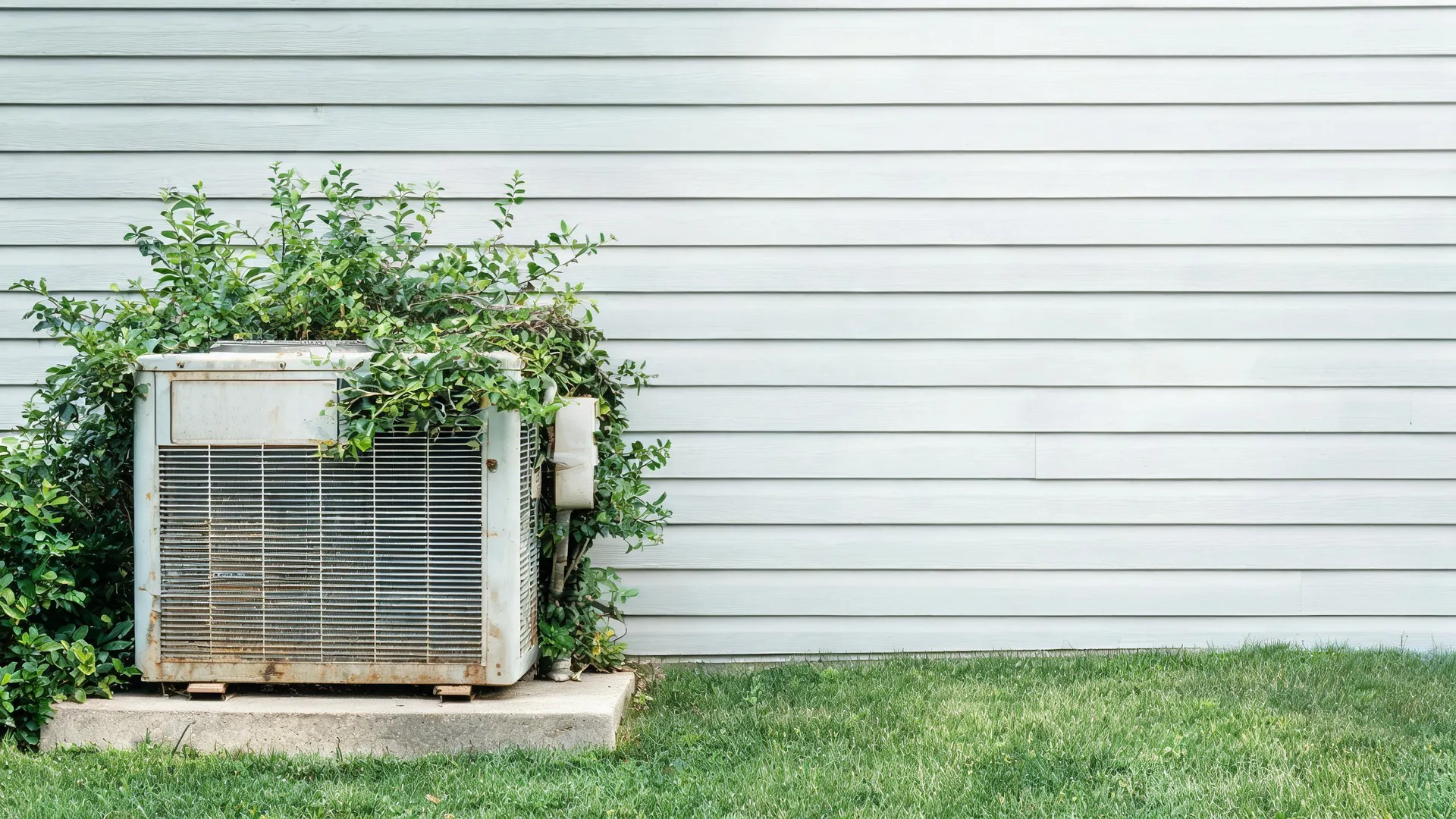
A heat pump sits outside all year, through wind and hail, with its coil and fan exposed. A unit that still runs after a storm can have a bent coil or a damaged fan blade that gets worse over time.

NOAA nClimDiv, 1991–2020 normals
Electricity in Franklin County runs 17.58 cents per kilowatt-hour, more than most US counties pay.
A heat pump that's struggling pulls more power to do the same job, and you pay that higher rate for every hour it runs.




Half the homes in Franklin County were built in 1979 or later. If yours is one of them, the heat pump likely isn't that old either, especially if it's the original system that came with the house. A repair on a newer unit makes sense because there's more life ahead of it to protect. Worn parts like a failing capacitor or a weak contactor can usually be replaced without touching the rest of the system. Before anyone talks replacement, it's worth finding out whether this is one part acting up, not the whole unit.
If your heat pump took wind or hail this year and still runs, that doesn't mean it came through clean. A bent coil or a chipped fan blade can sit there getting worse until the day it doesn't start. Worth having someone look at the outdoor unit now, while it's still just a check.
Find a contractor
A heat pump here doesn't get the winter off the way a central air conditioner does. It runs the compressor to cool the house from spring into fall, then reverses and runs it again all winter to pull heat out of the cold air. That's close to year round duty on the same parts. A storm-bent coil or a chipped fan blade doesn't get downtime to fail quietly. It keeps cycling through the next cold snap, and whatever got damaged keeps wearing from there. Catching it while it's still a rattle or a slow start is what makes the repair hold.
A heat pump low on refrigerant makes the compressor work harder to move the same heat. That extra strain shows up as heat inside the compressor itself, and over time it can burn out the windings or score the internal parts. What starts as a slow leak and a system that runs a little long can end with a compressor that needs replacing instead of a line that needs sealing.
A weak capacitor makes the compressor or fan motor strain every time it starts. A motor that strains on startup runs hotter than it should, and heat is what wears down bearings and windings. Left alone, a bad capacitor doesn't just stay a bad capacitor. It takes the motor down with it, and a cheap part swap turns into a motor replacement.
Most heat pump failures start small and in predictable places. A contactor pits and burns from years of opening and closing, until one day it sticks or stops making contact. A capacitor loses its charge over time and can't give the compressor or fan motor the kick it needs to start. Outdoor fan motors wear out from running in the weather day after day, bearings going dry long before the motor itself quits. The reversing valve, the part that switches a heat pump between heating and cooling, can stick in one position and leave you with a system that only does half its job. None of these start as a dead system. They start as a hum, a slow start, a unit that runs but doesn't keep up, and that's the point where fixing one part is still enough.
A heat pump pulling extra power to limp along costs more here than in most places, since the rate per kilowatt-hour already runs above what most of the country pays. That cost doesn't wait. It shows up on next month's bill, then the one after, for as long as the weak part stays in. A failing capacitor or a dirty coil makes the compressor work harder for the same result, and harder work means more power drawn every hour the system runs. Getting it looked at now stops that extra draw instead of paying it again next month.