





A bare concrete basement containing a gray gas furnace with metal ductwork and a vertical flue pipe, lit by a single hanging bulb.

Furnace Repair in Warren, OH

Tell us about the job

Takes about a minute. No obligation.

RepairFurnace or heatingTrumbull County, OH
Step 1 of 2

What ZIP code is the job in?

Furnaces in Warren run from October through May. That's eight months of the year cycling on and off, heating against overnight lows that average 21°F in December, January and February. That much runtime, against that much cold, wears parts down faster than a furnace that only runs a few months a year. The igniter, the blower motor, the heat exchanger, they're all logging more hours here than they would somewhere milder. When something starts acting up, that workload is usually part of the reason. Getting it checked out matters more here, not less.

8 months
October through May, your furnace is on duty
21°F
the average winter night it heats against
80%
of homes here heat with gas, so most furnaces here burn gas
9 winter storms
in ten years, the nights a failure hurts most
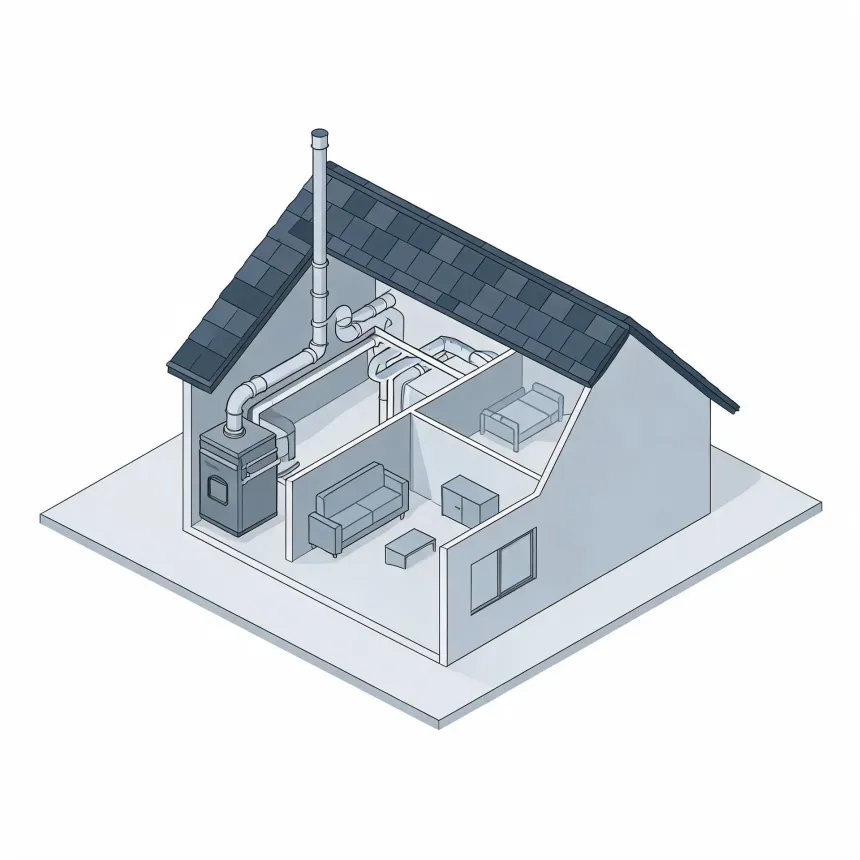
Isometric cutaway illustration of a small gabled house showing a furnace with flue pipe and ductwork connecting to interior rooms containing a sofa, bed, and cabinets.
Your furnace works hardest from November through March.

NOAA nClimDiv, 1991–2020 normals

If the heat exchanger is cracked and the furnace is old, don't fix it. Doesn't matter how small the repair sounds.

A blower motor or igniter going out on a furnace that's otherwise in good shape? Fix it. That's still the cheaper road, even if the part itself costs a bit.

Eight months of heat means October is when the weak part gives out

Heat runs October through May
Winter nights average 21°F
Climate zone 5A

Get the real cause found before it takes something else down

Eight months of heavy use is a lot of ground for a small problem to turn into a bigger one. Have a contractor find out what's actually failing before it takes something else down with it.

Find a contractor
A man in a dark shirt, tan work pants, boots and a cap walks up porch steps toward a navy front door, carrying a canvas tool bag.
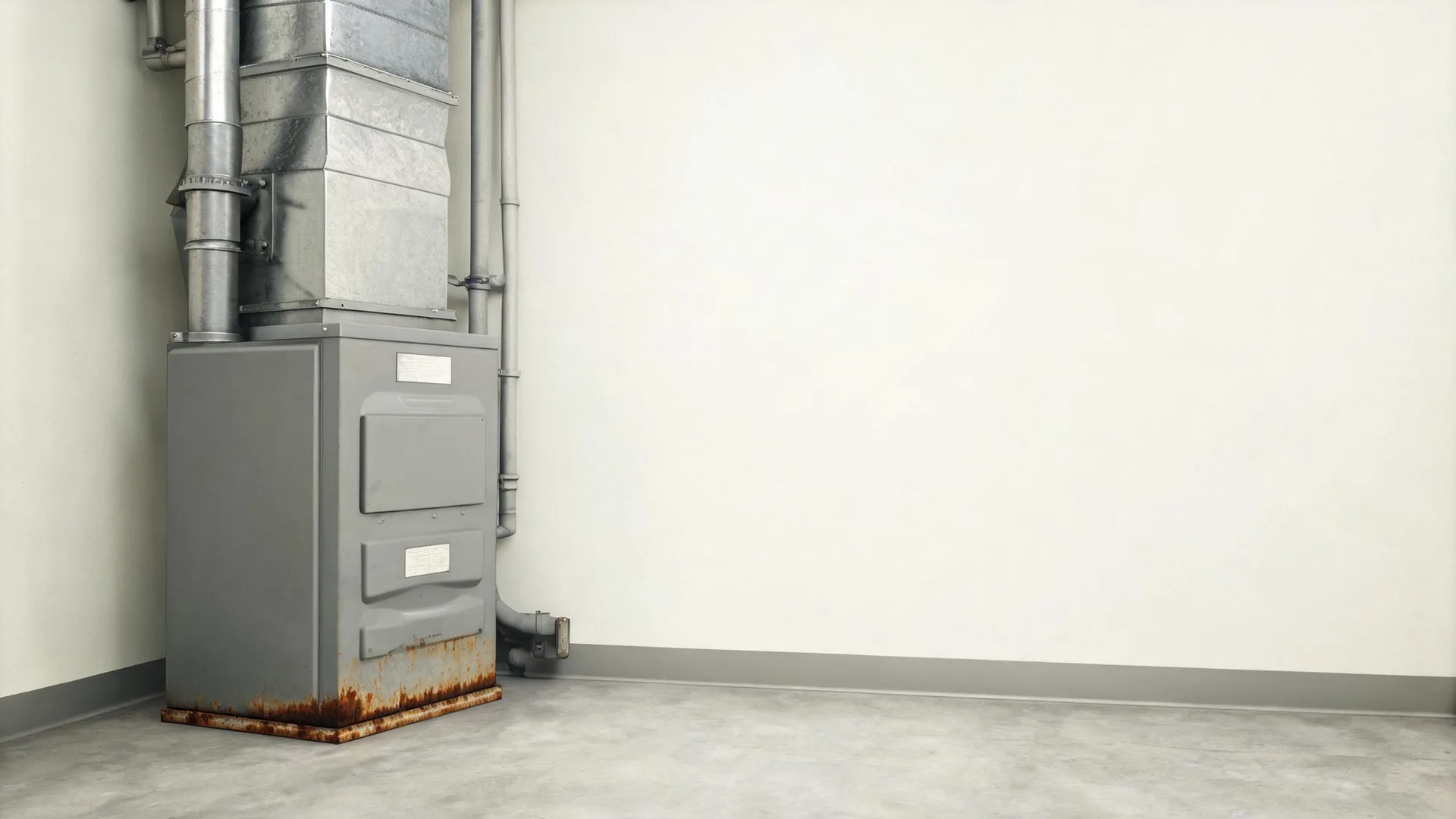
A gray residential gas furnace installed in an unfinished basement, surrounded by ductwork, a metal flue pipe, and a gas supply line.

A small problem left running doesn't stay small

A struggling furnace still runs, so it gets left alone. A cracked or clogged igniter keeps trying to spark long after it should be replaced. The control board just keeps calling for it, cycle after cycle. A blower motor with a bad bearing keeps turning too, just louder and hotter, until the bearing seizes and takes the motor with it. Even something as simple as a dirty flame sensor gets worse under load. The coating builds up a little more each cycle, until the furnace shuts itself off mid-winter instead of just running poorly. The parts around a weak one don't get a break either. A blower working against a clogged filter pulls harder every time it starts, and that strain lands on the motor and the bearings, not just the filter. Run it long enough like that and a filter change turns into a motor replacement. None of this means shut the furnace off and wait. It means get the failing part found while it's still just one part.

Short cycling means the furnace isn't finishing a heat cycle

A furnace that fires up, runs a couple minutes, then shuts off before the house warms is usually tripping a safety switch. Often it's a flame sensor not reading right, or the heat exchanger overheating. Don't ignore it just because the house still gets some heat. The control board is shutting things down because it already found a problem.

A yellow or flickering flame is worth a same-day call

A gas burner should show a steady blue flame. Yellow, flickering, or a flame pulling away from the burner means a combustion problem. Sometimes it's a dirty burner, sometimes it's venting pushing exhaust back where it shouldn't go. Don't wait and see on this one. Call the same day.

An unfinished basement featuring a forced-air furnace, exposed wooden ceiling joists, bare concrete walls, and miscellaneous items including cardboard boxes and coiled cables on the floor.

A new furnace would cut about $170 a year off heating for a typical Trumbull County home.

  • A new high-efficiency furnace$710 a year
  • An older furnace$880 a year

Estimates for a typical Trumbull County home, compared with an older unit built to the previous federal minimum, from EIA household energy data, Ohio fuel prices and NOAA climate normals. Your home will differ.

Repair makes sense when one part has failed and the heat exchanger is sound.

Replacement makes sense when the heat exchanger is cracked or the furnace keeps needing parts.

A diagnostic visit starts at the thermostat and works back toward the furnace. The contractor checks the call for heat first. Then watches how the furnace responds. Does the igniter glow and light the burners. Does the blower kick on. Does the flame hold steady or pull back toward the burner. From there it's the flue, the gas pressure, the amp draw on the blower motor, the temperature rise across the heat exchanger. Each reading rules something in or out. A furnace that short cycles might get a combustion analyzer on it, so the contractor can see what the flame is doing inside the chamber, not just what it looks like through the window. The visit ends with a part named, not a guess. That's a real diagnosis, not someone swapping pieces until one of them works.