

An unfinished basement featuring exposed ceiling joists, a metal HVAC unit with round ductwork, a hanging light bulb, and scattered boxes and debris along the left wall.

Furnace Repair in Steubenville, OH

Tell us about the job

Takes about a minute. No obligation.

RepairFurnace or heatingJefferson County, OH
Step 1 of 2

What ZIP code is the job in?

Furnaces in Steubenville run about eight months a year, October through May. Overnight lows hit 23°F in the worst of winter. That's a lot of hours on the clock, but nothing unusual for this area. Furnaces all over this part of the country see the same cold and the same workload. So when a furnace starts short cycling, won't light, or blows cold air, the cause is almost always something a contractor sees every week. A cracked igniter. A dirty flame sensor. A clogged filter choking the airflow. A furnace here doesn't fail any different than one two towns over. Find the real cause and fix it, and it'll carry through the rest of the winter.

8 months
October through May, your furnace is on duty
23°F
the average winter night it heats against
7 winter storms
in ten years, the nights a failure hurts most
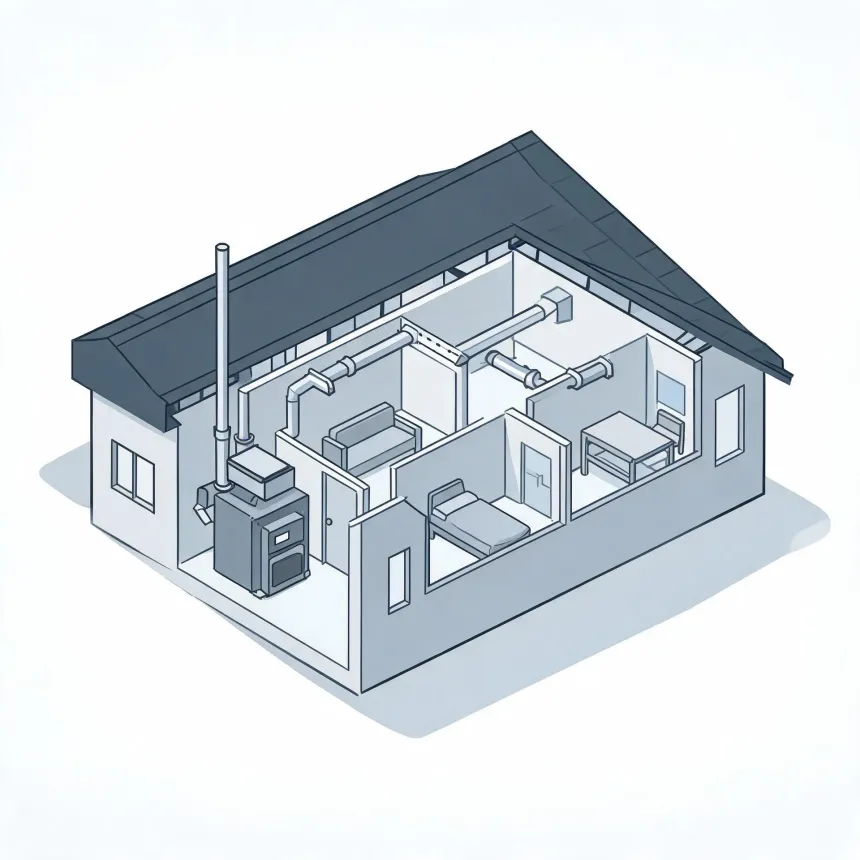
Isometric cutaway illustration of a single-story house showing interior rooms with furniture, overhead ducting, a flue pipe, and a furnace unit against an interior wall.
Your furnace works hardest from November through March.

NOAA nClimDiv, 1991–2020 normals

An inducer motor that hums but won't spin usually means the bearings are worn out. It's not always the motor itself.

Check if the wheel turns free by hand before replacing anything. A seized bearing and a failed motor need different parts.

Natural gas ran $12.89 per million Btu across Ohio in 2024. So a furnace that's cycling too much or struggling to heat the house is costing extra every month it sits unfixed. That doesn't mean something's badly wrong. Most of the time a furnace burning more gas than it used to is just dirty or short on air, not failing. A clogged filter makes the burner run longer to push the same heat through the house. A fouled flame sensor can cause short cycling, where the furnace fires, shuts off, fires again, and never settles into a steady run. Either one is a straightforward fix. Not a sign you need a new furnace.

Get the real cause found, not just the symptom

Jefferson County gets rough weather, 73 damaging wind events and 7 winter storms over the past decade. That doesn't mean the weather is why the furnace won't light. Those are two different problems. Find the actual cause, get it fixed, and the furnace will make it through the rest of the season.

Find a contractor
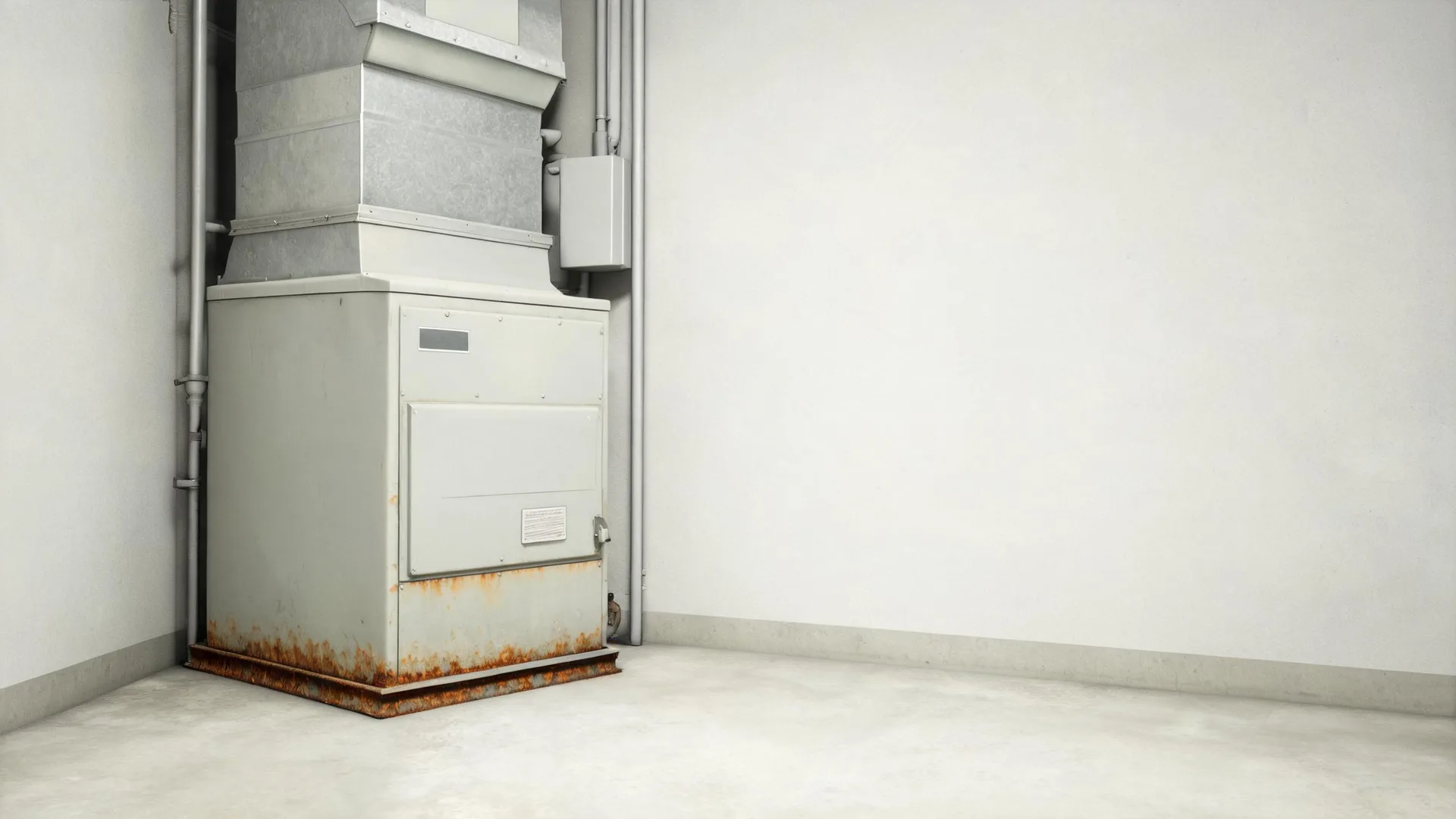
A gray residential gas furnace installed in an unfinished basement, surrounded by ductwork, a metal flue pipe, and a gas supply line.

An older house raises a question worth asking

Half the homes in Jefferson County were built in 1958 or earlier. That doesn't tell you the age of your furnace, since the furnace gets swapped out long before the house does. But it's a reason to check, if you don't already know. A cracked igniter or a dirty flame sensor is worth fixing no matter how old the unit is. A cracked heat exchanger on a furnace that's already past its years is a tougher call. Knowing the age is what lets you make that call.

A cracked heat exchanger spreads the crack

Metal that's already cracked keeps flexing every time the burner fires and the furnace heats up and cools down. Each cycle works the crack a little wider. A hairline split is something a technician can catch on inspection. Left alone, it turns into a breach that lets exhaust mix with the air moving through the house.

A failing limit switch stops protecting the furnace

The limit switch shuts the burner off if the air inside the furnace gets too hot, usually from restricted airflow. If that switch is sticking or wearing out and the furnace keeps running anyway, that's the one part standing between a dirty filter and a cracked heat exchanger. Lose it and there's nothing left to stop the damage.

An unfinished basement interior showing a gray furnace unit beneath a bare incandescent bulb, surrounded by exposed joists, concrete walls, cardboard boxes, and utility pipes.

A new furnace would cut about $150 a year off heating for a typical Jefferson County home.

  • A new high-efficiency furnace$650 a year
  • An older furnace$800 a year

Estimates for a typical Jefferson County home, compared with an older unit built to the previous federal minimum, from EIA household energy data, Ohio fuel prices and NOAA climate normals. Your home will differ.

Repair makes sense when one part has failed and the heat exchanger is sound.

Replacement makes sense when the heat exchanger is cracked or the furnace keeps needing parts.

First question is what the furnace was doing before it quit. Short cycling points to one cause. Not lighting at all points to another. From there it's power to the control board, resistance across the igniter, whether the flame sensor is reading a flame or just sitting under a layer of oxidation, whether the limit switch is tripping too soon. Airflow gets checked too. A dirty filter starving the return can look like a totally different problem. Most of this is done with the panels off and a meter in hand, testing one thing at a time to rule it out before moving to the next. The visit ends with an actual part named as the cause. Not a guess that the furnace is just old.