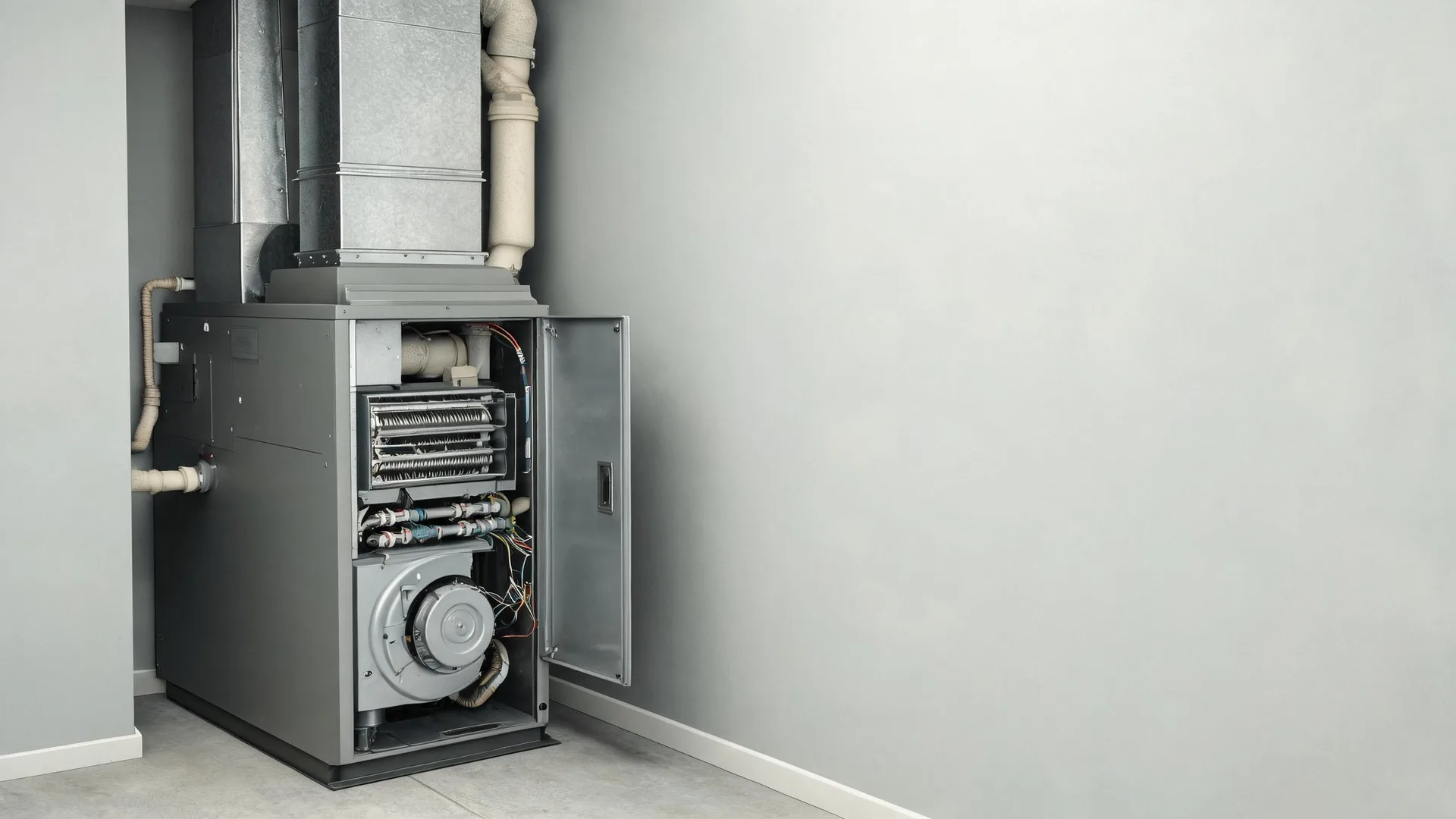
September is the month to get ahead of it
Furnaces in Clark County sit idle from May until October. A weak igniter or a failing part can sit through the off season without showing trouble. It gives out once the furnace has to run again.
Takes about a minute. No obligation.
Furnaces in Clark County sit idle from May until October. A weak igniter or a failing part can sit through the off season without showing trouble. It gives out once the furnace has to run again.
Once the furnace starts its eight-month run, whatever was already marginal gets found fast. If yours acts up early in the season, that's not bad luck. That's the weak part finally under load.
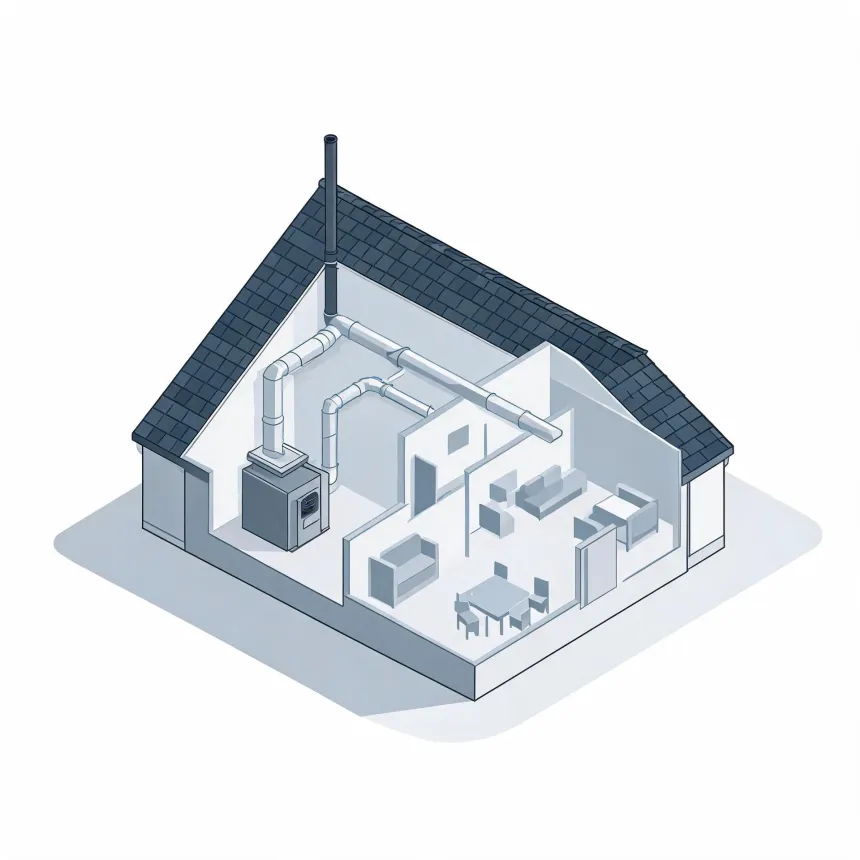
NOAA nClimDiv, 1991–2020 normals
Furnaces in Clark County run about eight months straight, October through May.
If a furnace is struggling now, that's not a short rough patch. There's a long stretch of cold weather still ahead, and it has to get through all of it.



A tech starts by asking what the furnace was doing before it quit. A furnace that short cycles points somewhere different than one that won't fire at all. From there it's a sequence, not a guess. Power and thermostat call get checked first. No point opening up a furnace that isn't even getting a signal to run. Then the igniter gets tested for continuity. The flame sensor gets checked for buildup. The draft or pressure switch gets checked to confirm the inducer is doing its job. Each step either clears a part or points to it, and the furnace only gets opened up as far as the problem requires. By the end you know exactly which part failed and why, not just that something did.
Nothing in that sequence points to anything unusual about furnaces in Clark County. It's the same igniter, sensor or switch that fails in any furnace once it's asked to run again. Gas in Ohio cost $12.89 per million Btu in 2024. A furnace losing efficiency to a failing part costs more for every week it keeps running that way. Get the actual cause found and fixed.
Find a contractorStart with the thermostat. Make sure it's set to heat, not cool, and the set temp is actually above room temp. Swap the batteries if it uses any, even if the screen still lights up. A weak battery can still run the display but fail to send the call for heat. Next, head to the breaker panel. Look for one that's tripped or stuck halfway between on and off. Furnaces usually have their own dedicated breaker. Check the furnace switch too, the one that looks like a light switch near or on the unit. Make sure nobody bumped it off. Got a standing pilot? Look through the little window and see if it's lit. If it's out, the furnace won't fire no matter what the thermostat says. Last, pull the filter and hold it up to a light. Can't see light through it? That's worth knowing before anyone shows up. A blocked filter can make the furnace shut itself down on its own safety switch. None of this means taking a panel off the furnace. If the pilot won't stay lit, or there's any smell of gas near the unit, stop checking and call a technician instead.
An igniter cracks. A flame sensor builds up a coating it can't read through. A pressure switch sticks. These parts wear out on their own schedule, from age and from sitting next to heat cycle after cycle. One going bad doesn't mean the heat exchanger or the blower is next.
A furnace that shuts off mid-cycle usually has a limit switch or pressure switch that tripped on purpose. It read a blocked flue or a dirty filter choking airflow and shut down because of it. Swap that switch without fixing what tripped it, and it just trips again.
Estimates for a typical Clark County home, compared with an older unit built to the previous federal minimum, from EIA household energy data, Ohio fuel prices and NOAA climate normals. Your home will differ.
Repair makes sense when one part has failed and the heat exchanger is sound.
Replacement makes sense when the heat exchanger is cracked or the furnace keeps needing parts.
Age by itself doesn't answer the question. What matters is which part failed and what else is showing wear next to it. A furnace with one bad igniter and a clean burner assembly is worth fixing, even if it's old, because nothing else on it is failing. A cracked heat exchanger is a different story. That part can't be patched, and shouldn't be. If a tech finds corrosion spreading past the one part they came to check, or a blower motor straining next to a bad switch, that's more than one system going at once. That's when replacement is the honest answer instead of another repair. Ask what else got found while they were in there, not just what got fixed.