




Three lit brick homes on a tree-lined residential street photographed at dusk.

Furnace Repair in Milford, OH

Tell us about the job

Takes about a minute. No obligation.

RepairFurnace or heatingClermont County, OH
Step 1 of 2

What ZIP code is the job in?

Clermont County sees real weather. Between 2015 and 2024 the county logged 193 severe weather events, including 143 cases of damaging wind and 29 hail events. Eight tornadoes touched down in that same stretch. Hail dents a cabinet and bends the fins on an outdoor unit without stopping it right away, and wind-driven debris can do the same. A furnace that still fires every morning can be running with a coil that took a hit months ago. If a storm has come through since the system last ran right, it's worth having someone look at it before the cold settles in.

7 months
October through April, your furnace is on duty
25°F
the average winter night it heats against
13 winter storms
in ten years, the nights a failure hurts most
Isometric line illustration of a cutaway single-story house with a shingled roof, showing an interior furnace connected to ductwork and a tall vertical flue pipe, plus simple furniture in the adjacent room.
Your furnace works hardest from November through March.

NOAA nClimDiv, 1991–2020 normals

Half the homes in Clermont County were built in 1987 or later.

A furnace that came with a newer house usually has years left in it, and that's worth knowing before you replace instead of repair.

A furnace that runs wrong here runs up a real bill

Climate zone 4A
Heat runs October through April
Winter nights average 25°F
Furnace trouble shows up when it first has to workHeat starts in October here. Whatever was already weak tends to fail in those first cold weeks.

If your furnace came with the house and the house is newer, get it repaired rather than replaced. A cracked heat exchanger or a dead control board doesn't mean the whole unit is worn out, especially if it hasn't had years to wear down. Have the contractor check the age and condition of the unit against what's actually failing before you spend money on a new system. A furnace with a lot of working life left is worth fixing.

Had a storm come through? Get the furnace checked before you trust it

A furnace that still runs isn't the same as one that came through a storm clean. If hail or wind has hit the house since the furnace last got checked, get it looked at now, not after it stops.

Find a contractor
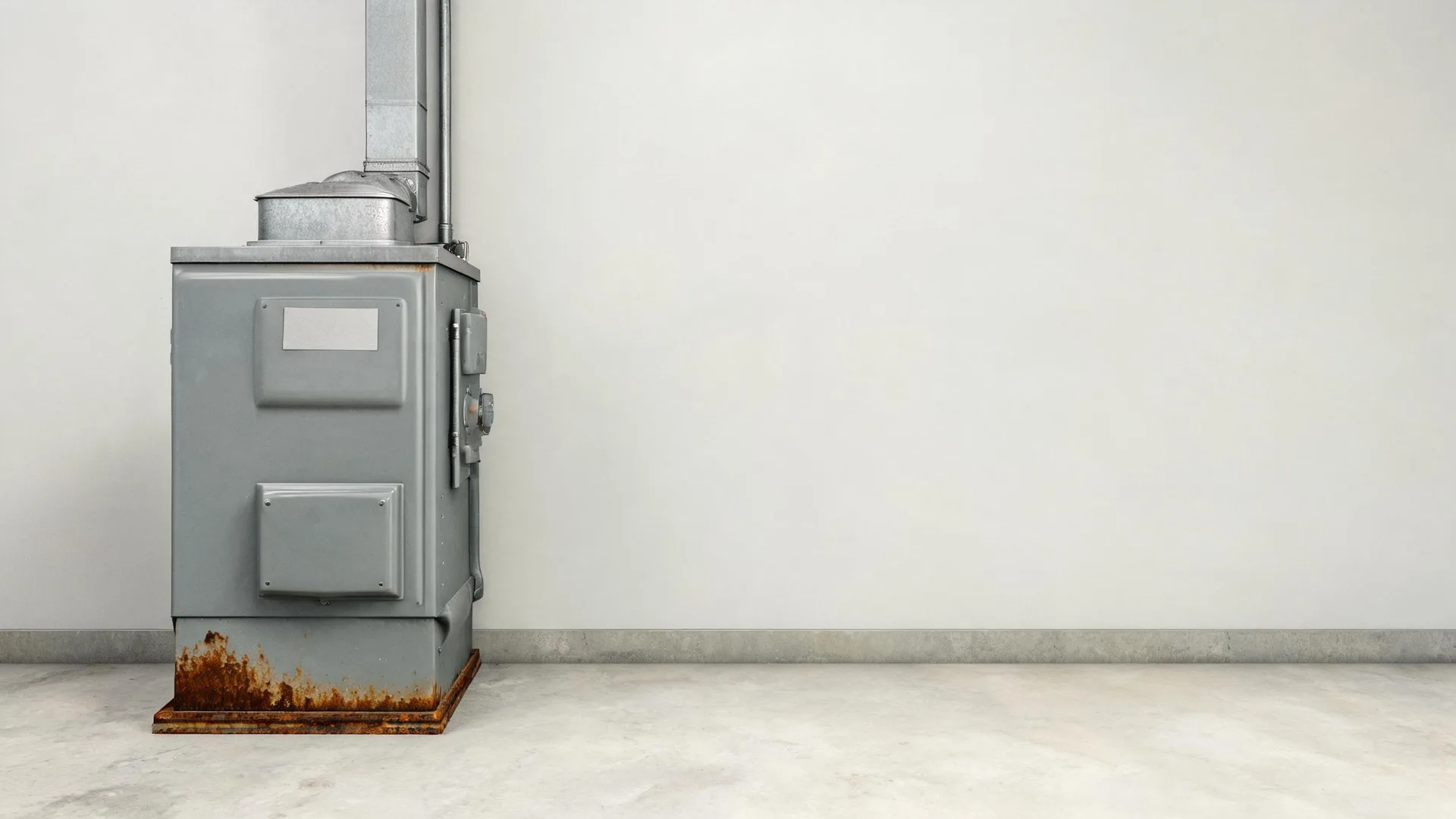
A gray residential gas furnace installed in an unfinished basement, connected to sheet-metal ductwork and PVC pipes.

What to check yourself before the furnace gets looked at

Before anything else, check the thermostat. Make sure it's set to heat, not cool, and that the set temperature is actually above room temperature. If it runs on batteries, swap them. Next, go to the breaker panel and look for a tripped switch. Furnaces often share a circuit with the blower, and a tripped breaker will stop the whole system cold. Then check the air filter. A filter clogged with dust chokes off airflow, and some furnaces are built to shut themselves down rather than run with restricted air. If yours has a removable door panel near the blower, check that it's seated and latched. Many furnaces have a safety switch right there that won't let the system fire unless the panel is closed all the way. If the furnace has a standing pilot, look for the flame through the little window. No flame or a flame that's yellow instead of blue is worth noting for whoever comes out. Last, listen for what it does when you raise the thermostat. Clicking with no ignition, a hum that cuts out, or the blower running without any heat all point to different problems, and telling the contractor exactly what you heard saves time on the visit.

A furnace rarely quits without warning first

Short cycling, a burner flame that's flickering or yellow instead of steady blue, a blower that won't shut off, or heat that feels weaker than it should all mean something inside is already struggling. A furnace that trips its limit switch repeatedly or won't stay lit past a few seconds is telling you the ignition system or the venting isn't working right, not that it's about to fix itself.
Waiting turns a repair into a bigger one

A cracked heat exchanger that gets ignored can crack further. A failing igniter that still sparks some mornings will stop sparking at all. Most furnace failures build slowly, through a part wearing down a little more each cycle, which is why the same noise or smell that seemed minor in the fall is usually the reason the system won't start at all once it's run hard for a few weeks.

Electricity in Ohio ran $46.85 per million Btu in 2024, and a furnace that short cycles or runs a long time to reach temperature is burning more of that than it should. A cracked heat exchanger, a weak igniter, a dirty flame sensor, each of these makes the burner work harder or longer to put out the same heat. That cost shows up on the bill before it shows up as a breakdown. Fixing the part now stops the waste instead of paying for it all winter.

A diagnostic visit starts before any panel comes off. The contractor asks what the furnace was doing, what it sounded like, whether it ran at all, because that narrows down where to look first. Then the panel comes off and the igniter, flame sensor, and burners get a visual check, since carbon buildup or a hairline crack in any of them shows up to the eye before it shows up anywhere else. Voltage gets tested at the control board, and the flame sensor gets checked for the microamp reading that tells whether it's sensing properly or just barely getting by. The heat exchanger gets inspected for cracks, since a cracked exchanger is a safety issue, not just a performance one. Airflow gets checked too, because a blower working against a clogged filter or blocked duct can mimic problems that have nothing to do with ignition at all.