




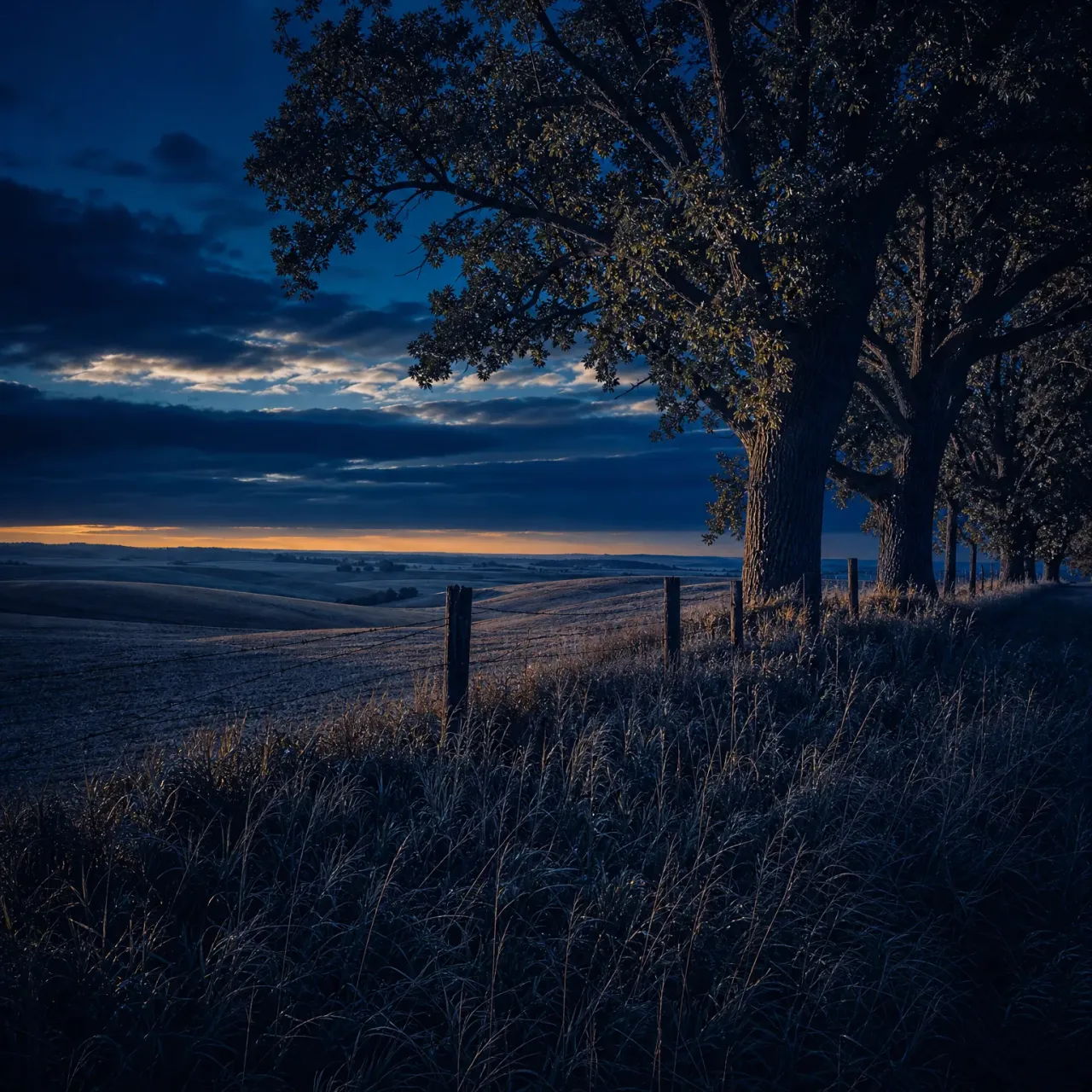

An unfinished basement interior showing a gray furnace unit beneath a bare incandescent bulb, surrounded by exposed joists, concrete walls, cardboard boxes, and utility pipes.

Furnace Repair in Martins Ferry, OH

Tell us about the job

Takes about a minute. No obligation.

RepairFurnace or heatingBelmont County, OH
Step 1 of 2

What ZIP code is the job in?

Your furnace in Martins Ferry runs about eight months a year, October through May, so it earns its keep. Overnight lows average 23°F in December, January and February. That's a normal winter night for this area, not something pushing your furnace past what it's built for. Nothing about Martins Ferry is hard on a furnace. When one starts acting up here, it's almost always the same handful of things a furnace tech sees everywhere, a dirty flame sensor, a failing igniter, a filter so clogged it's choking the airflow. Worth finding the actual cause rather than guessing, since two different problems can look the same from the thermostat.

8 months
October through May, your furnace is on duty
23°F
the average winter night it heats against
9 winter storms
in ten years, the nights a failure hurts most
Isometric cutaway illustration of a single-story house with a dark shingled roof, showing interior rooms with beds and furniture, overhead ductwork, and a gray furnace with a tall flue pipe at the exterior wall.
Your furnace works hardest from November through March.

NOAA nClimDiv, 1991–2020 normals

Martins Ferry furnaces sit idle all September. Then October comes and they run for eight months straight.

The first real cold snap finds whatever part was already weak. That's why repair calls climb fast once the heat goes on.

Zone 5A is a normal winter. Nothing here runs a furnace harder than it was built for.

Climate zone 5A
Heat runs October through May
Winter nights average 23°F
A normal winter, not a hard oneBelmont County saw 9 winter storms between 2015 and 2024. That's normal weather. A furnace is built to handle it.

Short cycling is one of the clearest signs something's wrong. The furnace fires, runs a few minutes, shuts off, then starts again before the house ever warms up. That's usually a dirty flame sensor. It can't prove the flame is burning, so the control board shuts things down to be safe. A furnace blowing cool or lukewarm air is another sign. Often that means a weak igniter or a gas valve not opening right. Listen for new sounds too. A low rumble, a screech on startup, a clicking that never leads to ignition. None of that is normal. Call someone before the struggling part fails completely on the coldest night of the year.

Get the usual fix

Nothing about this area is especially hard on it. It's most likely the usual problem with the usual fix.

Find a contractor
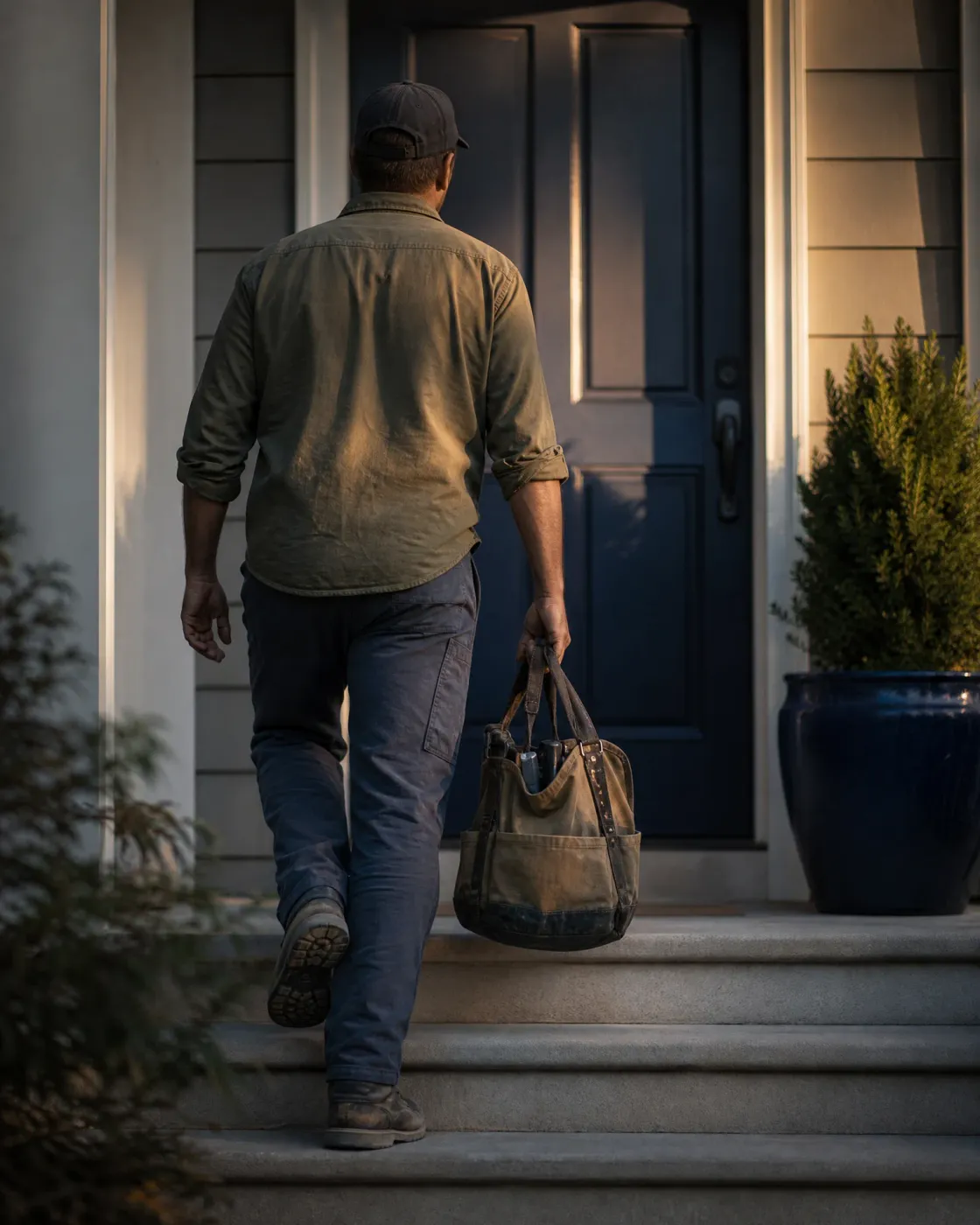
A man in a cap, olive shirt and dark pants carries a canvas tool bag up concrete steps toward a dark blue front door, with a potted shrub beside the entry.
A gray high-efficiency gas furnace installed in an unfinished basement, surrounded by gas lines, a condensate drain, and sheet-metal ductwork.

What actually wears out

A furnace does not wear out evenly. It sits idle most of the year, then gets asked to run for hours at a stretch once the cold sets in, and that start-stop pattern is what ages the parts that fail most. The flame sensor coats with a thin layer of oxidation every time it fires, cycle after cycle, until it can't sense the flame anymore. The igniter heats and cools hundreds of times a season, and that repeated stress is what eventually cracks it. Capacitors and relays on the control board degrade a little with every cycle too, not from any one hard night but from the sheer number of times they've opened and closed. None of this is damage from cold or from a hard winter. It is ordinary use, adding up the same way in any furnace, in any house, until the part that's furthest along finally gives out.

A cracked heat exchanger gets worse with every cycle

A cracked heat exchanger flexes every time it heats up and cools down. That crack grows a little each cycle. What starts as a small leak can turn into exhaust getting into the air the blower pushes through the house.

A struggling blower motor can burn itself out

A blower motor drawing too much current, because a bearing is going bad, will keep running for a while. But the strain adds up. Leave it running like that long enough and the motor overheats and seizes. What could've been a bearing replacement turns into a new motor.

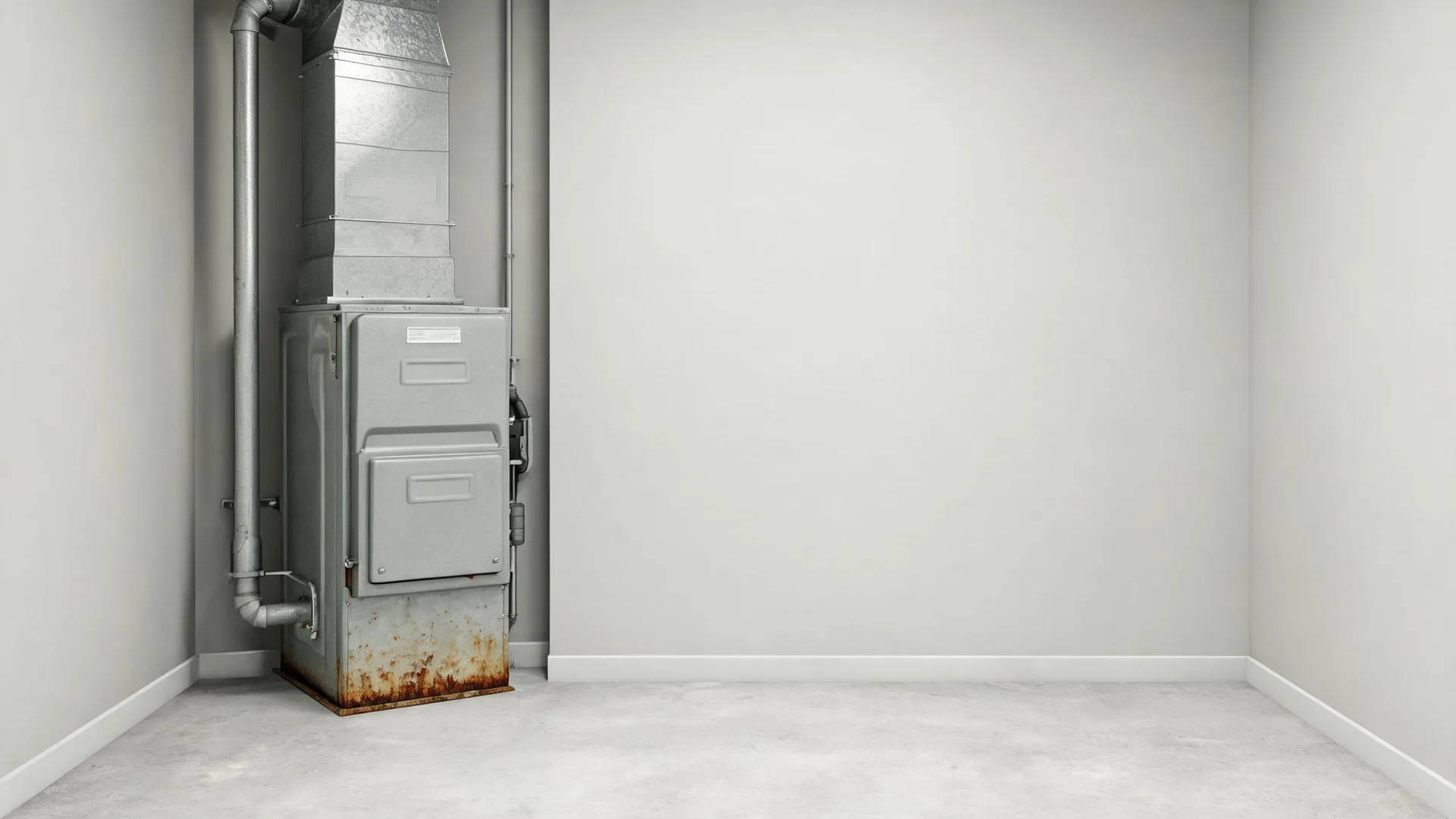
An empty unfinished basement containing a forced-air furnace with overhead ductwork, exposed ceiling joists, and a single hanging light bulb.

A new furnace would cut about $160 a year off heating for a typical Belmont County home.

  • A new high-efficiency furnace$630 a year
  • An older furnace$790 a year

Estimates for a typical Belmont County home, compared with an older unit built to the previous federal minimum, from EIA household energy data, Ohio fuel prices and NOAA climate normals. Your home will differ.

Repair makes sense when one part has failed and the heat exchanger is sound.

Replacement makes sense when the heat exchanger is cracked or the furnace keeps needing parts.

Most furnace calls end with a repair, not a replacement. The parts that fail most, the flame sensor, the igniter, a capacitor, are cheap to swap, and they don't mean the rest of the furnace is bad. What matters is whether this is one isolated failure or part of a pattern. A furnace that needs a different repair every season is telling you something, and swapping one more part won't fix it. Age matters, but condition matters more. A furnace that's built well and sized right for the house can run a long time on nothing but these small repairs. The one thing that changes the math is a cracked heat exchanger. That's not a wear item, it's a safety problem. A tech will usually talk replacement at that point, no matter how old the rest of the unit is.