

A row of illuminated two-story brick houses with front porches and mature trees photographed at twilight.

Furnace Repair in Lima, OH

Tell us about the job

Takes about a minute. No obligation.

RepairFurnace or heatingAllen County, OH
Step 1 of 2

What ZIP code is the job in?

September is when a weak furnace tells on itself. Your furnace has been sitting idle since spring, and the first cold snap in October asks it to run harder and longer than it has in months. If an igniter or a motor was already on its way out, that first real workload is what finishes it off. Furnaces in Lima run from October through May, so a problem that shows up now is only going to show up more as the months get colder. Getting it looked at in the first week or two it acts up is easier than waiting until you need it every day.

8 months
October through May, your furnace is on duty
22°F
the average winter night it heats against
64%
of homes here heat with gas, so most furnaces here burn gas
5 winter storms
in ten years, the nights a failure hurts most
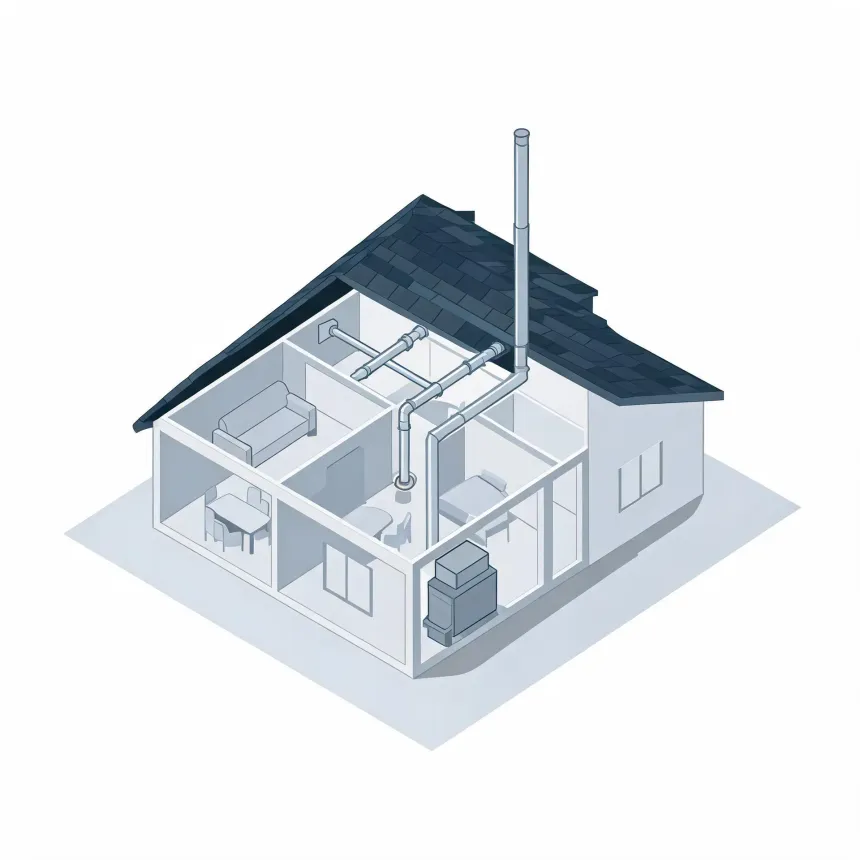
Isometric cutaway illustration of a single-story house showing interior rooms with furniture, ductwork and piping running to a tall vertical flue through the dark shingled roof, and a furnace-like appliance unit on the floor.
Your furnace works hardest from November through March.

NOAA nClimDiv, 1991–2020 normals

Furnaces in Lima run about eight months a year, October through May.

Winter nights here average 22°F. That's when the furnace needs to work, not when it needs a diagnosis.

Whatever's wrong with the furnace right now, it's probably not special to Lima. It's the same handful of problems that show up in any furnace this age, once it's running for hours at a stretch instead of minutes. An igniter cracks. A flame sensor gets coated with residue until it can't tell the flame is still burning. A motor draws too much current and trips its own limit switch. None of that has anything to do with where the house sits. That's good to know, because it means the fix is usually straightforward once someone finds the actual part that's failing. It's not a mystery that takes days to chase down. Natural gas ran $12.89 per million Btu here last year. So a furnace that's cycling on and off too much, or running longer to hit the same temperature, is worth fixing just for the gas bill, never mind the comfort.

Get it looked at early

Problems tend to show up in the first weeks of the season, when the load hits a part that was already weak.

Find a contractor
A man in a cap, dark jacket and tan work pants walks up porch steps toward a dark blue paneled door, carrying a canvas tool bag with tools in its outer pockets, beside a potted shrub.
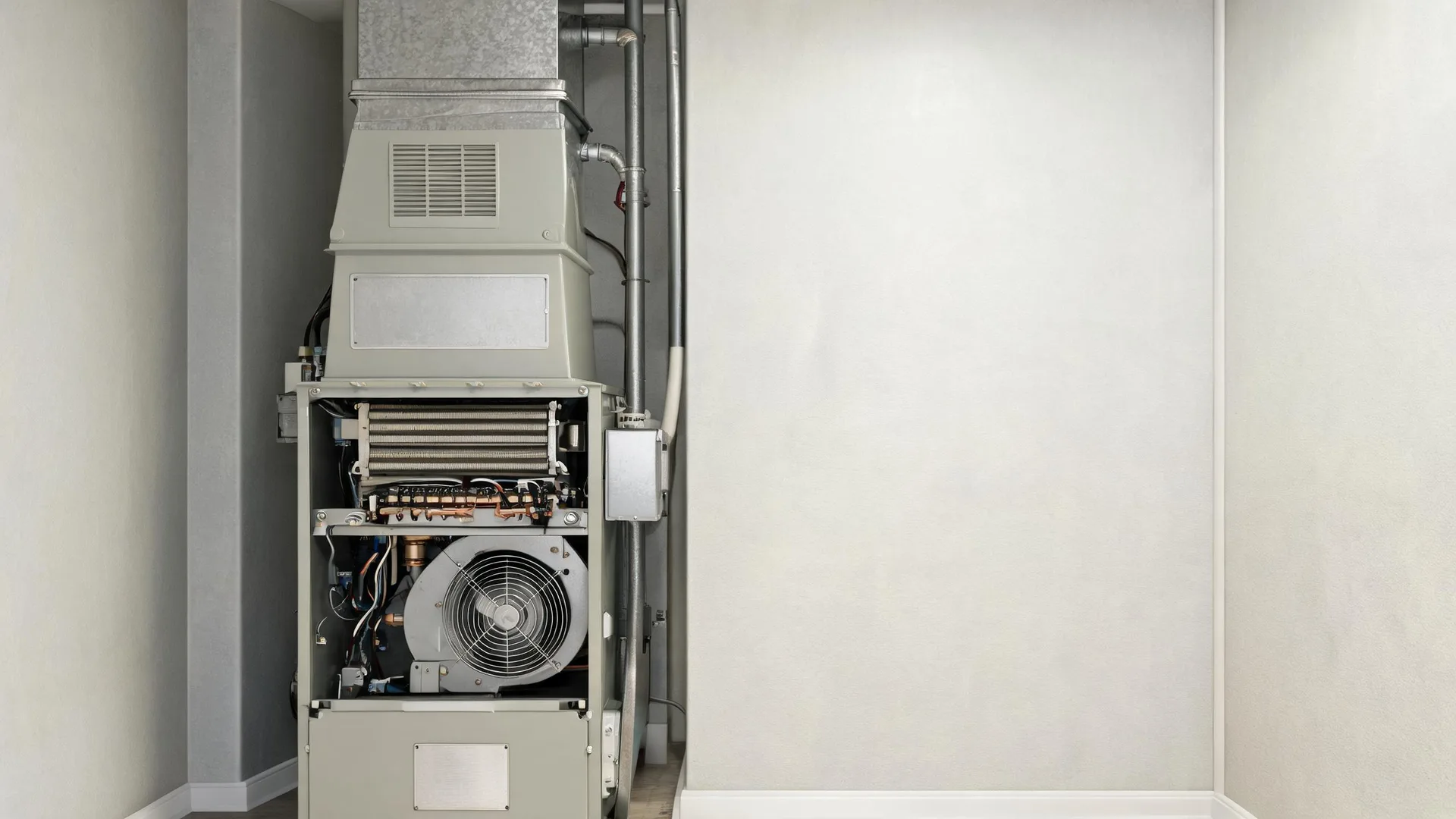
A gray high-efficiency gas furnace installed in an unfinished basement, surrounded by gas lines, a condensate drain, and sheet-metal ductwork.

Keep it running and the small problem becomes the only problem

A cracked igniter doesn't get better because the furnace keeps firing. Every attempt to light flexes that crack a little more, until it breaks clean through and the furnace won't light at all. A dirty flame sensor works the other way around. The furnace shuts off a little earlier each time, because the residue gets a little thicker with every cycle. A blower motor pulling too much current runs hotter than it should, and heat is what wears out motor windings. Wait another month and the repair at the end of that wait isn't the same one that's needed today. Airflow problems matter most of all. A clogged filter or a blocked vent makes the heat exchanger run hotter than it's built for. That's the one part in the furnace that cracks from strain, and once it cracks, it can't be patched. It has to be replaced.

Short cycling means something's cutting the flame off early

A furnace that fires up, runs a minute, shuts off, then starts again isn't heating the house right, and it isn't supposed to run that way. Usually the flame sensor loses track of the flame, or a limit switch trips because airflow is blocked somewhere. Either way, the furnace is shutting itself down to protect itself. It's not acting up for no reason.

A furnace that won't start at all is a different job than one that struggles

No response when the thermostat calls for heat points to the igniter, the control board, or the gas valve. A tech has to test each one to find which part failed. A furnace that starts fine but blows lukewarm air, or trips off partway through a cycle, points somewhere else. That's usually the blower motor or the heat exchanger.

A gray forced-air furnace with sheet-metal ductwork stands in an unfinished basement with exposed wooden joists, concrete walls, and a hanging incandescent bulb.

A new furnace would cut about $160 a year off heating for a typical Allen County home.

  • A new high-efficiency furnace$670 a year
  • An older furnace$830 a year

Estimates for a typical Allen County home, compared with an older unit built to the previous federal minimum, from EIA household energy data, Ohio fuel prices and NOAA climate normals. Your home will differ.

Repair makes sense when one part has failed and the heat exchanger is sound.

Replacement makes sense when the heat exchanger is cracked or the furnace keeps needing parts.

At some point the question isn't what's wrong. It's whether fixing it makes sense for a furnace that age. A cracked igniter or a failed flame sensor is worth replacing on almost any furnace. The part is cheap next to the furnace itself, and it solves the problem. A cracked heat exchanger is different. That part doesn't get repaired, only replaced, and finding one usually means the furnace is near the end anyway. What matters most is the pattern. Is this the first real repair, or the third one in a couple years? One failed part just means a furnace had a bad week. A string of them means the furnace is tired. A tech who knows the history can usually tell which one it is.