
A trimmed hedge borders a mown lawn in front of single-story houses with dark siding and shingled roofs, surrounded by large leafy trees under an overcast sky.

Furnace Repair in Lancaster, OH

Tell us about the job

Takes about a minute. No obligation.

RepairFurnace or heatingFairfield County, OH
Step 1 of 2

What ZIP code is the job in?

Your furnace in Lancaster runs from October through May, about eight months of the year, and overnight temperatures sit around 24°F through December, January and February. That's a long stretch of work, but it's not an unusual load. It's the same kind of winter furnaces around here are built for. So when something breaks, it's rarely because the cold found some weakness specific to this house. It's more likely a part that wears out the same way it would anywhere else, an igniter that's failed, a flame sensor that's fouled, a motor on its way out. The fix is finding which one it is and repairing that, not guessing at the whole system.

8 months
October through May, your furnace is on duty
24°F
the average winter night it heats against
60%
of homes here heat with gas, so most furnaces here burn gas
13 winter storms
in ten years, the nights a failure hurts most
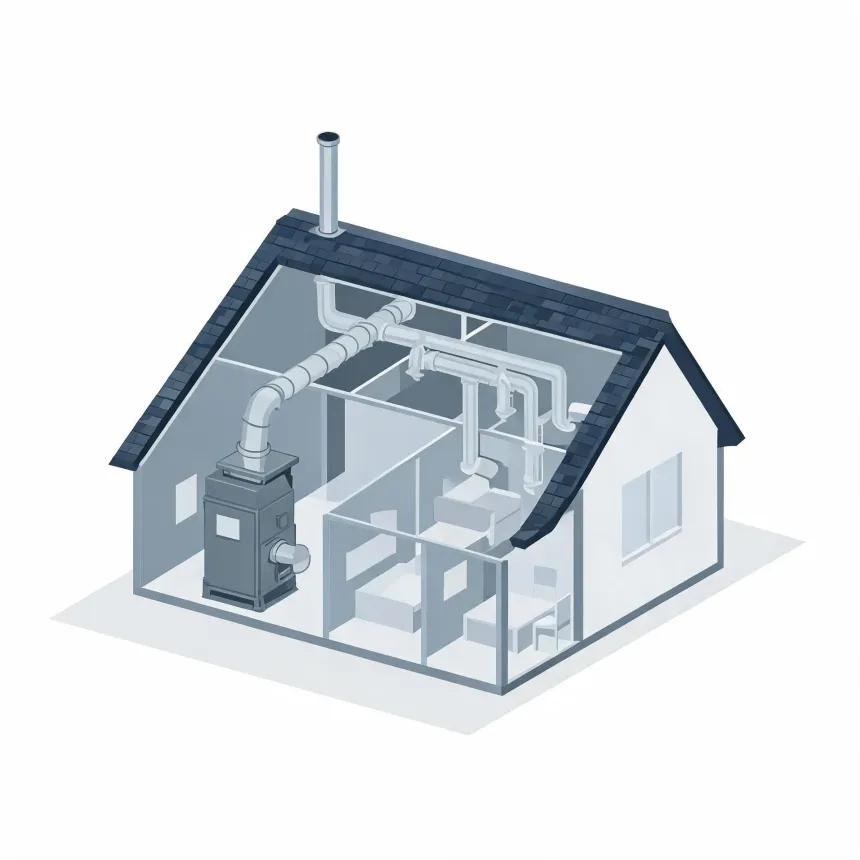
Isometric cutaway illustration of a small house showing a gray furnace unit with a flue pipe through the roof and branching ductwork running to rooms with simple furniture.
Your furnace works hardest from November through March.

NOAA nClimDiv, 1991–2020 normals

Furnaces in Fairfield County sit unused most of the summer, all the way to September.

Come October, the furnace has to run full-time again. That first stretch is when a weak part shows itself.

Natural gas ran $12.89 per million Btu in Ohio in 2024. A furnace that's working fine will still show up on the bill once it's running full load. That's a separate question from whether it's broken. If a furnace short-cycles, or takes a few tries to light, or blows air that never gets quite warm, it's burning gas without doing its job. That's worth a look no matter what gas costs. The repair itself is usually simple once the actual part at fault gets found. Running a furnace in Lancaster doesn't call for anything beyond that.

Get the part that's failing found and fixed

Fairfield County gets wind, hail, the occasional winter storm. None of that is what takes down a furnace. A furnace fails because a part inside it wears out, same as it would anywhere else. So if yours is acting up, don't wait for something bigger to happen. Get the part that's failing found and replaced.

Find a contractor
A man in a dark long-sleeve shirt and brown work pants, seen from behind, carries a worn canvas tool bag as he steps up porch stairs toward a navy blue front door of a light gray clapboard house, with a potted shrub beside the entry.
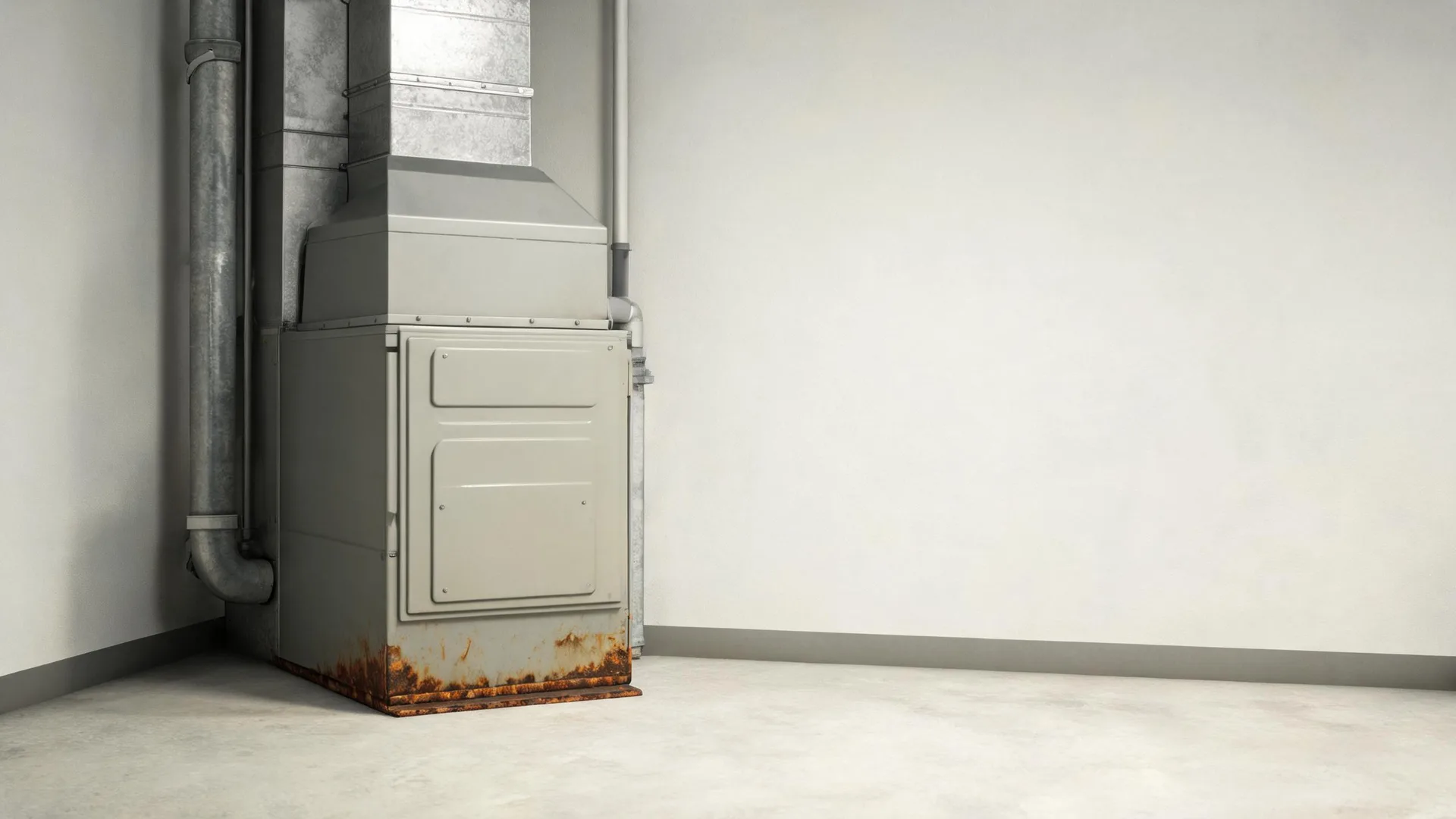
A gray gas furnace with attached ductwork and piping installed in an unfinished concrete basement.

A newer house usually means a furnace with years left in it

Half the homes in Fairfield County were built in 1984 or later. If yours is one of them, the furnace is less likely to be failing from age than from one part wearing out ahead of the rest. That's worth knowing before anyone talks about replacing anything. A furnace with years left in it is worth repairing. Fix the part that's acting up. That's not a sign the whole unit is done.

A cracked heat exchanger gets worse under heat

A heat exchanger with a hairline crack can look fine on a cold check. Once the burners fire and the metal heats up, that crack opens wider. Combustion gases get into the air the blower pushes through the house. Every cycle after that stresses the same weak spot more.

A failing motor can take other parts with it

A blower motor running on worn bearings draws more current and runs hotter than it should. Left alone, it can seize up or trip the limit switch. The extra heat can also shorten the life of the control board sitting nearby. Catch the motor early, it's a one-part fix. Catch it late, and it usually isn't.

An empty unfinished basement containing a forced-air furnace with overhead ductwork, exposed ceiling joists, and a single hanging light bulb.

A new furnace would cut about $150 a year off heating for a typical Fairfield County home.

  • A new high-efficiency furnace$620 a year
  • An older furnace$770 a year

Estimates for a typical Fairfield County home, compared with an older unit built to the previous federal minimum, from EIA household energy data, Ohio fuel prices and NOAA climate normals. Your home will differ.

Repair makes sense when one part has failed and the heat exchanger is sound.

Replacement makes sense when the heat exchanger is cracked or the furnace keeps needing parts.

The part that failed tells you more than the furnace's age does. An igniter, a flame sensor, a capacitor, a limit switch, these fail on their own and get swapped out on their own, and once that's done the furnace is back to normal. A heat exchanger is different. It isn't sold or installed as a standalone part, so a crack in it isn't a repair in the usual sense. A contractor opening the panel on a dead furnace can usually tell within a few minutes which kind of failure they're looking at. That's the question worth asking, not how many winters the furnace has already been through.