





Three illuminated two-story brick houses on a tree-lined residential street photographed at twilight, with warm window light and landscape uplighting visible against a deep blue evening sky.

Furnace Repair in Kent, OH

Tell us about the job

Takes about a minute. No obligation.

RepairFurnace or heatingPortage County, OH
Step 1 of 2

What ZIP code is the job in?

Kent gets eight months of heating a year, October through May. Overnight lows in January average 21°F. That's a normal workload for a furnace, nothing abusive. So whatever the furnace is doing right now, shutting off early, blowing cold air, not starting at all, it's almost always one failed part. Not the whole system going bad. Find that part, replace it, and it's fixed.

8 months
October through May, your furnace is on duty
21°F
the average winter night it heats against
64%
of homes here heat with gas, so most furnaces here burn gas
12 winter storms
in ten years, the nights a failure hurts most
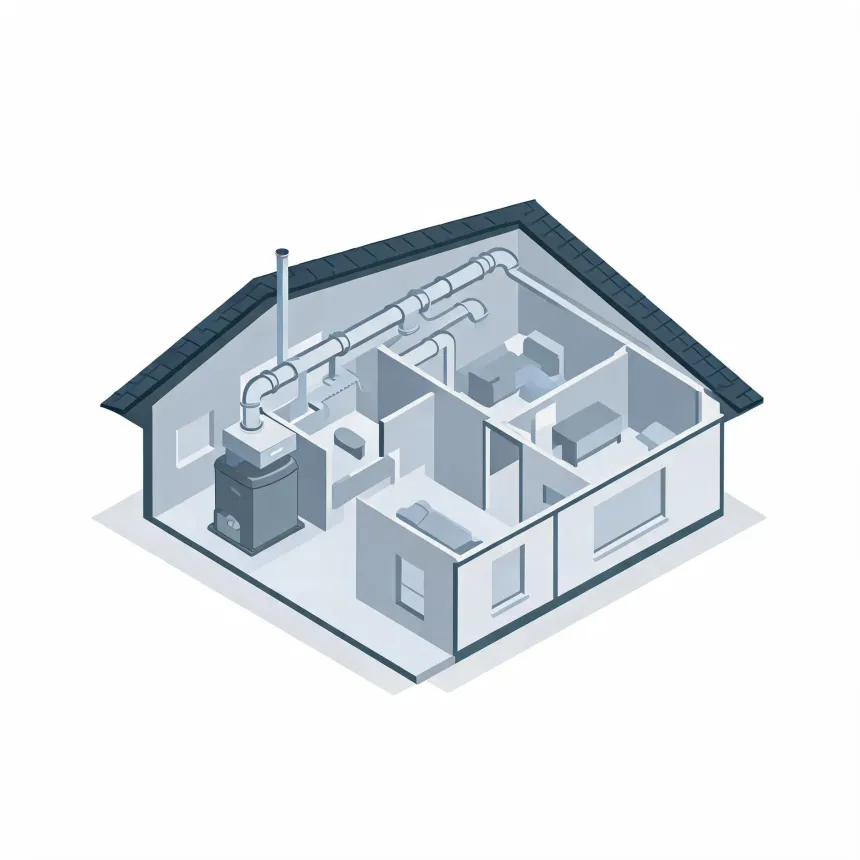
Isometric cutaway illustration of a single-story house showing interior rooms, ductwork running along the ceiling, a flue pipe through the roof, and a dark furnace unit in one corner.
Your furnace works hardest from November through March.

NOAA nClimDiv, 1991–2020 normals

September's still quiet around Kent. October's when the furnace kicks back on.

A weak igniter or a bad flame sensor usually doesn't show up until that first real cold snap hits.

Half these homes are older, but age isn't what breaks a furnace

Half the homes here were built by 1977
Heat runs October through May
Winter nights average 21°F
Running right matters more than running youngGas in Ohio ran $12.89 per million Btu in 2024. A furnace that short-cycles costs more than one that just takes a minute to get going.

Portage County gets its share of rough weather. 93 damaging wind events over the past decade, plus a handful of tornadoes. None of that touches a furnace directly. Wind and hail hit the roof and the siding, not the burner or the heat exchanger sitting in the basement or the closet. The one real connection is power. No power, no ignition, no matter how good the parts are. So if the furnace quit during a storm, check the breaker and the power first before assuming the worst about the unit itself.

Get the usual fix

Nothing about this area is especially hard on it. It's most likely the usual problem with the usual fix.

Find a contractor
A gas furnace with attached ductwork, gas piping, and condensate lines installed in a concrete-block basement.

A small problem now is still a small problem

A furnace that keeps running with something wrong doesn't fix itself. It wears down the next part too. A flame sensor coated with buildup can't hold a signal, so the burner shuts off early. Every short cycle after that means the blower starts and stops more than it should in a season. That's hard on a motor bearing that was fine a week ago. A cracked heat exchanger gets worse with more heating and cooling, not better. A limit switch that keeps tripping is doing its job. It's saying something downstream is blocking airflow. Keep running the furnace through that warning, and whatever's causing it keeps going too. None of this means shut the furnace off and wait out the winter. It means the part acting up now is still just one part. Keep running the furnace on it, and it won't stay that way.

Check the filter first

A filter packed with dust chokes off airflow. A furnace starved for air trips its limit switch and shuts down before anything gets dangerous. Pull the filter and hold it up to a light. If you can't see through it, that's likely why the furnace is short cycling or blowing cold air.

Check the thermostat and the switch

Make sure the thermostat is set to heat, not just fan, and the setpoint is above room temperature. Check the furnace switch too, the one that looks like a light switch near the unit. Either one being off stops the furnace cold. Neither one means a part has failed.

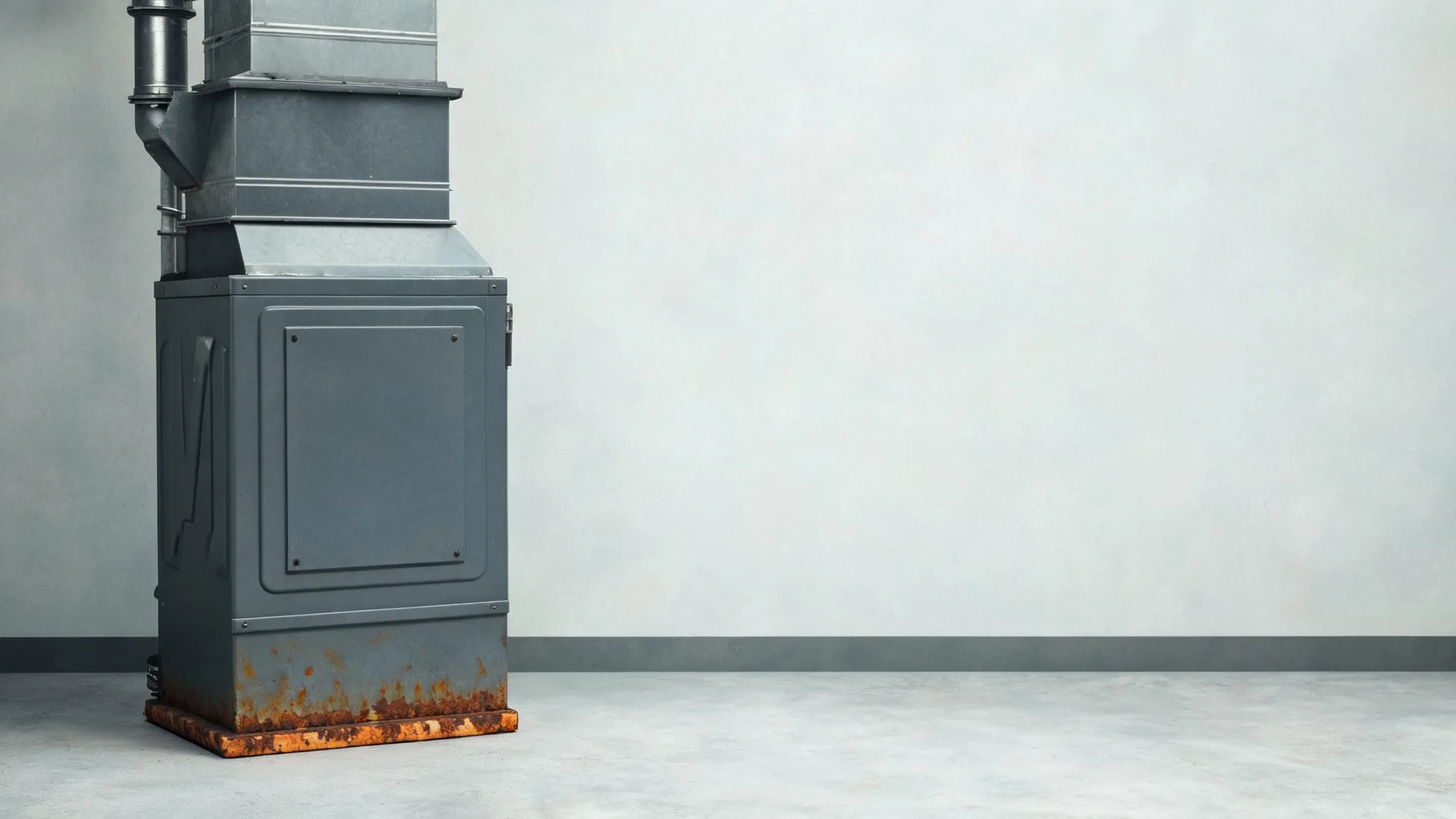
An unfinished basement interior showing a gray furnace unit beneath a bare incandescent bulb, surrounded by exposed joists, concrete walls, cardboard boxes, and utility pipes.

A new furnace would cut about $170 a year off heating for a typical Portage County home.

  • A new high-efficiency furnace$700 a year
  • An older furnace$870 a year

Estimates for a typical Portage County home, compared with an older unit built to the previous federal minimum, from EIA household energy data, Ohio fuel prices and NOAA climate normals. Your home will differ.

Repair makes sense when one part has failed and the heat exchanger is sound.

Replacement makes sense when the heat exchanger is cracked or the furnace keeps needing parts.

A diagnostic visit starts before any panel comes off. The tech asks what the furnace was doing right before it quit. Short cycling, blowing cold, not starting at all. That narrows things down fast. Then the covers come off, and the tech watches it run a full cycle, if it'll run at all. That means checking for a steady flame through the sight glass. Reading the flame sensor's signal with a meter. Checking that the inducer motor is pulling exhaust the way it should before the burners ever light. Static pressure gets checked too. A reading outside the normal range points straight at airflow, whether that's the filter, the ductwork, or a blower that's struggling. None of this is guesswork. Each reading either falls in range or it doesn't. That's what points to the part that actually failed.