





An unfinished basement containing a gas furnace with ductwork in the foreground and miscellaneous stored items along the far concrete wall.

Furnace Repair in Fremont, OH

Tell us about the job

Takes about a minute. No obligation.

RepairFurnace or heatingSandusky County, OH
Step 1 of 2

What ZIP code is the job in?

Furnace in Fremont runs about eight months a year, October through May. It works hardest on nights near 23°F. That's just normal workload for this area, nothing that wears a furnace out faster than anywhere else. If it's short cycling, blowing cold air, or not firing at all, usually one part is failing to do its job. A cracked igniter won't light the burners. A dirty flame sensor shuts the furnace off right after it starts. A clogged filter chokes airflow and can cause both of those problems. Find the part that's failing, replace it, and the furnace goes back to carrying the winter like it should.

8 months
October through May, your furnace is on duty
23°F
the average winter night it heats against
59%
of homes here heat with gas, so most furnaces here burn gas
6 winter storms
in ten years, the nights a failure hurts most
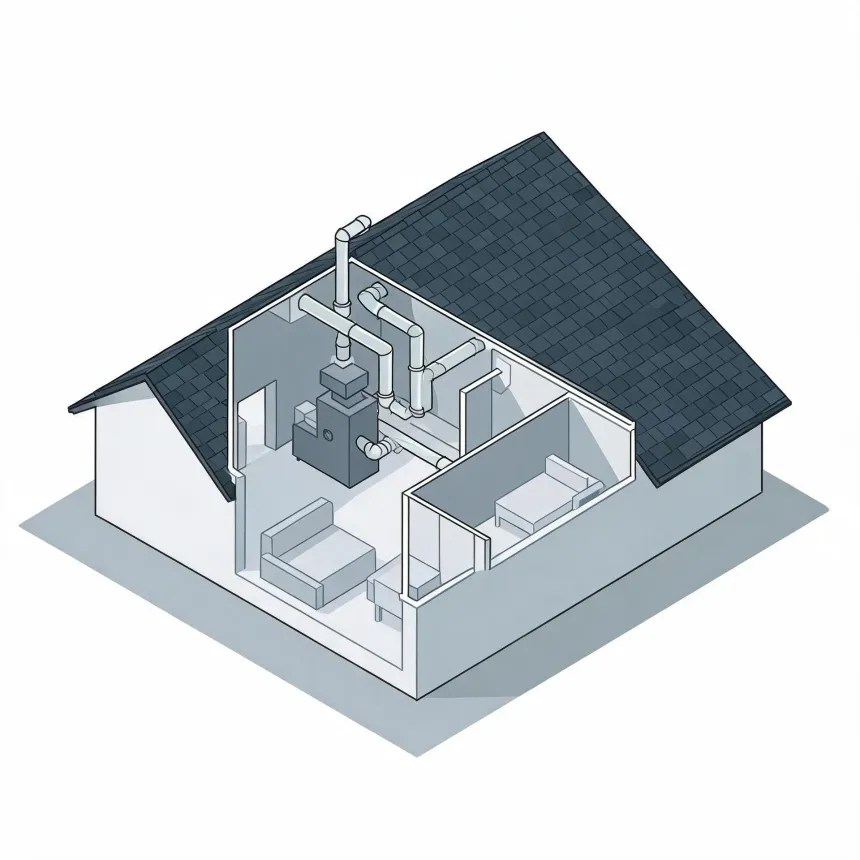
Isometric cutaway illustration of a single-story house with a dark shingled roof, showing interior rooms with furniture and a furnace connected to ductwork.
Your furnace works hardest from November through March.

NOAA nClimDiv, 1991–2020 normals

Furnaces in Fremont start their work in October.

If yours is struggling now, in the first cold weeks, that's when a weak igniter or a dirty flame sensor finally gets tested.

Half the houses in Fremont were built in 1960 or earlier

Half the homes here were built by 1960
Heat runs October through May
Winter nights average 23°F
A furnace that runs right is worth keeping that wayGas in Ohio cost $12.89 per million Btu in 2024. A furnace wasting fuel costs more than what it takes to fix it.

An old furnace and a worn-out furnace are not always the same thing. What decides the question is which part failed and what else is starting to go with it. A cracked heat exchanger ends the conversation, because it lets combustion gases mix with the air moving through your ducts, and that is not something to patch around. An igniter, a flame sensor, or a blower motor is a different story. Those get replaced on their own all the time, and doing so can carry a furnace that's otherwise sound through many more winters. The question worth asking the technician is whether this is the first real repair the furnace has needed or another one in a string of them. A furnace that keeps failing in different ways is telling you something a single repair can't fix.

Get the usual fix

Nothing about this area is especially hard on it. It's most likely the usual problem with the usual fix.

Find a contractor
A man in a cap, gray long-sleeve shirt and tan pants walks up stone steps toward a dark blue front door, carrying a waxed canvas tool bag in his right hand.
A gas furnace with attached ductwork, gas piping, and condensate lines installed in a concrete-block basement.

What wears out is whatever runs every cycle

The parts that fail are the ones working every time the furnace fires. The igniter heats up and cools down on every call for heat. That flexing is what cracks it eventually. The flame sensor sits right in the flame every cycle too. Over enough cycles it builds up a film that keeps it from sensing the flame at all. Then the furnace shuts itself off as a safety measure. A blower motor's bearings wear from hours of spinning. None of these parts care what the temperature is outside. They care how many times they've fired and how many hours they've run. Across a full season, those numbers just keep climbing.

Listen before you look

A boom at startup means gas is building up before it lights, instead of catching right away. A rhythmic squeal points to a blower wheel bearing. Clicking that never turns into a flame means the igniter is trying and failing. Any of these is worth a call before the furnace quits for good.

The pattern matters more than the moment

A furnace that shuts off after a few minutes, starts again, then shuts off again is short cycling. It's doing that on purpose. A limit switch or the flame sensor is telling it to stop rather than keep running unsafely. If it's been doing that for days already, the part hasn't just started to fail. It's already failed.

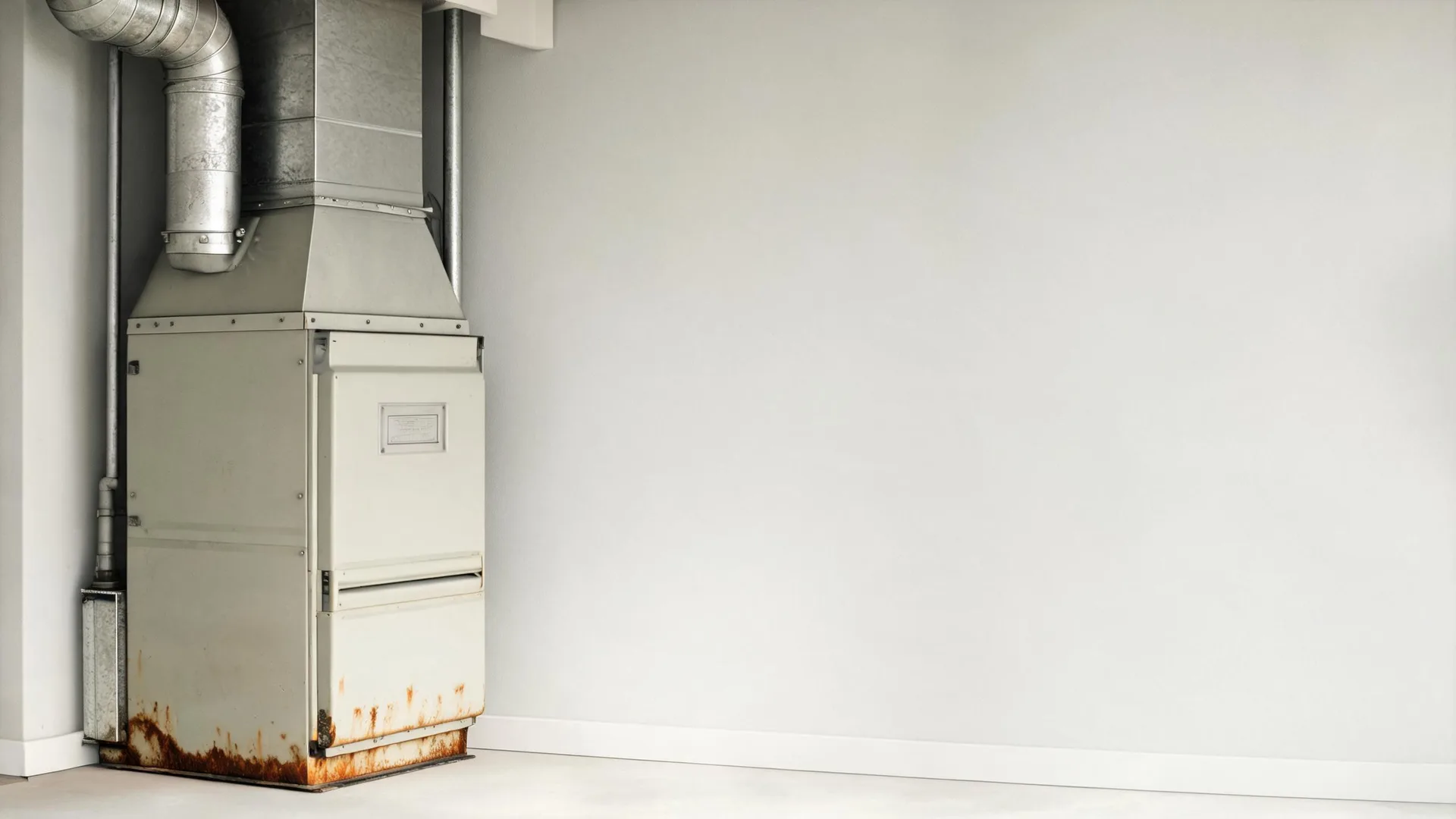
A gray forced-air furnace with sheet-metal ductwork stands in an unfinished basement with exposed wooden joists, concrete walls, and a hanging incandescent bulb.

A new furnace would cut about $170 a year off heating for a typical Sandusky County home.

  • A new high-efficiency furnace$670 a year
  • An older furnace$840 a year

Estimates for a typical Sandusky County home, compared with an older unit built to the previous federal minimum, from EIA household energy data, Ohio fuel prices and NOAA climate normals. Your home will differ.

Repair makes sense when one part has failed and the heat exchanger is sound.

Replacement makes sense when the heat exchanger is cracked or the furnace keeps needing parts.

A diagnostic visit starts with the technician asking what the furnace has been doing, because the symptom points to the system before any panel comes off. Short cycling sends them to the flame sensor and the limit switches. No ignition at all sends them to the igniter and the gas valve. From there they pull the panel and watch the furnace run through an actual cycle, since a part can look fine sitting still and still fail under heat. A multimeter checks the igniter's resistance and confirms the flame sensor's signal instead of guessing from a glance. Airflow gets checked too, because a choked filter or a blocked return can throw symptoms that look electrical but aren't. By the time the panel goes back on, the technician should be able to say which part failed and why, not just that the furnace is now running.