




Dark-sided single-story buildings with gray shingled roofs behind trimmed hedges, a mown lawn, and large leafy trees overhead.

Furnace Repair in Findlay, OH

Tell us about the job

Takes about a minute. No obligation.

RepairFurnace or heatingHancock County, OH
Step 1 of 2

What ZIP code is the job in?

Get the furnace looked at in Findlay before September ends, not after it's already running. Heat in Hancock County runs October through May, eight months straight. Anything that's already wearing thin tends to fail once the furnace gets worked hard again. A cracked heat exchanger, a weak igniter, a blower motor on its way out, none of that shows up while the furnace sits idle all summer. Get it checked before October and the problem gets caught on your schedule, not after the first cold stretch finds it first.

8 months
October through May, your furnace is on duty
22°F
the average winter night it heats against
59%
of homes here heat with gas, so most furnaces here burn gas
4 winter storms
in ten years, the nights a failure hurts most
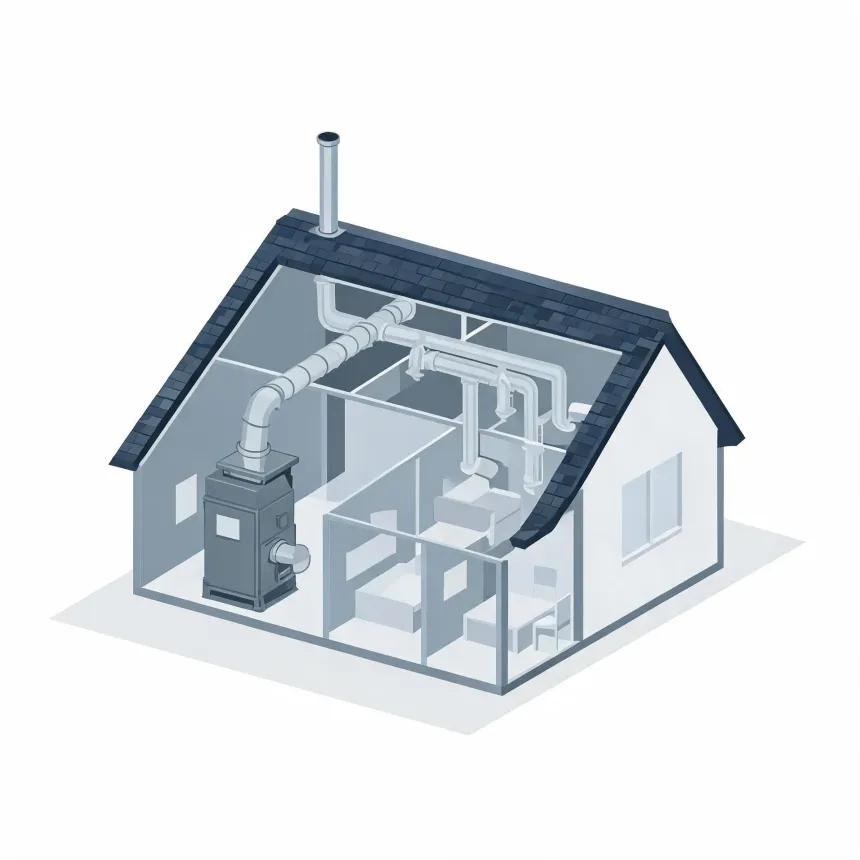
Isometric cutaway illustration of a small house showing a gray furnace unit with a flue pipe through the roof and branching ductwork running to rooms with simple furniture.
Your furnace works hardest from November through March.

NOAA nClimDiv, 1991–2020 normals

A weak igniter keeps trying to light the burners. Every failed attempt puts strain on the control board.

Turn the furnace off when something sounds or smells wrong. That keeps one bad part from taking the next one down with it.

A Hancock County winter doesn't wear out a furnace any faster than normal

Heat runs October through May
Winter nights average 22°F
Climate zone 5A

Furnace failures usually come down to the same few parts. The igniter goes first a lot of the time. It heats up and cools down every cycle, and that stress cracks it eventually. Flame sensors get a thin layer of residue on them until they can't tell the control board a flame is lit, so the gas valve shuts back off. Blower motors wear out at the bearings after years of running. You'll hear that happening before the furnace ever stops heating. The inducer motor fails the same way, and without it pulling exhaust out the flue, the furnace won't fire at all. These parts don't have much to do with each other. They just happen to be the ones working hardest every time the furnace runs.

In an older home, ask what the repair is buying you

Half the homes in Hancock County were built in 1973 or earlier. The furnace itself might be newer than that. But if it's still the original, it's worth asking how many years are left in it before paying for a big repair.

Find a contractor
A man in a navy shirt and tan trousers, seen from behind, carries a canvas tool bag up wooden porch steps toward a dark blue front door, with shrubs and a large planter nearby.
A gas furnace with attached ductwork, gas piping, and condensate lines installed in a concrete-block basement.

What all that running actually does to it

A furnace doesn't wear out by the calendar. It wears out by how many times it cycles on and off. Every start puts the same strain on the igniter. Every stop puts the same load on the blower bearings. Same heat and cooling stress on the heat exchanger, every time. That's what decides what a repair is actually worth. A cracked heat exchanger or a failing control board near the end of a furnace's life means the whole unit is wearing out at once, not just that one part. The same failure on a newer furnace is just a part that gave out early. Replace that part, and the rest of the furnace keeps going fine. Age alone doesn't tell which situation it is. A tech checking the repair against the furnace's actual condition can.

The furnace tells you before it quits

A furnace rarely stops cold without warning. It bangs on startup when a burner is slow to catch. It short cycles, running a few minutes and shutting off before the house warms up. The blower runs but no heat comes out, or there's a burnt, electrical smell from the cabinet when it fires. Each of these means a specific part needs attention before it fails for good.

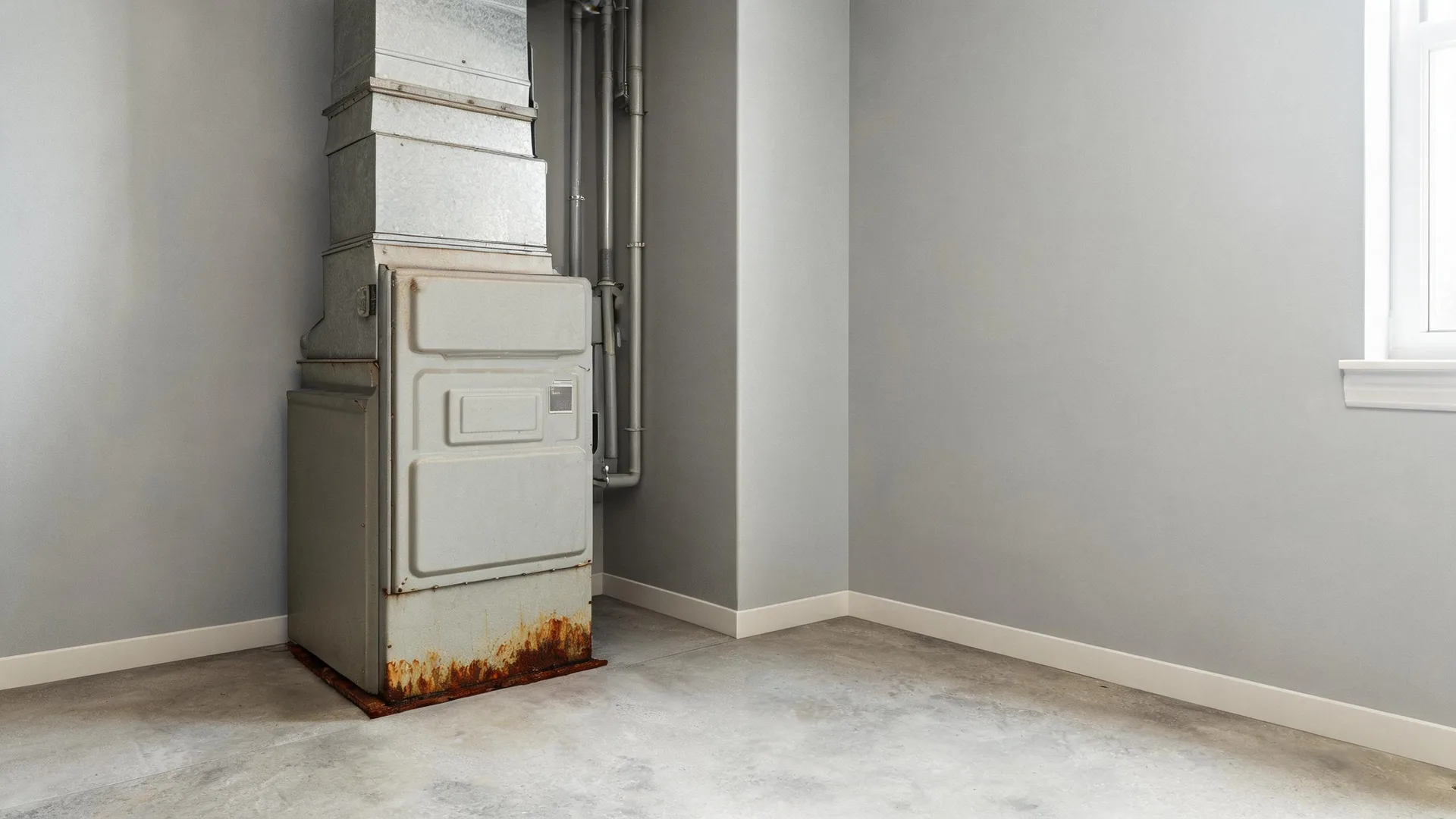
What you hear decides how fast to act

If the furnace still heats but makes a new noise, that can usually wait for a scheduled visit. If it shuts off mid cycle, trips the breaker, or smells like gas, shut it down and get it looked at right away. The noise or the smell tells you which situation this is.

An unfinished concrete basement containing a metal HVAC air handler, exposed wooden ceiling joists with sheet-metal ducts, a hanging bare bulb, copper pipes, and stacked cardboard boxes.

A new furnace would cut about $170 a year off heating for a typical Hancock County home.

  • A new high-efficiency furnace$670 a year
  • An older furnace$840 a year

Estimates for a typical Hancock County home, compared with an older unit built to the previous federal minimum, from EIA household energy data, Ohio fuel prices and NOAA climate normals. Your home will differ.

Repair makes sense when one part has failed and the heat exchanger is sound.

Replacement makes sense when the heat exchanger is cracked or the furnace keeps needing parts.

A diagnostic visit starts before any panel comes off. A tech asks what the furnace was doing, what it sounded like, whether it quit all at once or got worse over a few days. That history narrows down where to look before any tool comes out. Then the cabinet comes off and the igniter, flame sensor, and inducer motor get checked first, since those cause most no-heat calls. A multimeter checks whether the parts that look fine are actually getting the voltage they need. A part can look clean and still be dead. If the furnace fires, the tech watches the flame itself. Its color and shape say whether the burners are getting the right mix of gas and air. The visit ends with a straight answer about what failed, what it takes to fix it, and whether that repair is worth making on this furnace.