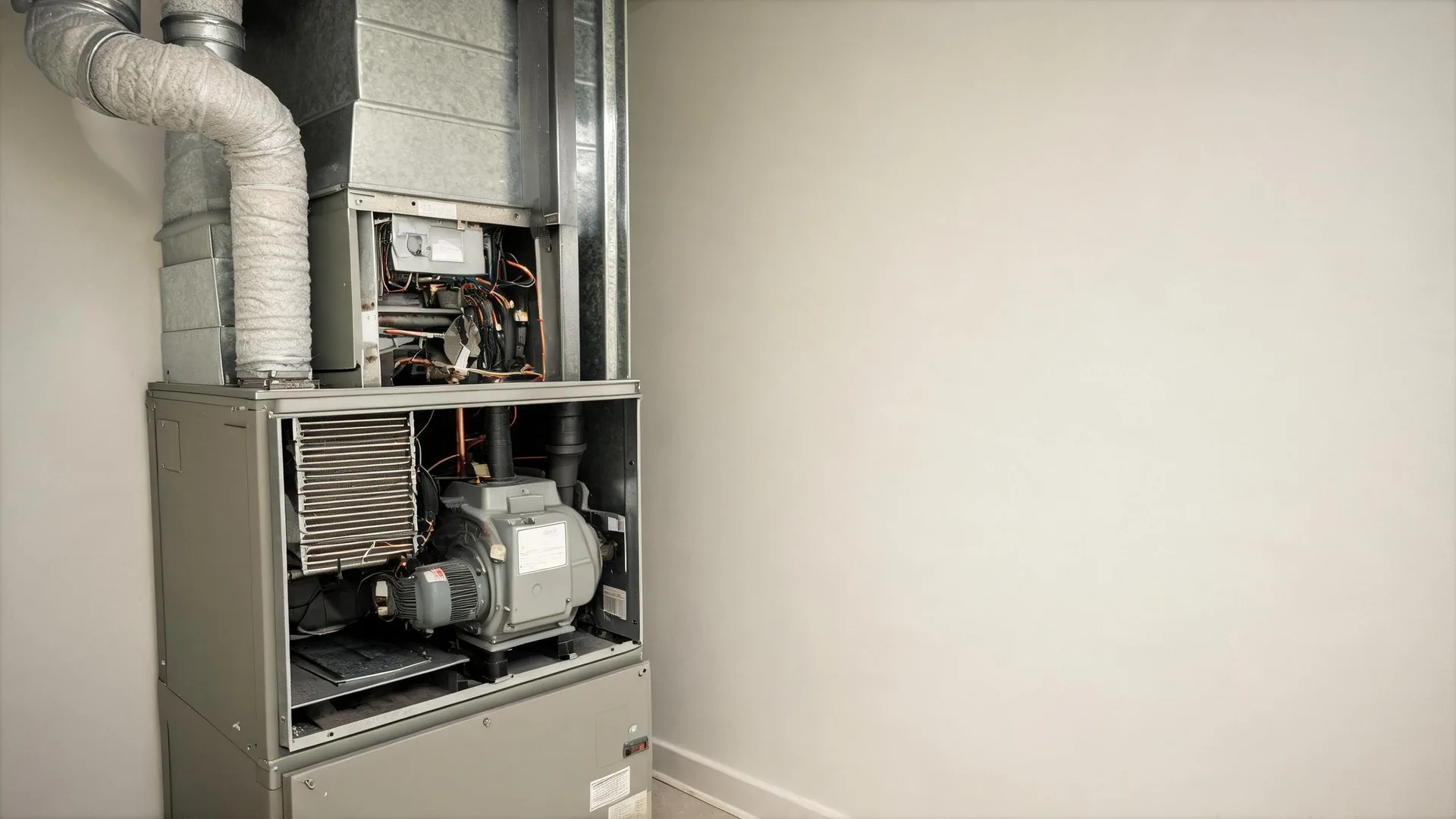
An empty unfinished basement containing a forced-air furnace with overhead ductwork, exposed ceiling joists, and a single hanging light bulb.

Furnace Repair in Cleveland, OH

Tell us about the job

Takes about a minute. No obligation.

RepairFurnace or heatingCuyahoga County, OH
Step 1 of 2

What ZIP code is the job in?

Storms come through often

Cuyahoga County saw 283 severe weather events between 2015 and 2024, with damaging wind alone hitting 221 times and 39 hail events in that span. Six tornadoes touched down too. A furnace sits inside, but what's bolted to the outside of the house, the venting, the electrical connections, doesn't always stay put through that.

Power doesn't always hold

Nearly one in five Ohio households went at least a full day without power in 2024. A gas furnace still needs electricity to run the blower and ignition, so when the power drops, so does the heat, no matter how much gas is in the line.

8 months
October through May, your furnace is on duty
23°F
the average winter night it heats against
80%
of homes here heat with gas, so most furnaces here burn gas
17 winter storms
in ten years, the nights a failure hurts most
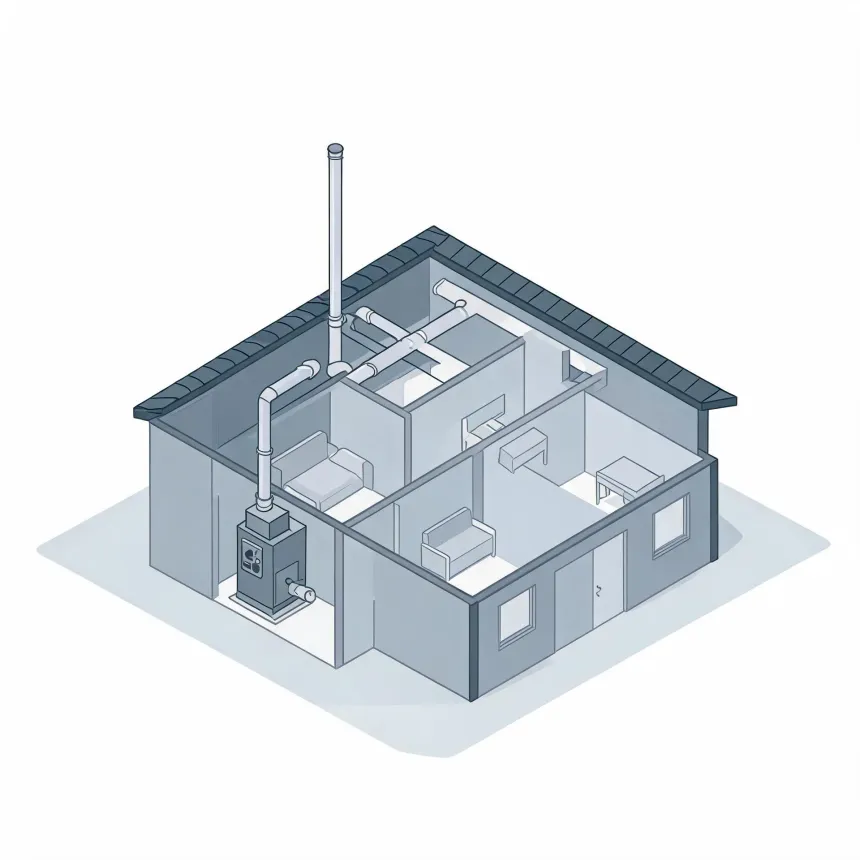
Isometric grayscale illustration of a cutaway single-story house showing interior rooms with furniture, a furnace unit connected to ductwork and a tall vertical flue pipe extending above the roof.
Your furnace works hardest from November through March.

NOAA nClimDiv, 1991–2020 normals

Half the homes in Cuyahoga County were built in 1957 or earlier.

A furnace that old is on borrowed time, and a big repair bill is a bad way to find out.

Eight months of heat, starting in October

Heat runs October through May
Winter nights average 23°F
Climate zone 5A

A few things are worth checking before anyone comes out. Start with the thermostat: make sure it's set to heat, not just fan, and that the temperature is actually set above room temperature. Check the breaker box and any reset switch on the furnace itself, since a tripped breaker will shut the whole thing down with no warning sign. Pull the filter and hold it up to a light. If you can't see light through it, that's choking off airflow and could be enough to trip a safety switch on its own. Look at the vent pipe where it leaves the house and make sure nothing is blocking it, no debris, no nest, nothing fallen against it. If the furnace has a standing pilot, check whether it's lit. None of this calls for taking anything apart. If the furnace still won't run after that, the problem is past what you can see from the outside.

If the outside unit took a hit, get it looked at now

If your furnace vent or the electrical connections outside took debris or hail this year, that's worth a look even if the furnace still runs fine. A tech can check whether anything bolted to the outside of the house moved or cracked before it turns into a no-heat call in the middle of winter.

Find a contractor
A gray high-efficiency gas furnace installed in an unfinished basement, surrounded by gas lines, a condensate drain, and sheet-metal ductwork.

Problems don't wait for you to notice them

A furnace that's struggling doesn't fail all at once. A cracked heat exchanger gets worse under heat, not better, because the metal keeps expanding and contracting around the crack every time the burners fire. A blower motor with worn bearings runs hotter the longer it spins, and heat is exactly what kills a motor faster. Ignore a clogged filter and the furnace pulls harder to move air through it, which stresses the blower and can run the heat exchanger hotter than it's built for. None of that fixes itself by running longer. The part doesn't rest and heal between cycles, it just keeps doing the thing that's wearing it out. A furnace making a new noise or tripping its limit switch is already telling you something's working too hard. Shutting it off and having it looked at stops the damage where it is instead of letting it spread to the next part down the line.

Most failures start with dirt or age, not bad luck

A flame sensor coated with a thin layer of residue stops sensing the flame and shuts the burners down, even though the part itself is fine. A dirty filter chokes airflow and overworks the blower. Igniters and blower motors simply wear out after enough cycles, the same way any part that heats up and cools down thousands of times eventually gives out. Most of what brings a furnace down is ordinary wear, not something exotic.

The question is whether the failure is isolated

A bad igniter or a failed flame sensor is a contained repair. The rest of the furnace doesn't know it happened. A cracked heat exchanger or a blower motor that's seized is different, because it points to stress that's been building for a while, and whatever caused it is still there after the part is replaced. Knowing which kind of failure you're looking at is what decides whether a repair actually settles the problem.

An unfinished concrete basement containing a metal HVAC air handler, exposed wooden ceiling joists with sheet-metal ducts, a hanging bare bulb, copper pipes, and stacked cardboard boxes.

A new furnace would cut about $170 a year off heating for a typical Cuyahoga County home.

  • A new high-efficiency furnace$670 a year
  • An older furnace$840 a year

Estimates for a typical Cuyahoga County home, compared with an older unit built to the previous federal minimum, from EIA household energy data, Ohio fuel prices and NOAA climate normals. Your home will differ.

Repair makes sense when one part has failed and the heat exchanger is sound.

Replacement makes sense when the heat exchanger is cracked or the furnace keeps needing parts.

A diagnostic call starts before any panel comes off. The tech asks what the furnace was doing: short cycling, no heat at all, a smell, a noise, a tripped breaker. That tells them where to look first. Then the cover comes off and they watch it run through a full cycle if it'll run at all, checking the igniter glows and lights the burners, the flame sensor holds that flame, and the blower kicks on when it should. They'll check the pressure switch, the limit switch, and pull the filter to see if airflow is part of the problem. A meter comes out for anything electrical, testing the capacitor, the connections, the control board, since a part can look fine and still be failing. The goal is to find the one thing actually causing what you're seeing, not to start swapping parts and see what sticks.