A row of dark-clad single-story houses with gabled roofs behind trimmed hedges, lawn and leafy trees under an overcast sky.

Furnace Repair in Chillicothe, OH

Tell us about the job

Takes about a minute. No obligation.

RepairFurnace or heatingRoss County, OH
Step 1 of 2

What ZIP code is the job in?

Age tells you how to read the problem

An old furnace acting up is a different story than a young one doing the same thing. On an older unit, a cracked heat exchanger or a failing inducer motor is often just the first of more problems to come. A furnace still within its expected life is usually worth fixing outright. It's got good years left in it.

Weigh the repair against what's left

A technician can tell you what the repair costs and how that stacks up against a new furnace. But only the homeowner knows how much patience is left for a unit that keeps needing attention. If this is the second or third repair in as many winters, that matters just as much as the price tag on this one.

8 months
October through May, your furnace is on duty
25°F
the average winter night it heats against
15 winter storms
in ten years, the nights a failure hurts most
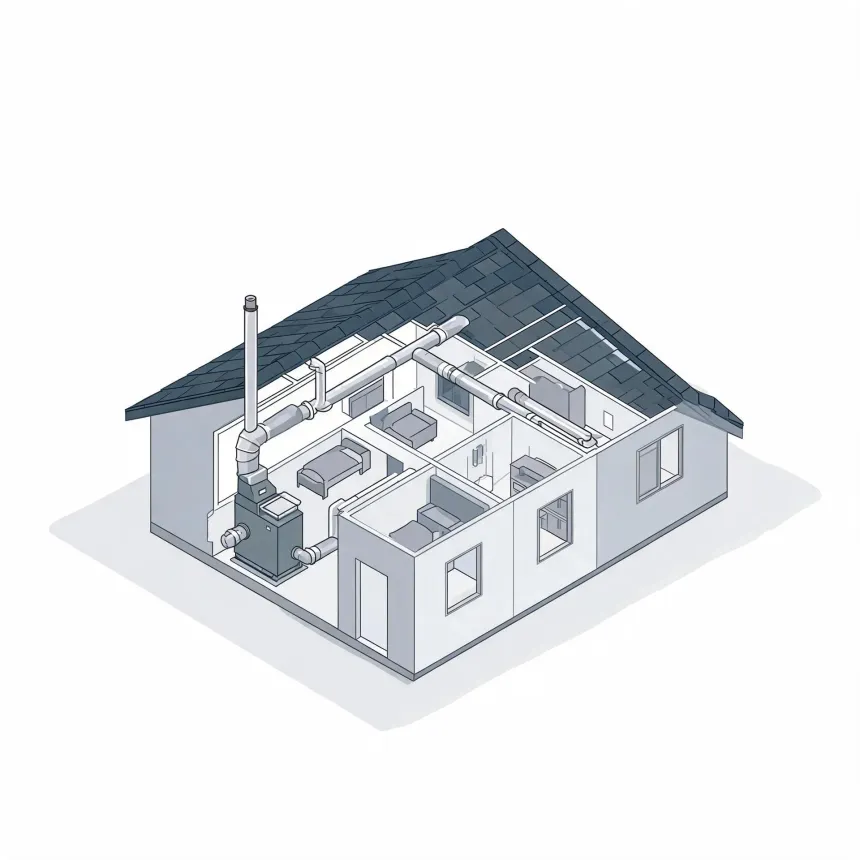
Isometric cutaway illustration of a single-story house showing interior rooms with furniture, ceiling ductwork, a furnace unit with a tall flue pipe, and a dark shingled roof.
Your furnace works hardest from November through March.

NOAA nClimDiv, 1991–2020 normals

Furnaces in Chillicothe sit unused from spring until October.

A weak part usually shows up in that first cold week. Not months later.

Ross County gets wind, hail, and winter storms. None of that picks on a furnace specifically.

107 severe weather events from 2015 to 2024
18% of homes statewide lost power a day or more in 2024
78 damaging wind events from 2015 to 2024
Ohio power costs make a struggling furnace expensive to ignoreElectricity cost $46.85 per million Btu across Ohio homes in 2024. A furnace working harder than it should burns through that every month it runs.

Half the furnaces in Ross County are heating homes built in 1974 or earlier, and half in newer ones, which tells you less than you'd think. A furnace doesn't know how old the house around it is. It runs on its own clock, wearing out the igniter or the inducer motor on its own schedule regardless of when the walls went up. So an old house can have a furnace installed five years ago, and a new house can have one nursed along since the Clinton administration. What matters is the unit itself, not the place it sits in. A technician will ask when the furnace was installed, not when the house was built, because that's the number that actually tells them something.

A furnace that's struggling only gets more expensive to run

A furnace working harder than it should pulls more power every day it's left alone. Ohio's rates make that add up fast. Getting a technician out to find the real cause stops that waste instead of paying for it all winter.

Find a contractor
A man in a dark work shirt, tan cargo pants and boots, seen from behind, climbs porch steps toward a navy front door while carrying a worn leather tool bag.
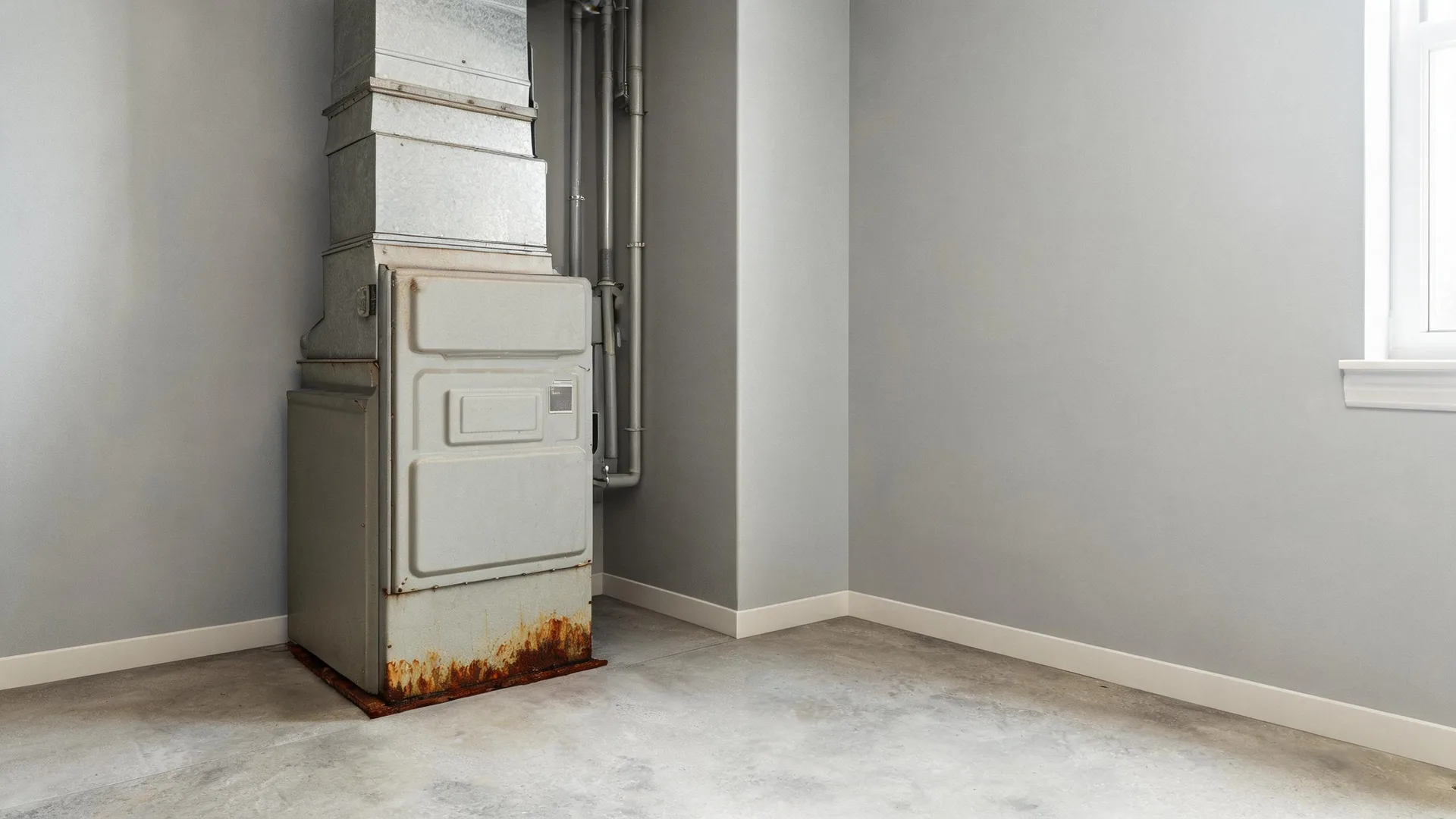
A gray gas furnace with attached ductwork and piping installed in an unfinished concrete basement.

Every cycle wears on the same parts a little more

A furnace doesn't fail from one bad month. Every cycle heats the igniter, then lets it cool. It flexes the heat exchanger, then lets it settle back. Enough winters of that, and those small stresses crack a part that looked fine the year before. The igniter usually goes first. It's brittle by design, and a small crack ends it the next time it heats up. The flame sensor doesn't break, it just gets fouled. A little more soot builds up each season until it can't sense the flame anymore. The inducer motor runs every cycle, start to finish, for as many winters as the furnace has worked. That many hours on a motor, and the bearings wear out. None of this is damage anyone could catch by looking. It's just parts reaching the end of what they were built to do.

Check the thermostat and the filter first

Check the thermostat setting. Set to 'auto' instead of 'on,' the blower sits idle between cycles. A dead battery can shut the whole system down, and it looks just like a furnace failure. Pull the filter next and hold it up to a light. If daylight barely gets through, airflow is choked enough to trip a limit switch and shut the furnace off on its own.

Check the power and the gas before anything else

The furnace runs off its own breaker. There's usually a switch near the unit too, looks like a regular light switch, and it cuts power the same way. Check both. If the furnace runs on gas, make sure that valve is open, and check whether any other gas appliance in the house lost service around the same time. A furnace that looks dead is sometimes just waiting on a switch somebody bumped.

A furnace cycling on a cracked heat exchanger or a failing limit switch isn't resting between cycles. It's stressing the same part every time it fires. A blower pulling air across a fouled flame sensor just builds more soot on it, and the next cycle shuts off sooner than the last one. Letting a short-cycling furnace keep trying doesn't give the part a chance to recover. None of this wears down slowly and heals up. It keeps failing in the same spot until that spot gives out. A cracked heat exchanger gets worse the longer it runs, too, because the metal keeps flexing against a crack that spreads under heat. Shut the furnace off and call someone. That stops it from getting worse before the next cold morning asks it to fire again.

A technician asks what the furnace was doing right before it quit. A short cycle tells a different story than no heat at all. Then comes the panel, watching it try to fire. A furnace that won't light points at different parts than one that lights and shuts off a minute later. The flame sensor gets checked for soot. The igniter gets tested for resistance. The inducer motor has to pull enough vacuum to satisfy the pressure switch before gas is allowed to flow at all. If the furnace trips a limit switch, the heat exchanger gets checked too. A crack there isn't just a repair, it's a safety issue. Most of this is testing one part at a time until one fails the test. Not guessing from the sound it makes. By the time the panel goes back on, the answer should be which part failed and why, not just that something did.