





A row of dark-sided single-story houses behind a long trimmed hedge, with mown lawn, a paved path and large leafy trees under an overcast sky.

Furnace Installation in Steubenville, OH

Tell us about the job

Takes about a minute. No obligation.

New system or replacementFurnace or heatingJefferson County, OH
Step 1 of 2

What ZIP code is the job in?

Close to half the homes in Jefferson County heat with utility gas, more than any other fuel. If your old furnace burns gas, a new gas furnace is almost always the straightforward choice, since the gas line and vent are already there to use. Electric heat comes in second here at 27.6 percent, and fuel oil still heats a fair number of homes too, at 13.1 percent. If yours is one of those, say so up front. Swapping fuels on an install is a different job than replacing what's already there.

8 months
October through May, your furnace is on duty
23°F
the average winter night it heats against
80% AFUE
the federal minimum any new unit must meet
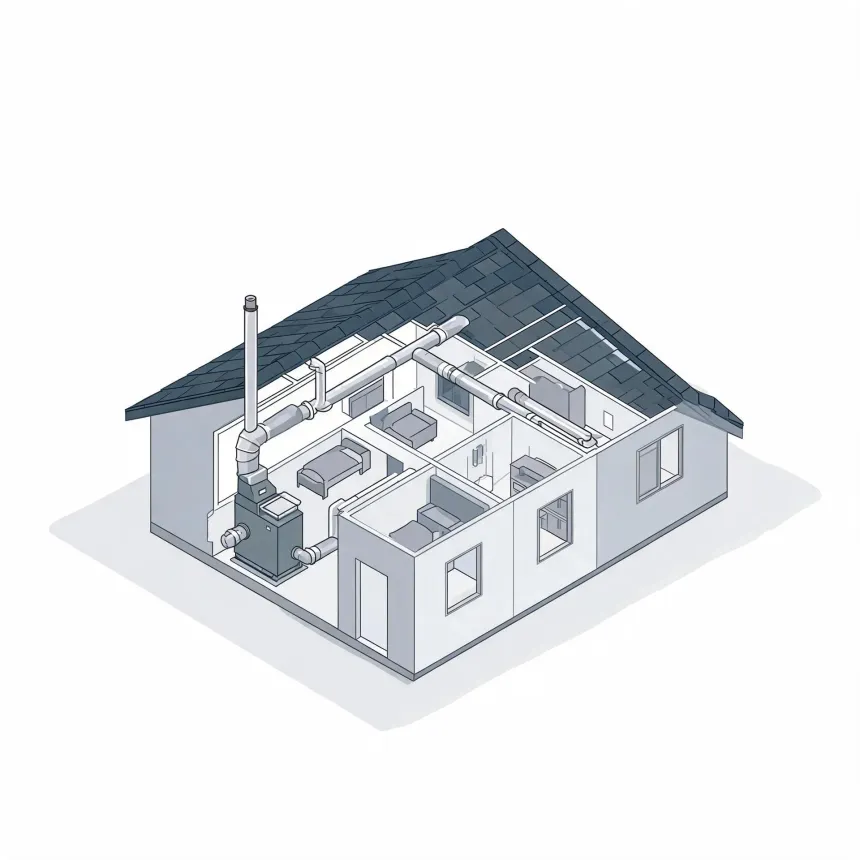
Isometric cutaway illustration of a single-story house showing interior rooms with furniture, ceiling ductwork, a furnace unit with a tall flue pipe, and a dark shingled roof.
Your furnace works hardest from November through March.

NOAA nClimDiv, 1991–2020 normals

Half the houses in Jefferson County went up in 1958 or earlier.

A furnace going into a house that old has to work with the ducts and vent already built into that house, not a blank slate.

Heat sticks around eight months a year here. September is the month to get this done.

Heat runs October through May
Climate zone 5A
Winter nights average 23°F
A standard furnace fits this jobGas cost $12.89 per million Btu in Ohio in 2024. That number works for a standard furnace, sized right for the house.

Before a contractor sizes a new furnace, have them look at the ducts and vent already running through your house, not just the nameplate on the old unit. A furnace built for a house going up today assumes certain duct sizes and a certain kind of venting. Yours may not match that. If the ductwork is narrower than a new high-efficiency furnace wants, or the old vent isn't right for a condensing unit's exhaust, that has to get sorted as part of the install, not found after. Ask what they're checking in your ducts and vent before they quote a system, and ask what changes if anything there.

A new furnace here has a minimum to meet, and a credit to go with it

Jefferson County falls in climate zone 5A. Any new non-weatherized gas furnace here has to hit at least 80 percent AFUE. That's the floor any contractor quoting an install has to meet. It stays the floor until the end of 2028, when the minimum jumps to 95 percent. A furnace installed now may also qualify for a federal tax credit. Worth looking into while comparing systems and bids.

Find a contractor
A man in a dark long-sleeve shirt and brown work pants, seen from behind, carries a worn canvas tool bag as he steps up porch stairs toward a navy blue front door of a light gray clapboard house, with a potted shrub beside the entry.
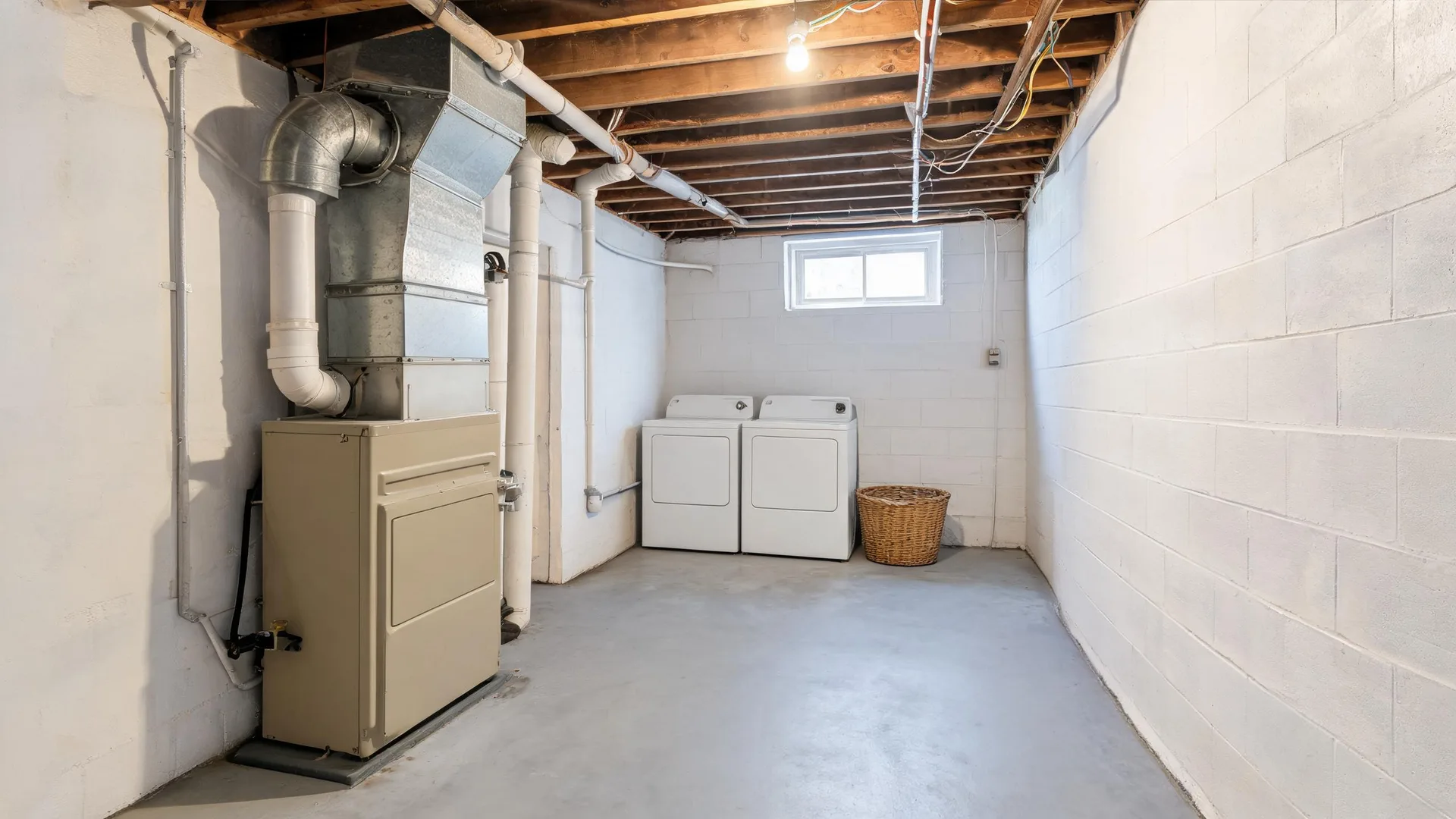
A gas furnace with attached ductwork, gas piping, and condensate lines installed in a concrete-block basement.

Eight months of running, not eight months of strain

A furnace here runs October through May, about eight months. Overnight lows average 23 degrees in December, January and February. That's cold, but not extreme. The furnace just cycles on and off through that whole stretch instead of fighting short bursts of severe cold. A standard furnace, sized right for the house, handles that kind of run time for years. Nothing about the length or the load calls for a bigger unit or a higher-tier furnace than the house actually needs.

The furnace itself is rarely the biggest line item

The equipment cost is only part of what a bid covers. Labor to set the furnace, run or modify ductwork, and tie in venting and gas lines often adds up to more than the unit sitting in the basement. Bids quoting the same furnace can still land at different totals because of what each contractor found, or didn't find, when they looked at the house.

What's already there either saves work or adds it

A furnace going into a spot with a matching vent category, ducts sized right, and a gas line already rated for it is a simpler job. Change any one of those, by stepping up to a higher AFUE furnace or fixing ducts that were never sized correctly, and the crew is doing work beyond pulling one furnace and setting another. That extra work is where bids start to differ.

An unfinished basement featuring exposed ceiling joists, a metal HVAC unit with round ductwork, a hanging light bulb, and scattered boxes and debris along the left wall.

A high-efficiency gas furnace would save about $130 a year to run in Jefferson County compared with a gas furnace.

  • A high-efficiency gas furnace$650 a year
  • A gas furnace$780 a year

Estimates for a typical Jefferson County home, from EIA household energy data, Ohio fuel prices and NOAA climate normals. Your home will differ.

Pulling out the old furnace takes longer than most people expect, once the vent pipe, gas line, and ductwork all have to come apart clean. Setting the new one in place is the fast part. Most of the day goes to hooking everything back up around it. The supply and return plenums get sealed to the cabinet. New vent pipe goes in if the furnace is a different category than the old one. The gas line gets checked for proper pressure once it's connected. Then the furnace runs a full cycle while the technician checks temperature rise across the heat exchanger and adjusts blower speed to match the ducts. A combustion analyzer checks the flue gases, so the furnace is burning clean before anyone calls it done. Count on most of the day once removal, install, and testing are all added up.