





A quiet residential street at dusk lined with illuminated two-story brick houses and mature trees.

Furnace Installation in Martins Ferry, OH

Tell us about the job

Takes about a minute. No obligation.

New system or replacementFurnace or heatingBelmont County, OH
Step 1 of 2

What ZIP code is the job in?

Belmont County sees rough weather. 9 winter storms between 2015 and 2024 brought heavy snow and ice. None of that calls for an oversized furnace or special equipment. A furnace sized to the home's square footage handles a normal Ohio winter just fine. What matters more is what happens when the power goes out along with the storm. A gas furnace still needs electricity to run the blower and ignition. A bad windstorm can knock out the power and leave the house without heat, even if the furnace itself is fine. That's worth planning around. It's not a reason to size up the furnace.

8 months
October through May, your furnace is on duty
23°F
the average winter night it heats against
80% AFUE
the federal minimum any new unit must meet
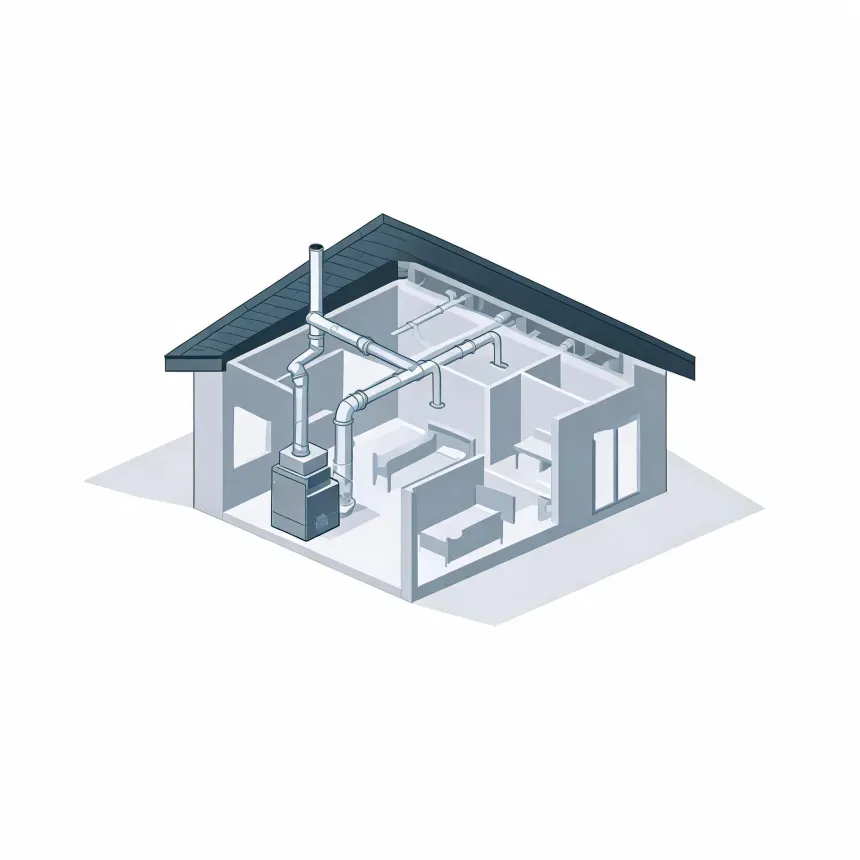
Isometric cutaway illustration of a small single-story house showing interior rooms, a furnace unit with a flue, and connected ductwork running below the dark gabled roof.
Your furnace works hardest from November through March.

NOAA nClimDiv, 1991–2020 normals

Furnaces in Martins Ferry run from October through May.

Get the new furnace in by September. That way the install isn't fighting the first cold snap.

Half the homes in Belmont County were built in 1965 or earlier. A new furnace has to work with the house that's already there.

Half the homes here were built by 1965
Heat runs October through May
Winter nights average 23°F

Eight months of heating a year is a long run for any furnace. That's not a reason to size up, though. A furnace matched to the home's square footage is built to carry that load. Nights average 23°F through December, January and February, and a correctly sized unit holds steady through all of that without strain. A bigger furnace doesn't handle cold any better. It just means longer stretches off and heat that's less even in between.

The right size furnace costs less to run, every winter it's in

A furnace that's sized right costs less to run. Gas in Ohio runs $12.89 per million Btu, and that price stays the same no matter how big the unit is. A furnace matched to the square footage only burns what the house needs. Winter after winter.

Find a contractor
A man in a dark jacket, cap and tan work pants carries a canvas tool bag up stone steps toward a navy front door, with a potted shrub beside the entry.
A gray gas furnace with attached ductwork and piping installed in an unfinished concrete basement.

Size it to the house, not to what's already hooked up

A furnace sized to match the old ductwork isn't the same as a furnace sized to the house. Get the square footage and the layout measured before accepting a quote. That's what tells you the right size. Not what's already installed.

The old furnace gets disconnected and hauled out

Taking out a furnace means capping or disconnecting the gas line, pulling the flue or venting, and disconnecting the electrical and the ductwork. The old unit gets hauled away after that. None of it gets left behind to deal with later. And the new furnace doesn't go in until the old one is all the way out of the space.

The vent pipe usually changes too

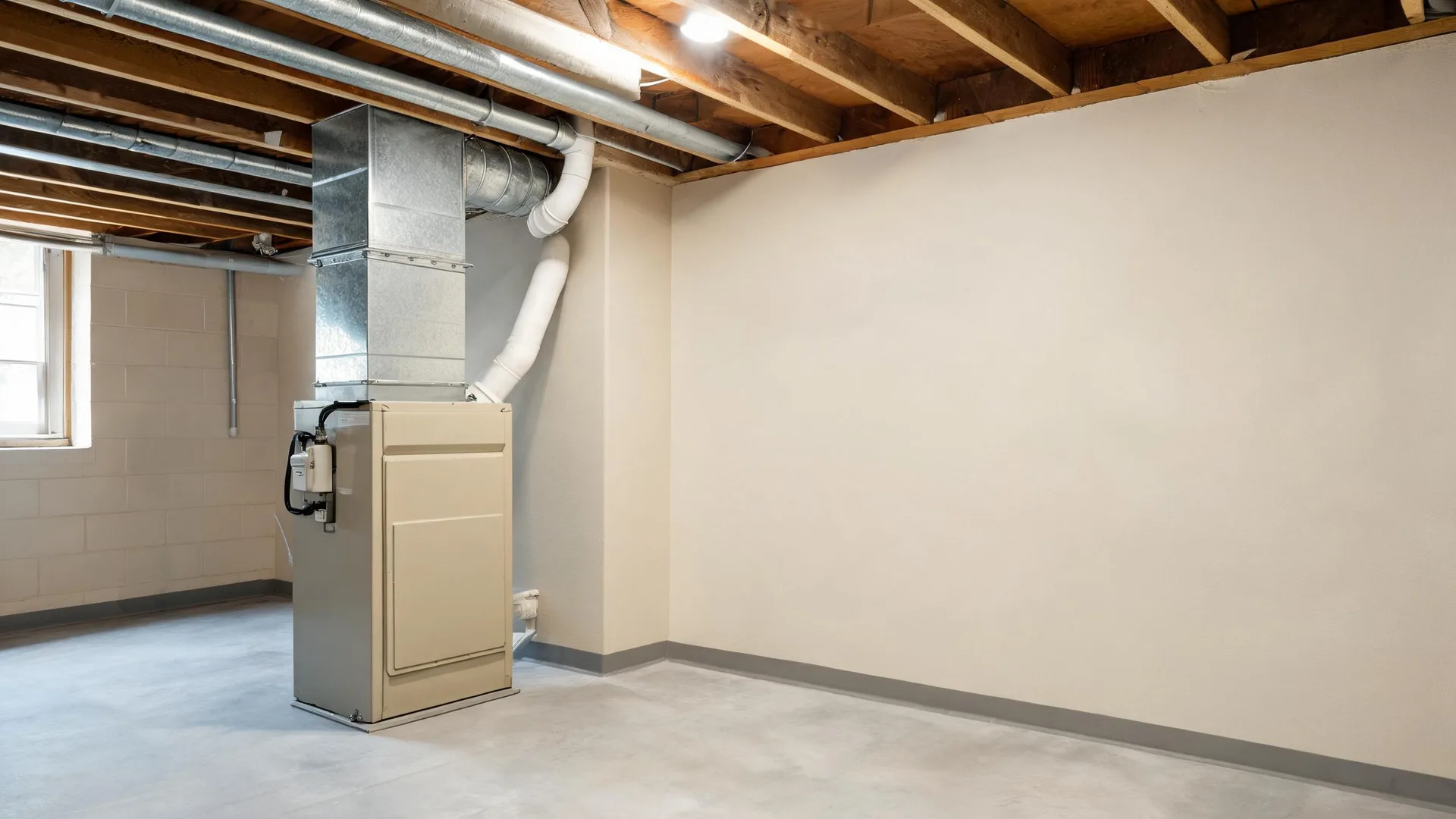
A new furnace almost always has a different efficiency rating than the old one, and that changes the venting it needs. A high efficiency furnace vents through PVC pipe out a sidewall, not up a metal flue. If that's the switch being made, the old flue gets capped or pulled out. It doesn't get reused.

An unfinished basement containing a forced-air furnace with metal ductwork, exposed wooden ceiling joists, a hanging Edison bulb, and bare concrete floors.

A high-efficiency gas furnace would save about $140 a year to run in Belmont County compared with a gas furnace.

  • A high-efficiency gas furnace$630 a year
  • A gas furnace$770 a year

Estimates for a typical Belmont County home, from EIA household energy data, Ohio fuel prices and NOAA climate normals. Your home will differ.

Install starts with setting the new furnace in place and leveling it on its stand or in the closet. Then comes the hard pipe into the gas line, the venting run, the return and supply plenums tying into the existing ductwork, and the electrical hookup to the control board. If it's a high efficiency unit, the condensate line goes in next, since that furnace makes water as it runs and needs a place for it to drain. Once it's all connected, the furnace gets fired up and checked. That means measuring gas pressure at the manifold, checking the temperature rise across the heat exchanger, and confirming the blower is moving the right amount of air. A furnace that fires up but never gets tested this way can run for years slightly out of spec. So this step doesn't get skipped. Last thing before anyone leaves is going over the thermostat and anything the new system needs that the old one didn't, like a different filter size.