





An empty unfinished basement containing a forced-air furnace with overhead ductwork, exposed ceiling joists, and a single hanging light bulb.

Furnace Installation in Lancaster, OH

Tell us about the job

Takes about a minute. No obligation.

New system or replacementFurnace or heatingFairfield County, OH
Step 1 of 2

What ZIP code is the job in?

Close to six in ten homes in Fairfield County heat with gas, more than any other fuel. If your old furnace burns gas, putting in another gas furnace is the simplest path, since the house is already set up to run on it. Electric heat comes next at under a third of homes, and a smaller share run on propane or fuel oil. Whatever your house already runs on is usually the strongest reason to stay with it.

8 months
October through May, your furnace is on duty
24°F
the average winter night it heats against
60%
of homes here heat with gas, so most furnaces here burn gas
80% AFUE
the federal minimum any new unit must meet
Isometric cutaway illustration of a single-story house showing interior rooms with furniture, a furnace unit with connected ductwork and a tall vertical flue pipe extending above the dark shingled roof.
Your furnace works hardest from November through March.

NOAA nClimDiv, 1991–2020 normals

A furnace built for Lancaster winters doesn't have to be oversized to get the job done.

Standard size and standard efficiency will handle it here. No need to pay for more than that.

Fairfield County gets rough weather, sure. But that doesn't mean the house needs a bigger furnace than it actually needs.

131 severe weather events from 2015 to 2024
18% of homes statewide lost power a day or more in 2024
81 damaging wind events from 2015 to 2024

October through May, the furnace is what stands between you and a 24 degree night. That's eight months of real work, not occasional use. A properly sized furnace handles that stretch the same way it handles any other winter. It cycles on and off to hold the temperature set on the thermostat. It doesn't need extra capacity for the cold nights, because sizing is based on the house, not on how low it gets on the worst night of January. Get the size right for the square footage and insulation, and it keeps up all season without being asked to do more than a furnace is built to do.

September is the month to get this done

Furnace season runs October through May, eight months of leaning on this thing. Get it put in during September, and it's already broken in by the time the cold sets in for good. No surprises on the first hard night.

Find a contractor
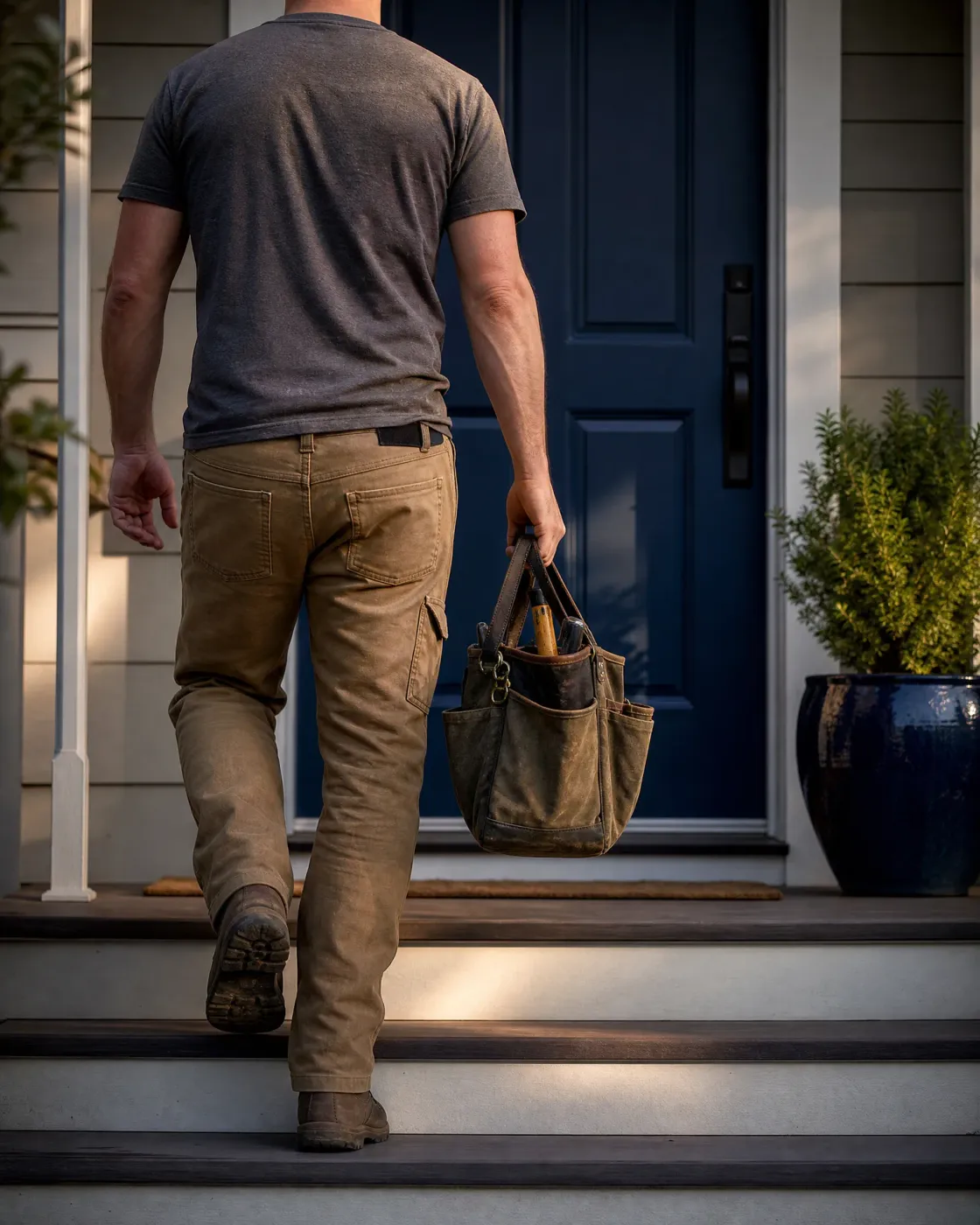
A man in a gray t-shirt and tan work pants, seen from behind, climbs concrete steps toward a dark blue front door while carrying a canvas tool bag, with a potted shrub beside the entry.
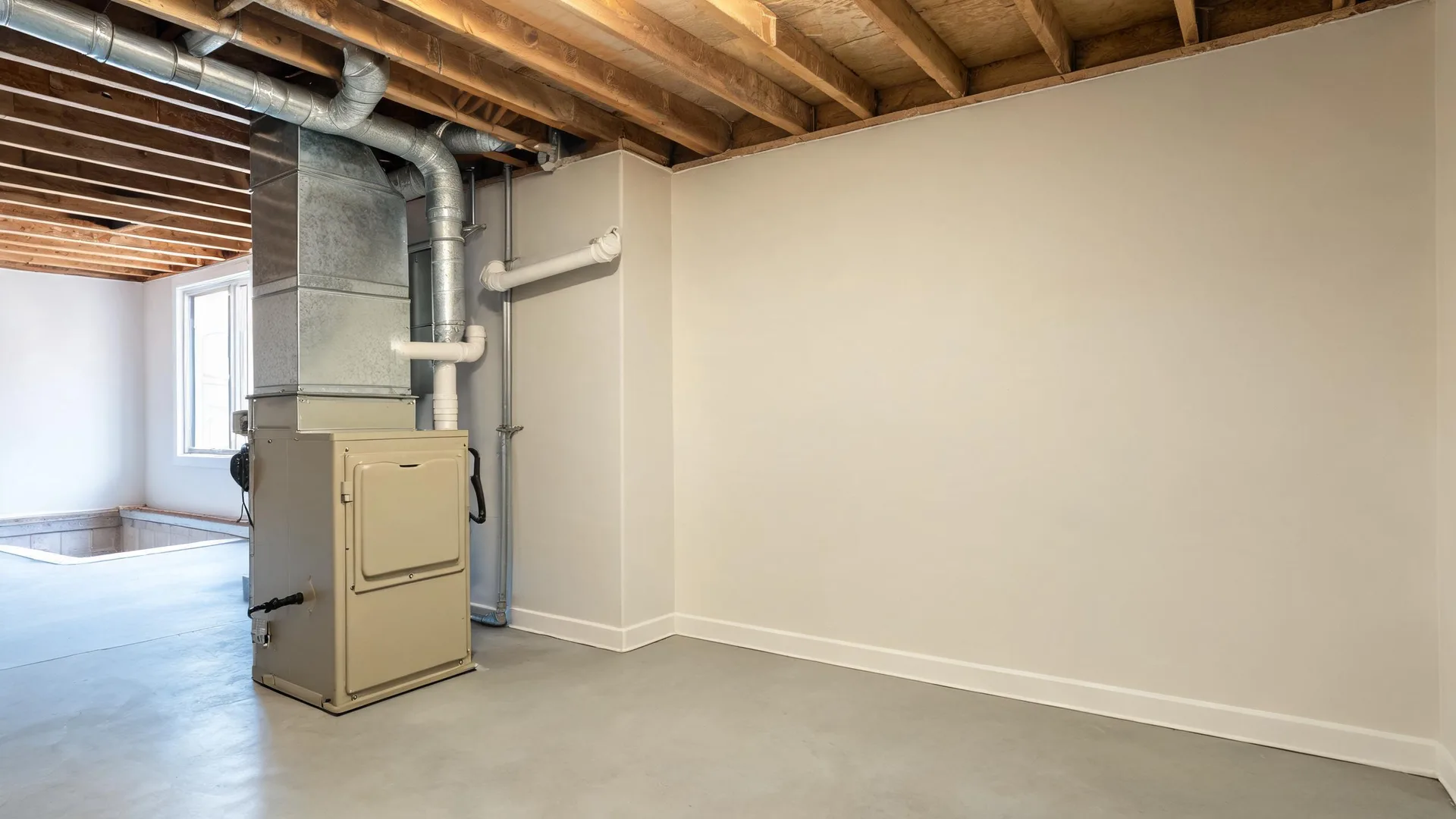
A gray gas furnace with attached ductwork and piping installed in an unfinished concrete basement.

The AFUE number says what happens to the gas after it's burned

The AFUE number on the label tells you how much of the gas it burns turns into heat in your house versus how much goes out the flue. The rest leaves as exhaust, so a lower rated furnace is paying to heat your house and your flue pipe both. The number also tells you what's inside the cabinet. A higher rated furnace is built around a second heat exchanger that pulls more warmth out of the exhaust before it vents, and that's why those models run PVC pipe instead of a metal flue. It isn't a better tuned version of the same furnace, it's built differently to do more with the same flame. A furnace that runs for months on end is turning fuel into heat on a lot of cold mornings, and whatever that rating is, it's the number working on every one of them.

The old furnace gets disconnected and hauled out

Before the new furnace goes in, the gas line, the flue, and the ductwork all get disconnected from the old one. If the cabinet has to come through a tight spot, it gets pulled out in pieces. Then it's hauled off to be scrapped. None of it stays behind to work around.

The new furnace doesn't just take the old one's place

The flue pipe, the gas line fitting, even the electrical hookup often have to change to match the new furnace. That's especially true with a higher efficiency model, since those run PVC instead of metal. Swapping the furnace means swapping what connects to it too. It's not just setting a new box where the old one sat.

An unfinished basement containing a metal furnace with ductwork, exposed wooden joists on the ceiling, cardboard boxes, a coiled cable, and a single hanging incandescent bulb.

A high-efficiency gas furnace would save about $130 a year to run in Fairfield County compared with a gas furnace.

  • A high-efficiency gas furnace$620 a year
  • A gas furnace$750 a year

Estimates for a typical Fairfield County home, from EIA household energy data, Ohio fuel prices and NOAA climate normals. Your home will differ.

Once the old furnace is out, the new one gets set in place and tied into the gas line, the flue or PVC venting, the ductwork, and the thermostat wiring. The gas line gets pressure tested for leaks before anything is fired. If it's a high efficiency furnace, a condensate line gets run too, since the second heat exchanger produces water that has to drain somewhere. Then the tech fires the burners, checks that the flame sensor is reading right, and watches the furnace cycle a few times to make sure it lights clean and shuts off the way it should. Last comes airflow at the vents and making sure the thermostat is reading the house correctly before anyone calls it done.