






An unfinished basement interior showing a gray furnace unit beneath a bare incandescent bulb, surrounded by exposed joists, concrete walls, cardboard boxes, and utility pipes.

Furnace Installation in Fremont, OH

Tell us about the job

Takes about a minute. No obligation.

New system or replacementFurnace or heatingSandusky County, OH
Step 1 of 2

What ZIP code is the job in?

Most homes in Sandusky County heat with gas. That's 59.4 percent of them. If the current furnace burns gas, putting in another gas furnace is the easy path. The installer is matching what's already there, not converting the house to something new. About 21.6 percent of homes here run on electricity, and another 15.4 percent run on bottled or LP gas. If the house is one of those, the installer sizes the new furnace around that fuel instead. The equipment and the installation steps change depending on which one it is.

8 months
October through May, your furnace is on duty
23°F
the average winter night it heats against
59%
of homes here heat with gas, so most furnaces here burn gas
80% AFUE
the federal minimum any new unit must meet
Isometric cutaway illustration of a single-story house showing interior rooms with a dark furnace unit, connected ductwork, a vertical flue pipe through the roof, and simple furniture, on a white background.
Your furnace works hardest from November through March.

NOAA nClimDiv, 1991–2020 normals

Furnaces in Fremont run from October through May.

September is the month to put in a new one. That's before the cold puts any demand on it.

Fremont doesn't ask more of a furnace than the standard size and efficiency can handle

Heat runs October through May
Winter nights average 23°F
Climate zone 5A
A standard furnace handles nights like these just fineWinter nights average 23°F here. That's well within what standard equipment is rated to handle.

Furnace size matters more than almost anything else in the price. A unit sized right for the house costs less to buy and less to run than one that's oversized because somebody guessed instead of calculating heat loss. Venting is the other big variable. If the new furnace runs a different efficiency than the old one, the exhaust may need a whole new path, PVC pipe run outside instead of a metal flue. That's labor and material most homeowners don't see coming. Ductwork plays a part too. If it's undersized or leaky, a contractor worth hiring will flag it. A new furnace pushing air through old, bad ducts won't heat the house the way it should. Efficiency rating drives cost as well. A higher-efficiency furnace costs more up front but burns less gas to make the same heat over a winter. What a house already has in place, usable ductwork, a vent that still works, a gas line sized right, keeps the job simple. What it's missing adds steps.

The furnace has to match the house, and this one has been standing a while

Half the homes in Sandusky County were built in 1960 or earlier. Sizing a furnace for a house that age isn't a blank-slate job. The house was built around whatever heated it back then, and the new furnace has to work with that. Matching the equipment to the actual house, not some generic setup, is what makes the installation hold up.

Find a contractor
A gray high-efficiency gas furnace installed in an unfinished basement, surrounded by gas lines, a condensate drain, and sheet-metal ductwork.

Ask for a load calculation, not a guess

A load calculation measures the house as it stands now. The windows, the insulation, the square footage, whatever's true today. Ask whoever quotes the job if they're running one, or just sizing the new furnace off the old one. An old furnace sized wrong the first time isn't a reason to repeat the guess.

Ask what each bid assumes about the vent

A furnace quoted at one efficiency can need a completely different exhaust path than a furnace quoted at another, metal flue for one, PVC run to the outside for the other. Installers pricing what looks like the same job can be pricing different venting work underneath it. Ask each one to say plainly what the exhaust setup involves before comparing the numbers.

Ask whether labor is covered, not just the part

The manufacturer backs the equipment itself for a set term no matter who installs it. Labor is a separate promise, and it comes from the installer, not the manufacturer. If a part fails and the warranty only covers the part, the homeowner is still paying someone to put it in.

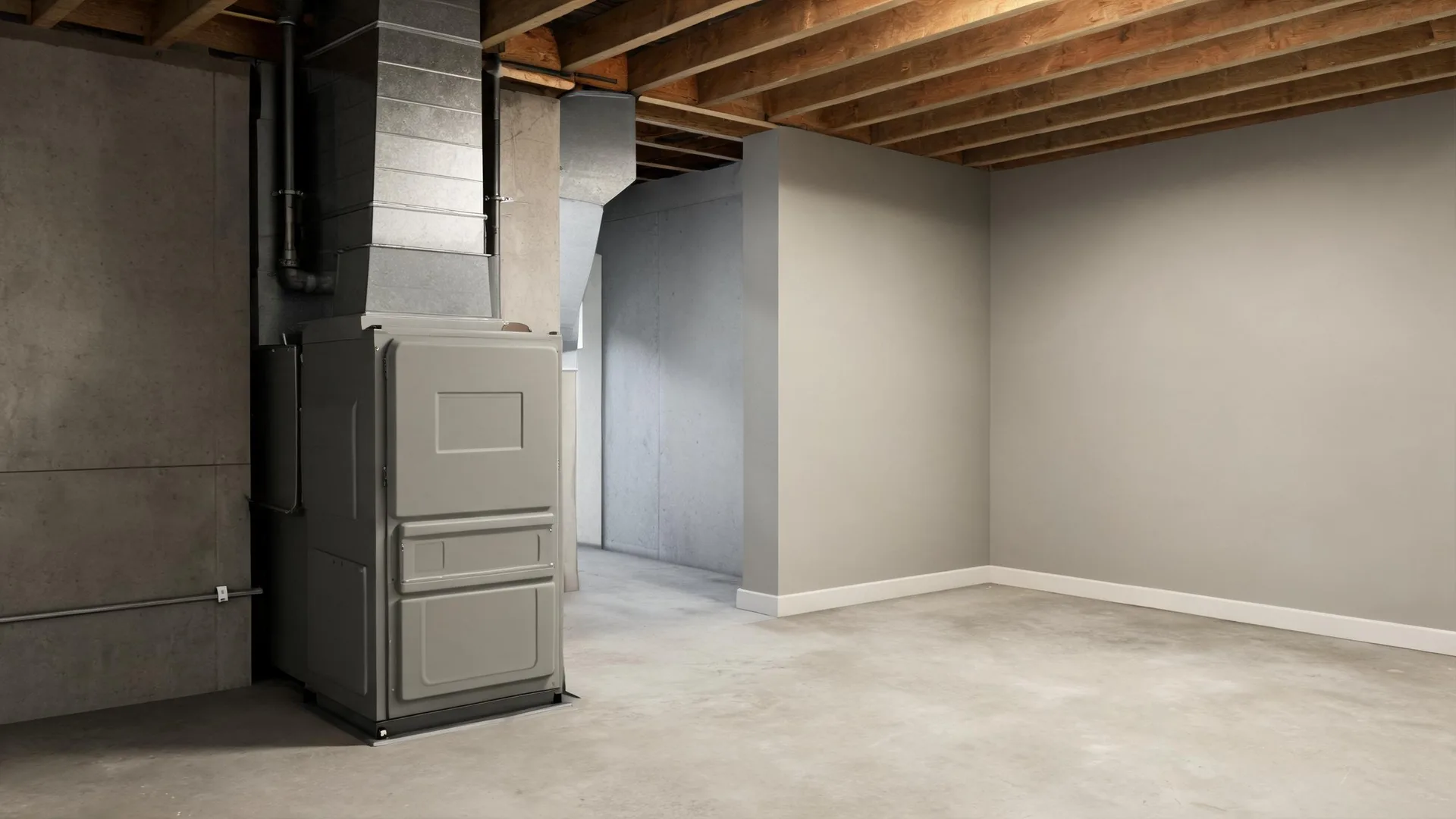
A gray forced-air furnace with ductwork stands in an unfinished concrete basement surrounded by storage items and clutter.

A high-efficiency gas furnace would save about $140 a year to run in Sandusky County compared with a gas furnace.

  • A high-efficiency gas furnace$670 a year
  • A gas furnace$810 a year

Estimates for a typical Sandusky County home, from EIA household energy data, Ohio fuel prices and NOAA climate normals. Your home will differ.

The old furnace comes out first. Gas and power get shut off before anything gets disconnected. If the venting is changing, that work happens next, since the new flue or PVC run has to be in place before the new furnace can be set and hooked to it. The furnace gets set on its pad or stand, squared up, and tied into the ductwork, the gas line, and the vent. Once it's connected, gas pressure gets checked, the flue or PVC gets confirmed to draw correctly, and the system runs through a full heating cycle to see how it fires and how it settles once it's warm. Last step is going over the thermostat and the basic controls, so the furnace is left running right, not just sitting there installed.