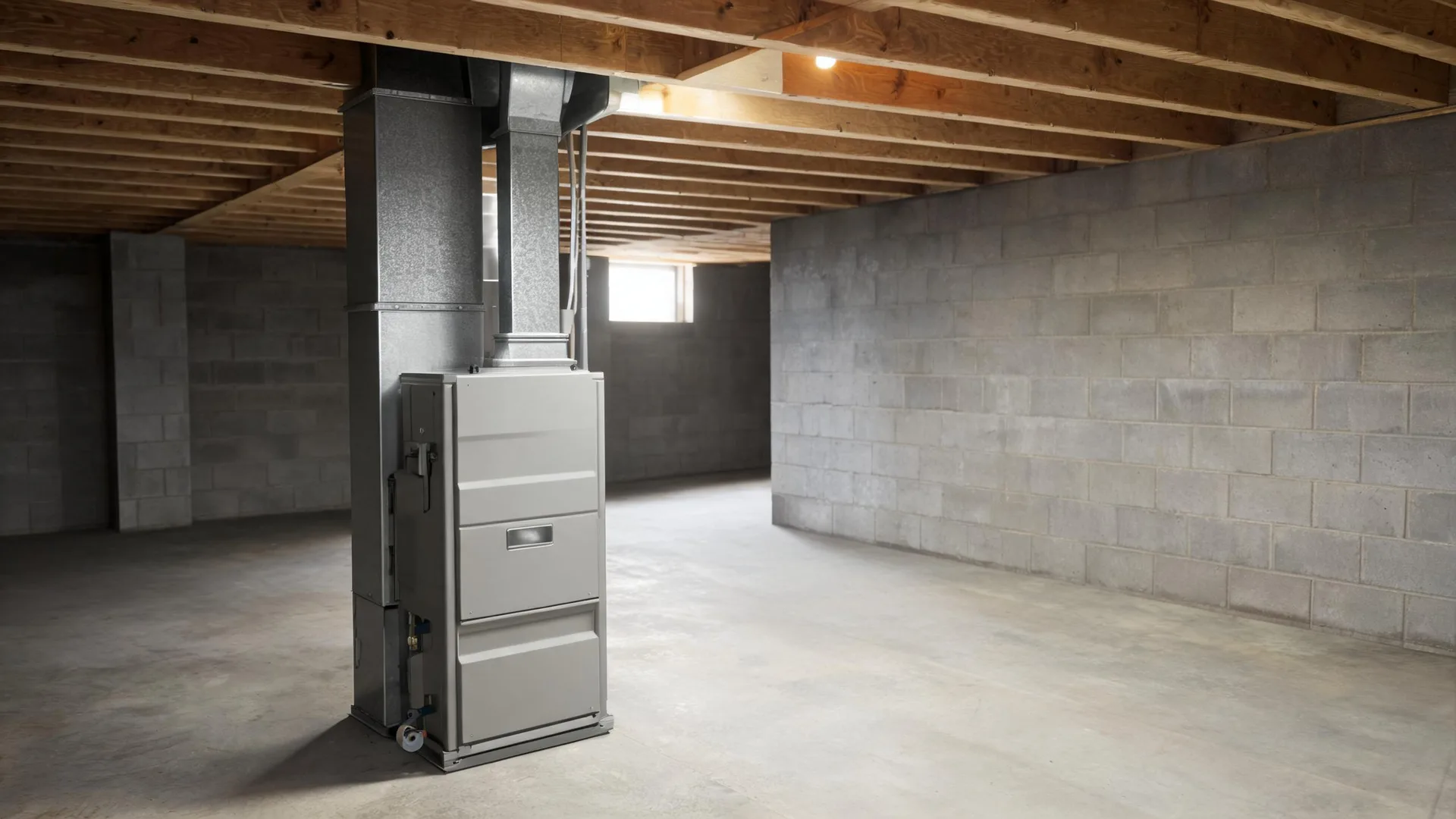
Gas is the standard here
Utility gas heats 58.8% of homes in Hancock County, more than every other fuel combined. A new furnace that burns gas is simply what most houses in this county are already set up for.
Takes about a minute. No obligation.
Utility gas heats 58.8% of homes in Hancock County, more than every other fuel combined. A new furnace that burns gas is simply what most houses in this county are already set up for.
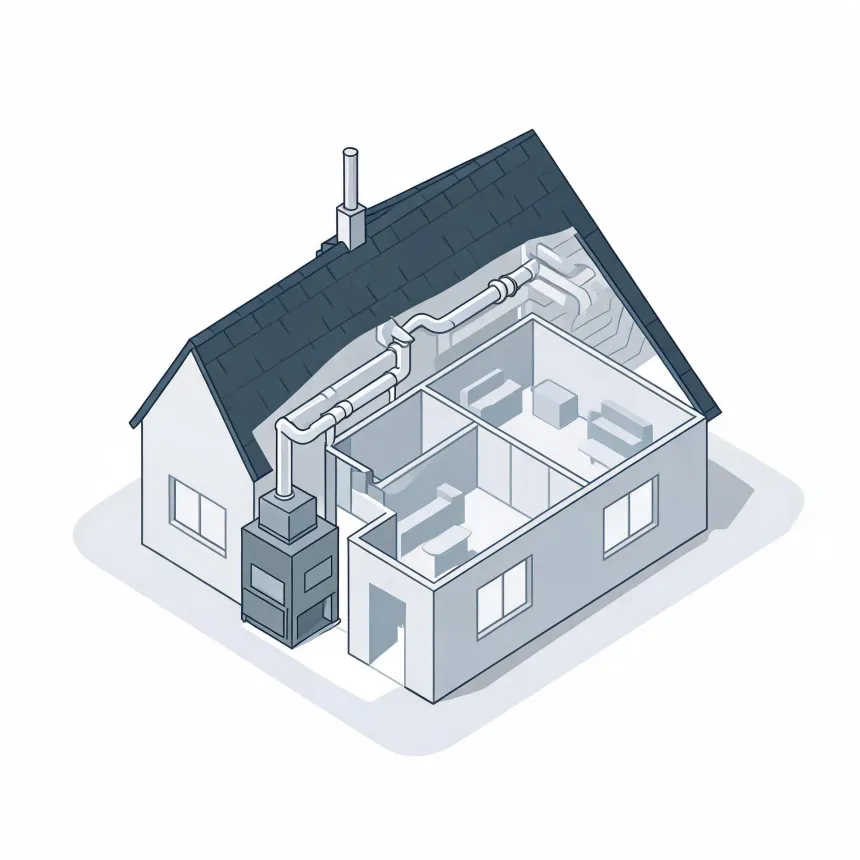
If your house already has a gas line and a flue, putting in another gas furnace means the venting and fuel supply are already there. Switching to electric heat would mean rethinking both.
NOAA nClimDiv, 1991–2020 normals
The old furnace doesn't just stay in the basement when the new one goes in.
The gas line gets disconnected, the flue connection gets pulled, and the old cabinet gets hauled out. The new furnace doesn't share space or venting with the one it replaced.



September is a good time to put this on the calendar. Homes in Hancock County start running heat in October, and the furnace will be on duty for about eight months straight, October through May. Install it in September and the crew isn't racing a cold snap. The furnace isn't being chosen while the house is already cold. It also means the system gets tested under easy conditions, not on the first night it has to work hard. Wait until October and the install happens while heat is already needed, not before.
Hancock County is in zone 5A. Any new gas furnace has to hit at least 80 percent AFUE. That's the rule for now. In December 2028 it jumps to 95 percent. A furnace put in today only has to meet the current 80 percent floor. There's also a federal tax credit available for going with a high-efficiency system.
Find a contractorA furnace installed here runs for months on end, and in a house built in 1973 or earlier it has to work with the ductwork, clearances and venting already in the walls. That means a contractor sizing the new unit should measure your house, not size off a standard template. Ask that a load calculation gets done before anything is installed.
The AFUE rating on the label tells you how much of the gas burned turns into heat in the house versus how much goes out the flue. It says nothing about how evenly the house heats, how quiet the furnace runs, or how long the burner stays on. Furnaces with the same AFUE can still feel different to live with.
A furnace that clears a higher AFUE does it by pulling more heat out of the exhaust before that exhaust leaves the house, usually with a second heat exchanger and a condensate drain to carry off what that exchanger wrings out. That drain line and the venting it needs are why a high-efficiency furnace cannot always just drop into the spot and flue the last one used.
Estimates for a typical Hancock County home, from EIA household energy data, Ohio fuel prices and NOAA climate normals. Your home will differ.
Gas and power to the old furnace get shut off before anything gets disconnected. Once the old cabinet is out, the duct opening, the flue, and the gas line are easier to see for what they are, not what the old furnace was built around. Setting the new furnace means leveling it, sealing the duct connections, and running the flue or intake piping to the right spot outside. Gas gets reconnected and pressure tested before the burner ever fires. Only then does the system run through a full heating cycle, checking temperature rise and airflow against what that model is rated for. A furnace that gets fired up without that check might run, but nobody's confirmed it's running right.