




A row of single-story houses with dark siding and gray shingled roofs behind large deciduous trees, with a trimmed hedge in the left foreground and a mown lawn under an overcast sky.

Furnace Installation in Cleveland, OH

Tell us about the job

Takes about a minute. No obligation.

New system or replacementFurnace or heatingCuyahoga County, OH
Step 1 of 2

What ZIP code is the job in?

Cuyahoga County saw 283 severe weather events between 2015 and 2024. Damaging wind accounted for 221 of those, and winter storms with heavy snow and ice hit 17 times. A furnace does no good sitting in the basement if the power's out. Statewide, 18% of Ohio households lost power for a day or more in 2024. A new furnace install is the time to think about how you'd keep the house warm if that happens to you.

8 months
October through May, your furnace is on duty
23°F
the average winter night it heats against
80%
of homes here heat with gas, so most furnaces here burn gas
80% AFUE
the federal minimum any new unit must meet
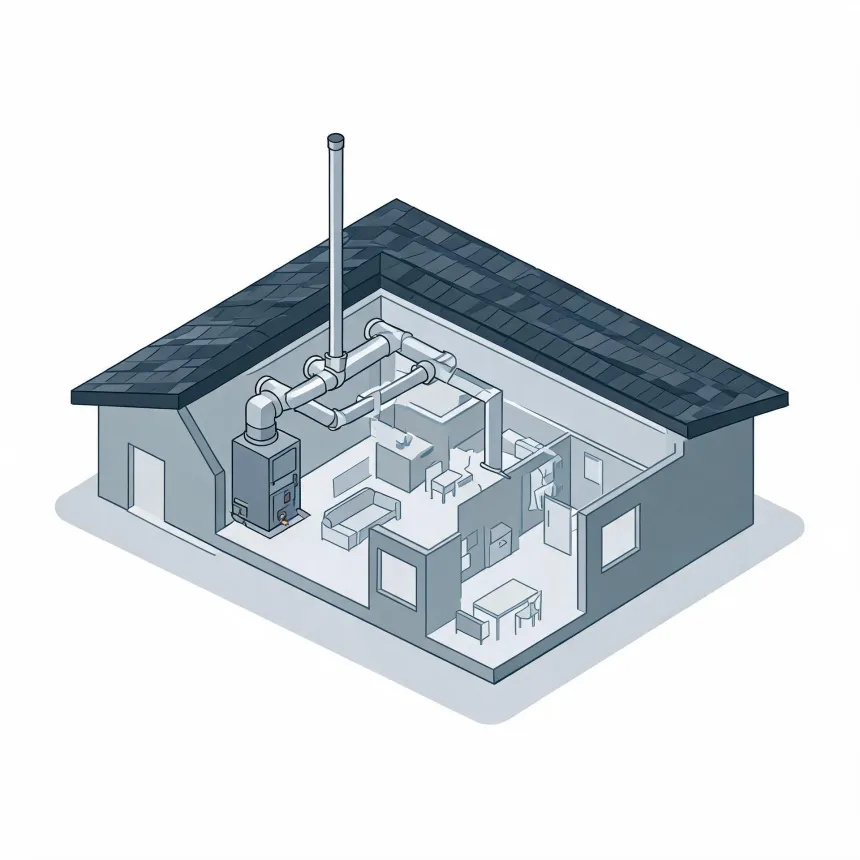
Isometric cutaway illustration of a single-story house showing interior rooms with furniture, a furnace unit with connected ductwork and a tall vertical flue pipe extending above the dark shingled roof.
Your furnace works hardest from November through March.

NOAA nClimDiv, 1991–2020 normals

Half the homes in Cuyahoga County were built in 1957 or earlier.

An older furnace setup won't always match what a new system needs to run right.

Get it done before October, not after the first cold snap

Heat runs October through May
Winter nights average 23°F
Climate zone 5A
Gas Heats This County80.2% of homes in Cuyahoga County run on gas, more than any other fuel

Cuyahoga County falls under zone 5A in the 2021 energy code, a cool zone where heating carries most of the load. Any furnace installed here has to meet that standard. Right now that means turning at least 80 percent of the gas it burns into heat over the winter, and every furnace built since November 2015 is held to that mark. The bar moves higher in December 2028, when new furnaces will need to hit 95 percent. That's not a reason to wait. It's a reason to ask a contractor where the system they're proposing sits against both numbers.

Plan the install around the power going out, not just the cold

If a storm knocks out power this winter, the furnace won't run without it. Talk to your contractor about where the outdoor unit goes, how it's protected, and what keeps the house warm if the lights go out.

Find a contractor
A gray gas furnace with attached ductwork and piping installed in an unfinished concrete basement.

Running on borrowed ductwork

If your furnace is original to the house, a contractor working on it has to deal with whatever duct layout and venting were installed decades ago. Ask what has to change, not just what's being swapped out. A new furnace that bolts up to old ductwork without a look at sizing and airflow won't run the way it's supposed to.

Ask what happens if the power goes out

A gas furnace still needs electricity to run. The control board, the blower motor and the igniter all depend on it. If the system you're comparing can't connect to a generator or battery backup, ask what it would take to add that later. Some furnaces make it simple to wire in a transfer switch. Others don't.

Ask how they sized it, not just what size they picked

Two furnaces with the same output rating can perform differently depending on the ductwork, the house, and how the contractor ran the load calculation. A unit that's oversized will short cycle and wear out faster. One that's undersized will run constantly and still fall short on the coldest days. Ask to see the calculation, not just the final number.

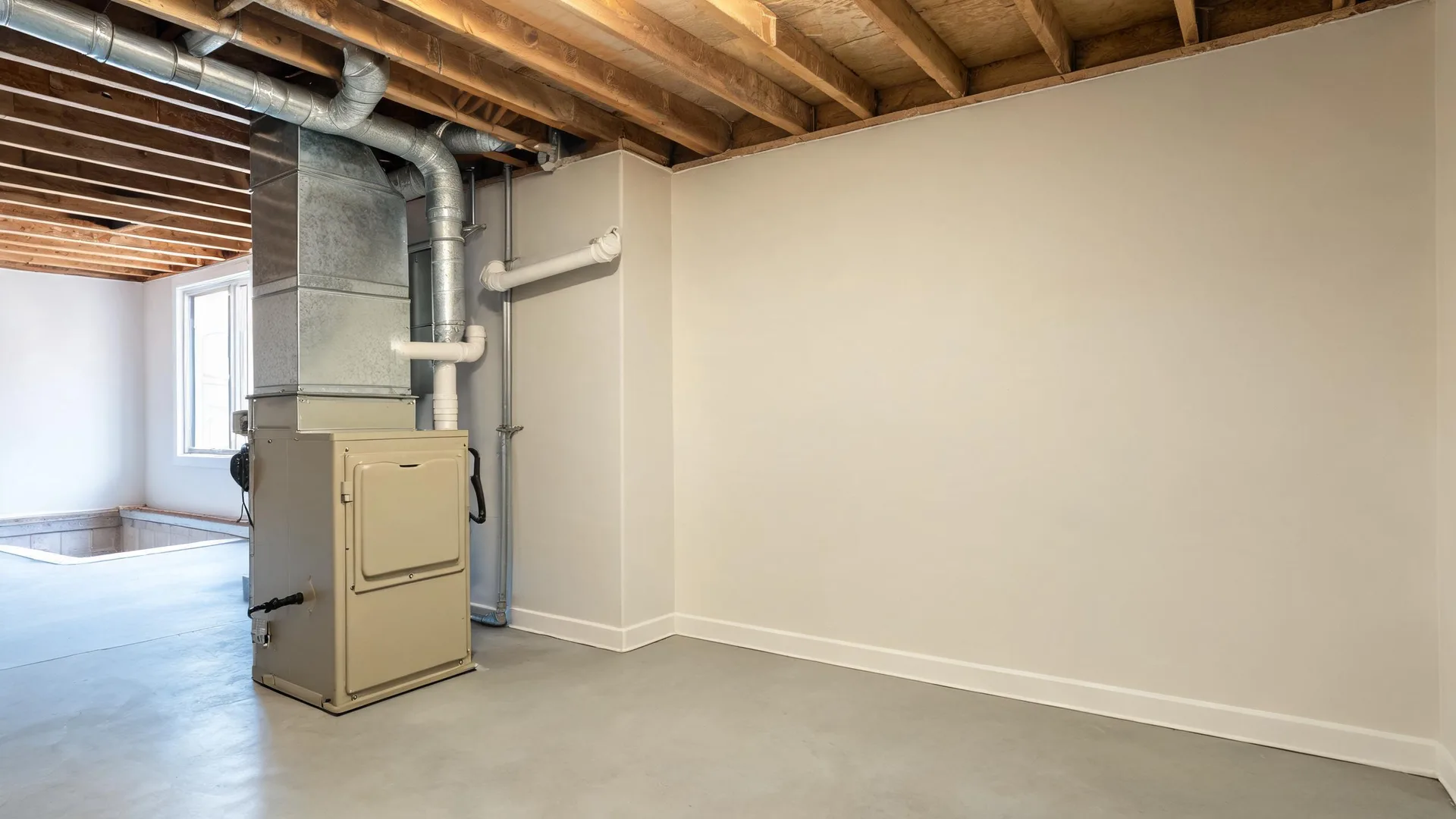
An empty unfinished basement containing a forced-air furnace with overhead ductwork, exposed ceiling joists, and a single hanging light bulb.

A high-efficiency gas furnace would save about $150 a year to run in Cuyahoga County compared with a gas furnace.

  • A high-efficiency gas furnace$670 a year
  • A gas furnace$820 a year

Estimates for a typical Cuyahoga County home, from EIA household energy data, Ohio fuel prices and NOAA climate normals. Your home will differ.

Installation starts with pulling the old furnace out, and that's usually slower than putting the new one in. The contractor disconnects the gas line, the vent pipe and the ductwork, then has to work the cabinet out of whatever space it's been sitting in, which is rarely a straight shot. The new unit gets set, leveled, and connected to the existing ductwork, the gas line, and the vent. Each connection gets checked on its own: gas line for leaks, vent for the right pitch and clearance, ductwork for a seal that doesn't leak air into the basement instead of the house. Once it's wired in, the contractor runs it through a full cycle, checking the flame, the temperature rise, and how it cycles on and off. A combustion analyzer gets used to check the exhaust itself, not just whether the furnace sounds right. None of this gets signed off until the system runs the way it's supposed to, not just until it turns on.