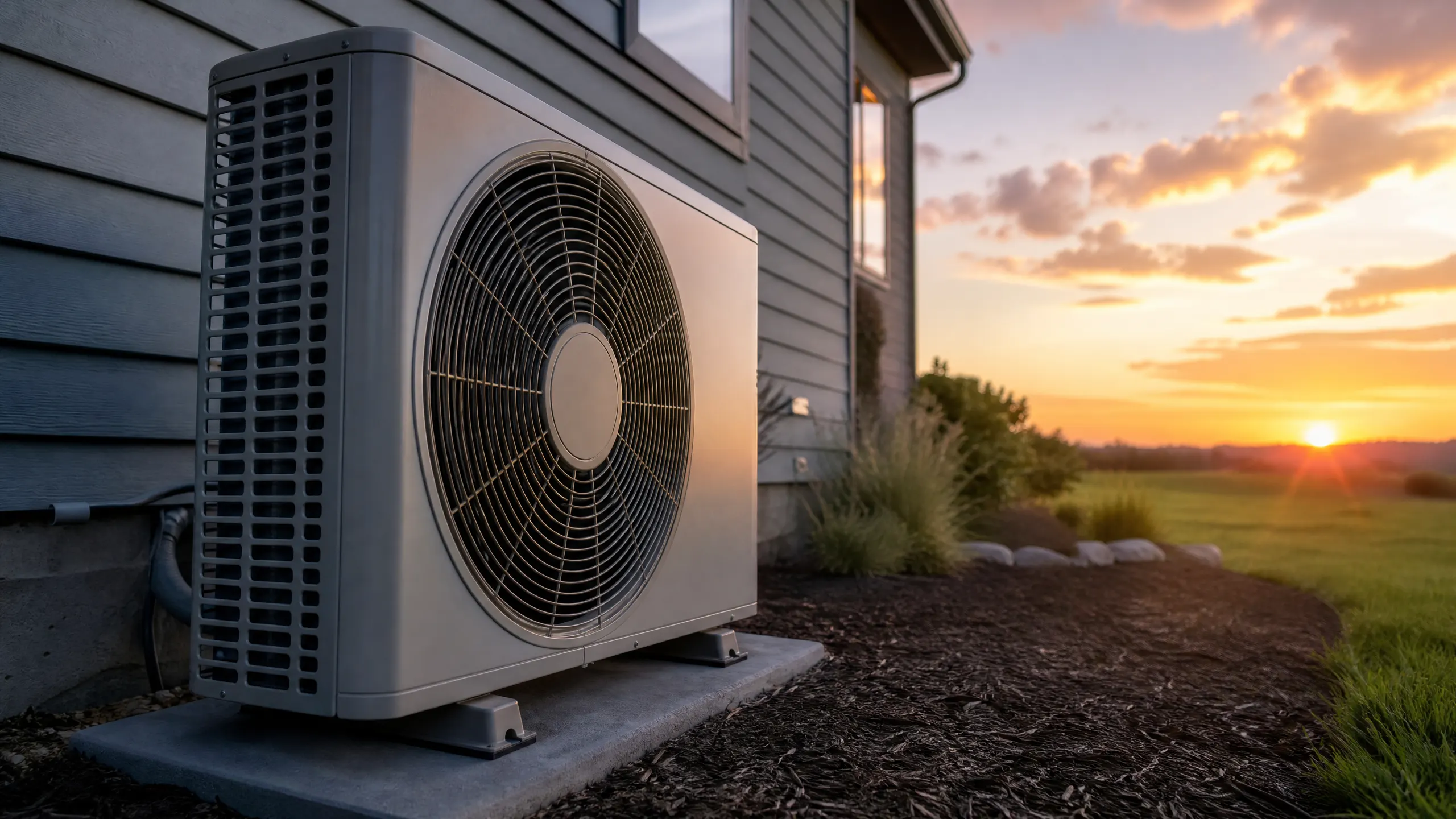
A grey residential air-conditioning condenser unit mounted on a concrete pad beside a house, photographed at sunset.

Heat Pump Repair in Troy, OH

Tell us about the job

Takes about a minute. No obligation.

RepairHeat PumpMiami County, OH
Step 1 of 2

What ZIP code is the job in?

Troy winters push the heat side, not the cooling side

Miami County sits in zone 5A, a cool climate where heating carries the bigger load. Overnight lows average 23°F through December, January and February, so your heat pump spends those months working harder than it does the rest of the year.

That load is steady, not severe

A heat pump built for this area is sized for winters like Troy's. The strain comes from ordinary heating demand, not extreme weather, which means a unit that's been maintained usually has less wear behind it than its age alone would suggest.

8 months
October through May, your system heats
3 months
June through August, it cools
23°F
the average winter night it heats against
83°F
the average summer afternoon it cools against
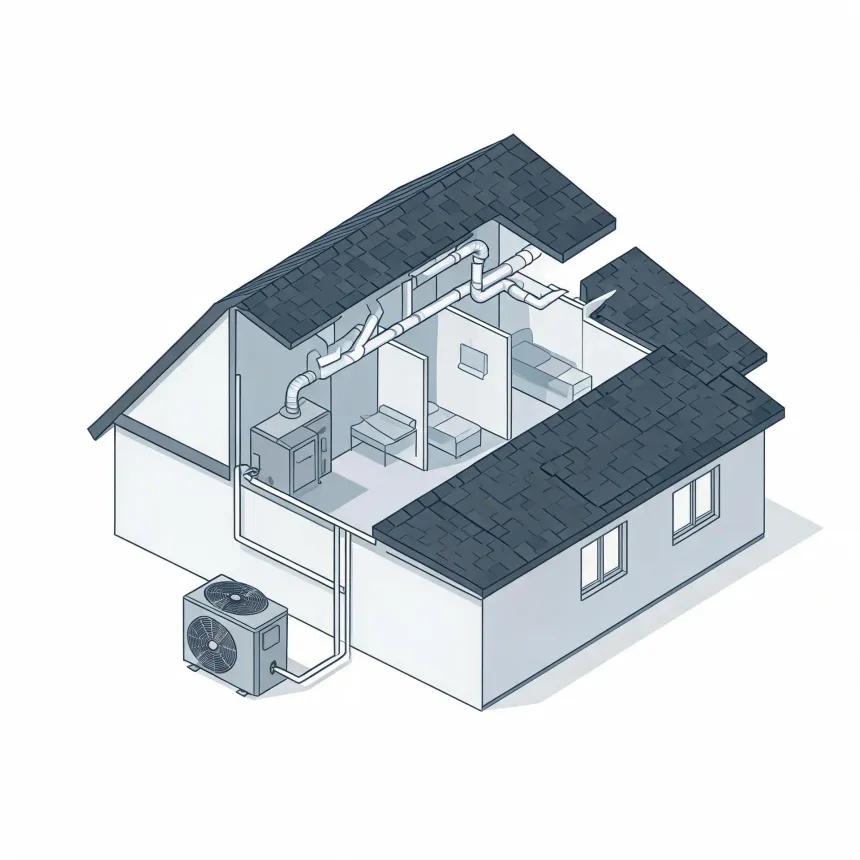
Isometric line illustration of a cutaway single-story house showing interior ductwork, an indoor air handler unit, and an outdoor condenser connected by refrigerant lines, with a dark shingled roof.
Your system heats October through May and cools June through August.

NOAA nClimDiv, 1991–2020 normals

September is the last month before heat pumps in Miami County switch over to heating.

A part that's already weak tends to fail in October. That's the first month the heat pump has to carry real heating load.

Ohio households paid 15.99 cents per kilowatthour in 2024. A heat pump runs on electricity every hour it's on. That rate doesn't drop because the unit is struggling. A heat pump low on refrigerant, or running on a weak contactor, still pulls the same power. It just does less with it. So the house stays less comfortable, and the bill stays the same or climbs. The longer a bad part sits, the more months you pay that rate for worse heat. Getting it checked now stops that.

The problem is probably simpler than it feels

Miami County gets the same wind, hail and winter storms as the rest of the region. Nothing about the weather here is harder on a heat pump than anywhere else. A part wears out, a connection loosens, refrigerant drops. That's the usual cause. A straightforward diagnosis usually finds a straightforward fix.

Find a contractor
A gray air-source heat pump mounted on a concrete pad next to a house with gray vinyl siding, surrounded by gravel and flanked by green shrubs and white hydrangea flowers.

The age on the unit isn't the whole story

Years on a heat pump don't tell the whole story here. It works hard through December, January and February when overnight lows sit around 23°F, then eases off the rest of the year. That's not the same wear a unit gets in a place where summer pushes it just as hard as winter does. So when a part fails, the question isn't how old the unit is. It's what actually broke. A failed capacitor or a low refrigerant charge is usually a fix, not a sign the whole system is done.

Air blowing but not warm means the reversing valve or the heat strip, not the thermostat

Heat pump's running, but the air coming out feels cool or barely warm. That's usually not the thermostat. The reversing valve might be stuck in cooling mode. Or the backup heat strip isn't kicking in when it should. Either one is a repair a tech can usually find in one visit.

Short cycling wears out the parts that are already stressed

Heat pump shuts off a few minutes after it starts, then kicks back on. That's short cycling. Could be a failing pressure switch, low refrigerant, or the thermostat reading things wrong. Every one of those start-stop cycles wears on the compressor. A unit doing this for a week is worse off than one doing it for a day.

A few parts fail more than the rest. The contactor is one. It's a small switch that sends power to the compressor. The points on it burn and pit every time it closes. After enough cycles, it stops making good contact, or it welds shut. Capacitors are another. A capacitor gives the compressor and the fan motor the jolt they need to start turning. It weakens with age and heat until the motor just hums instead of spinning. Low refrigerant usually means a leak. It's not normal loss. A sealed system doesn't use up refrigerant the way an engine uses oil. Outside, the defrost board and sensor can fail too. When they do, the outdoor coil ices over and stays iced, instead of clearing itself every few hours like it should.

Once a tech finds what actually failed, the repair or replace call usually comes down to what else is going wrong at the same time. A bad contactor, a weak capacitor, a failed defrost sensor, any of those is a repair on a system that's otherwise sound. It's a different conversation when the compressor itself is failing, or when the refrigerant leak is in the coil instead of a fitting that can be resealed. Those jobs are expensive to chase down, and they tend to show up alongside other wear instead of on their own. The compressor and the coil are the parts that are genuinely hard to replace by themselves. Everything else on a heat pump is a part, and parts get swapped out all the time.