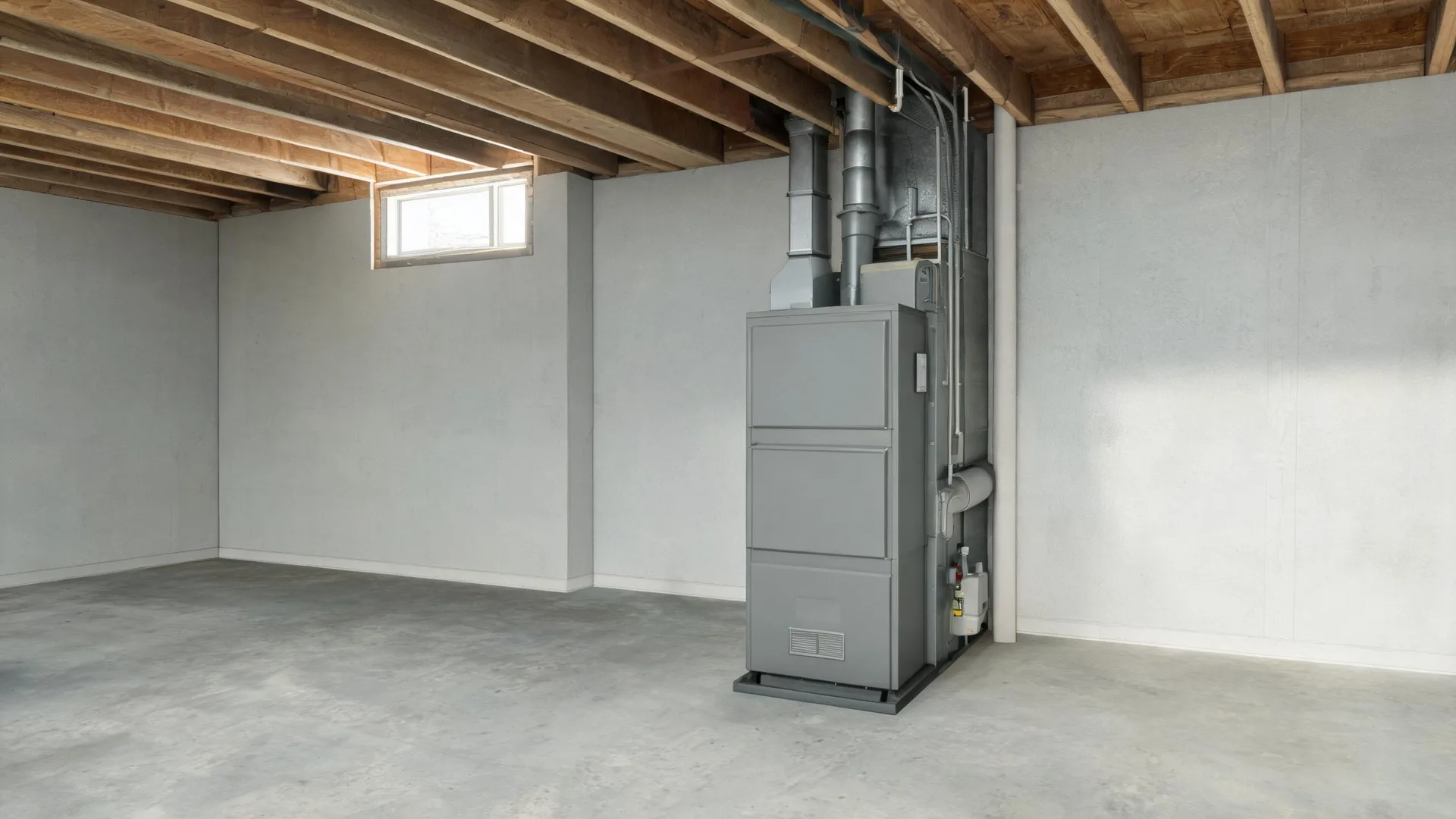
The old furnace leaves the property
A disconnected furnace has open gas and electrical connections and a flue that's not tied to anything anymore. It gets hauled out the same day the new one goes in. It doesn't sit in the basement or the garage.
Takes about a minute. No obligation.
Utility gas heats 71.4% of occupied homes in Clark County, more than every other fuel combined. Electricity comes in a distant second at 18.7%. With gas this common, most furnaces going into replacement here are gas furnaces. If your home already has a gas line and a vent for one, putting in another gas furnace is usually simpler than switching to electric, since the line and venting are already in place.
NOAA nClimDiv, 1991–2020 normals
Furnaces in Clark County run from October through May.
So September is the month to put in a new one, before the cold weather puts it to work.



Clark County sits in zone 5A under the 2021 energy code. That's cool climate territory, where heating does most of the work all year. Any gas furnace put in now has to hit at least 80.0 percent AFUE. That's the federal minimum for non-weatherized units. That number is going up to 95.0 percent in a few years, but a furnace bought today only has to clear 80.0 percent. Check the efficiency number printed right on the unit. Don't just assume it's higher than that.
Half the homes in Clark County went up in 1963 or earlier. Putting a new furnace into a house that old means fitting it to a layout that was never built with that furnace in mind. Sizing it right means measuring the actual house, not going off square footage. Get that measurement right and the install fits the house that's really there.
Find a contractor
Heat runs eight months a year here, October through May. Overnight lows average 23°F through December, January, and February. That's a long, cold season, but it's exactly what a standard furnace is built for. Over those eight months, the furnace cycles on and off as the house calls for heat. It's not running flat out the whole time. A furnace sized right for the house handles this season fine, no need for anything bigger or pricier than what the house actually needs.
A disconnected furnace has open gas and electrical connections and a flue that's not tied to anything anymore. It gets hauled out the same day the new one goes in. It doesn't sit in the basement or the garage.
Swapping the old unit for a new one doesn't mean going without heat for a while. The old furnace keeps running until the new one's ready to take over. The whole changeover happens in one visit.
Estimates for a typical Clark County home, from EIA household energy data, Ohio fuel prices and NOAA climate normals. Your home will differ.
The old furnace comes out first. Disconnected from the gas line, the vent, the ducts, the power, then unhooked and hauled off. Only after that does the new one go in, set in place and tied back into those same connections. Once it's wired up and the gas is on, it gets fired up and run through a full cycle. The flame gets checked through the sight glass. The vent gets checked to make sure it's drafting right. The ducts get checked too, supply and return, making sure air is actually reaching the rooms it's supposed to. Carbon monoxide gets tested at the unit before the job is called done. Last step is the thermostat. Set it, test it, make sure the furnace answers on the first call for heat.